


Comment vérifier la qualité d'un produit avant de l'acheter
Table des matières
- Pourquoi la plupart des produits en ligne échouent aux contrôles qualité
- Comment vérifier la qualité d'un produit avec une liste de contrôle simple
- Comment repérer les faux produits en ligne avant de payer
- Comment lire les avis clients pour évaluer la qualité
- La liste de contrôle pour l'inspection qualité que vous pouvez utiliser dès aujourd'hui
- Que faire lorsqu'un produit échoue à votre test qualité
- Conclusion : Acheter avec confiance, pas avec espoir
- Foire aux questions
Dernière mise à jour : 7 septembre 2026
Chaque jour, des acheteurs à travers le monde reçoivent des colis qui semblent impeccables à l'extérieur mais tombent en morceaux en une semaine. Apprendre à vérifier la qualité d'un produit avant de communiquer vos coordonnées bancaires est la compétence la plus pratique que vous puissiez acquérir en tant qu'acheteur en ligne. Ce guide détaille les étapes de vérification précises, afin que vous puissiez appliquer la même rigueur à chacun de vos achats.
La plupart des échecs de qualité découlent d'une lacune simple : les acheteurs vérifient les photos du produit mais jamais les promesses du produit. Ci-dessous, nous vous montrerons exactement comment combler cette lacune, repérer les contrefaçons et lire les avis comme un inspecteur professionnel. Mais d'abord, voici ce que la plupart des guides négligent : ils traitent la vérification de la qualité comme un acte unique, alors qu'elle fonctionne mieux comme une liste de contrôle en cinq points à appliquer avant de payer.
Pourquoi la plupart des produits en ligne échouent aux contrôles qualité
La plus grosse erreur lors des achats en ligne est de supposer qu'une fiche produit bien présentée signifie un produit de qualité. Les vendeurs investissent massivement dans la photographie et le marketing, mais pas nécessairement dans les normes de fabrication. Lorsqu'un produit arrive cassé ou défectueux, le problème provient généralement d'un décalage entre les promesses marketing et les spécifications techniques réelles.
Un point de défaillance courant est l'absence de toute preuve de conformité. Les produits qui manquent de marquages appropriés, de certifications ou de documentation de traçabilité évitent souvent les tests critiques pendant la production. Conformément aux directives sur les normes de sécurité des produits de consommation, vérifier qu'un produit respecte les exigences réglementaires avant l'achat est le moyen le plus fiable d'éviter de recevoir des produits non conformes.
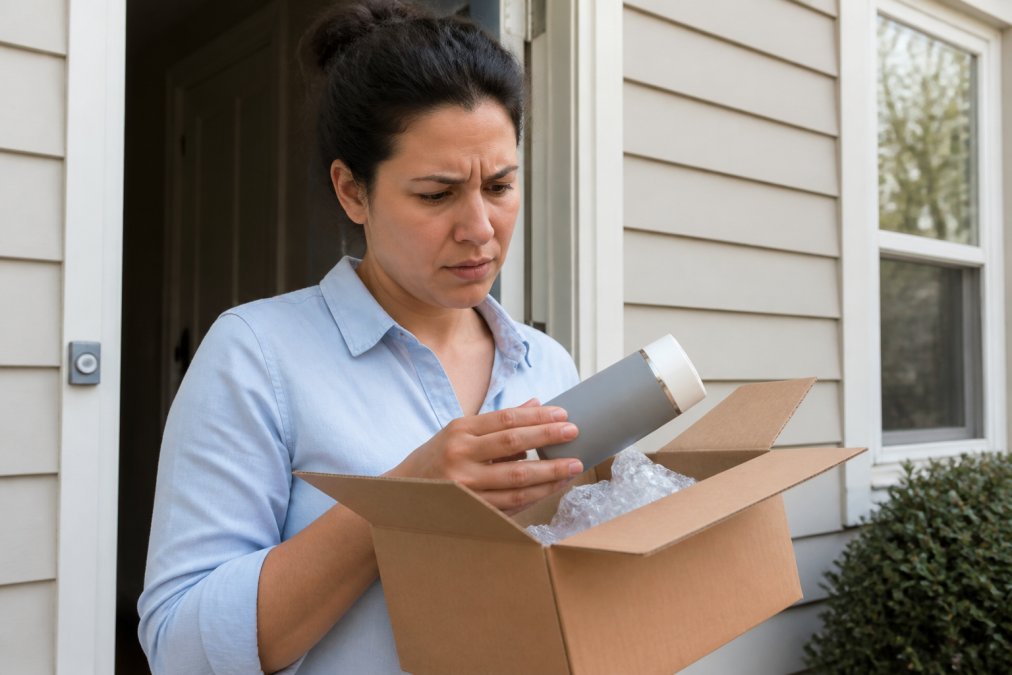
Comment vérifier la qualité d'un produit avec une liste de contrôle simple
La vérification de la qualité d'un produit est le processus consistant à confirmer qu'un article correspond aux spécifications annoncées avant de s'engager à l'acheter. Bien qu'un examen rapide de la fiche soit un bon début, une vérification approfondie va plus loin. Elle implique de croiser les affirmations du produit avec des normes établies, d'examiner les preuves de tests et de comprendre la différence entre un système d'assurance qualité (QA) et un simple contrôle qualité (QC).
Vous pouvez effectuer une vérification approfondie en moins de cinq minutes en utilisant les informations déjà disponibles sur la page produit, mais savoir quoi regarder est essentiel.
Vérifier la fiche technique et les normes
Commencez par la fiche technique. Recherchez des mesures, des matériaux et des performances spécifiques. Des descriptions vagues comme « haute qualité » ou « premium » ne veulent rien dire ; des chiffres précis comme « rechargeable par USB, moteur à 2 vitesses » ou « lecture sans contact en 1 seconde » vous donnent quelque chose de concret à évaluer. Si la fiche manque de ces détails, considérez cela comme un signal d'alarme.

Mais ne vous arrêtez pas aux chiffres. Demandez-vous quelles normes ces chiffres sont censés respecter. Pour l'électronique, il peut s'agir d'une norme de la CEI (Commission Électrotechnique Internationale). Pour les textiles, cela pourrait être une norme ISO pour le poids du tissu ou la résistance à la déchirure. Lorsqu'une annonce fait référence à une norme spécifique, cela indique que le fabricant teste son produit par rapport à un point de référence connu. Dans le cas contraire, vous vous reposez sur sa parole non vérifiée.
Rechercher les preuves de conformité et les marquages
Les produits authentiques portent des marquages indiquant qu'ils ont passé les contrôles réglementaires. Recherchez des symboles de certification comme CE (Conformité Européenne) pour le marché européen, FCC pour l'électronique américaine, ou UKCA pour la Grande-Bretagne. Ce ne sont pas juste des autocollants ; ils représentent une déclaration légale indiquant que le produit répond à des directives spécifiques de sécurité et de performance. Recherchez également les numéros de lot et les informations sur le fabricant. Un numéro de lot traçable permet au fabricant d'isoler un défaut à un cycle de production spécifique, ce qui est la marque d'un système de gestion de la qualité fonctionnel.
Les produits sans traçabilité sont souvent fabriqués sans système de gestion de la qualité en place, ce qui est fortement corrélé à des taux de défauts plus élevés. C'est la différence fondamentale entre l'Assurance Qualité (le processus proactif d'intégration de la qualité dans la ligne de production) et le Contrôle Qualité (le processus réactif de vérification des produits finis). Un produit qui a passé le contrôle qualité peut toujours faire partie d'un mauvais lot ; un produit issu d'un système doté d'une assurance qualité robuste est moins susceptible d'avoir des problèmes systémiques.
Comprendre les protocoles de test
Pour les articles de plus grande valeur, creusez les protocoles de test. Quels tests spécifiques le produit a-t-il réussis ? Pour une bouteille d'eau, cela pourrait être un test d'étanchéité ou un test de chute. Pour une batterie externe, cela pourrait être un test de cyclage thermique ou un test de protection contre la surcharge. Si l'annonce mentionne qu'un produit a été « testé » sans préciser comment, cette affirmation est presque inutile. Un langage de test spécifique, comme « testé pour résister à 10 000 chutes » ou « IPX7 testé étanche à 1 mètre pendant 30 minutes », fournit une preuve vérifiable que vous pouvez comparer aux performances réelles du produit.
La vérification de la documentation
Enfin, examinez la documentation. Pour les produits réglementés (comme les biens électriques ou les jouets pour enfants), un vendeur légitime devrait être en mesure de fournir une Déclaration de Conformité (DoC) sur demande. Ce document liste les normes auxquelles le produit est conforme et l'adresse du fabricant. Si un vendeur ne peut pas ou ne veut pas fournir de documentation de conformité de base pour un produit réglementé, c'est un signe définitif qu'il faut renoncer à l'achat.
Comment repérer les faux produits en ligne avant de payer
Repérer les contrefaçons nécessite de changer d'état d'esprit : passez de « est-ce une bonne affaire ? » à « ce produit est-il réel ? ». La détection des contrefaçons commence par l'examen de l'annonce elle-même pour déceler des incohérences qu'un vendeur authentique ne ferait pas.
Les signaux d'alerte sur les prix qui trahissent la contrefaçon
Si un produit est vendu à une fraction du prix pratiqué par tous les autres détaillants, cet écart est rarement une aubaine. Les fabricants authentiques maintiennent une tarification cohérente sur tous les canaux pour protéger leur marque. Une réduction extrême signifie généralement que le produit est soit une contrefaçon, soit un rebut d'usine ayant échoué au contrôle qualité.
Vérifier l'authenticité avec des codes QR et des numéros de série
Les produits légitimes incluent de plus en plus de codes QR ou de numéros de série qui renvoient vers des bases de données de vérification. Scannez le code s'il apparaît sur les photos de l'annonce ; s'il ne mène nulle part ou vers une page générique, c'est un signal d'alerte. Les numéros de série enregistrés permettent une traçabilité jusqu'au fabricant, ce que les réseaux de contrefaçon ne peuvent pas reproduire.
Comment lire les avis clients pour évaluer la qualité
Les avis clients restent l'un des meilleurs outils gratuits pour l'évaluation de la qualité, mais seulement lorsque vous les lisez de manière stratégique. L'objectif est de trouver des plaintes spécifiques et vérifiables plutôt que des réactions émotionnelles.
Distinguer les faux avis des retours utilisateurs authentiques
Les avis réels mentionnent des détails précis : combien de temps le produit a duré, sa sensation en main, s'il correspondait aux dimensions listées. Les faux avis utilisent des éloges génériques sans détails. Recherchez des modèles à travers plusieurs avis ; si plusieurs acheteurs mentionnent le même défaut, comme une couture qui craque ou une batterie qui meurt rapidement, considérez cela comme un signal fiable d'un problème de qualité systémique.
La liste de contrôle pour l'inspection qualité que vous pouvez utiliser dès aujourd'hui
Utilisez cet outil pratique pour vérifier la qualité du produit avant chaque achat. Suivez les points dans l'ordre, et si un seul contrôle échoue, reconsidérez l'achat.
- Clarté de la fiche technique : L'annonce inclut-elle des mesures, des matériaux et des données de performance spécifiques ?
- Marquages de conformité : Y a-t-il des symboles de certification, des numéros de lot ou les détails du fabricant ?
- Saineté du prix : Le prix est-il dans une fourchette normale par rapport à d'autres vendeurs réputés ?
- Outils d'authenticité : Le produit inclut-il un code QR ou un numéro de série vérifiable ?
- Profondeur des avis : Les avis mentionnent-ils des détails spécifiques sur la durabilité, la coupe ou les performances ?
- Politique de retour : Que se passe-t-il si le produit arrive endommagé ou défectueux ?
Que faire lorsqu'un produit échoue à votre test qualité
Lorsqu'un produit arrive et ne répond pas à vos attentes, votre première action détermine la facilité avec laquelle vous pourrez résoudre le problème. La plupart des acheteurs commettent l'erreur de contacter le vendeur en premier avec une plainte vague. Une approche plus efficace consiste à traiter cela comme un échec de vérification formel, en documentant les preuves et en faisant référence à l'affirmation spécifique qui n'a pas été respectée.
Étape 1 : Tout documenter immédiatement
Photographiez le défaut sous plusieurs angles, y compris des gros plans et des photos montrant le produit dans son contexte. Conservez l'emballage, surtout les étiquettes avec les numéros de lot ou les marques de certification. Prenez une capture d'écran de l'annonce originale, incluant le prix, la fiche technique et la date de votre commande. Cela crée un enregistrement horodaté prouvant que le produit reçu ne correspond pas à celui acheté.
Étape 2 : Lancer la procédure de litige du vendeur
Contactez le vendeur via le canal officiel de la plateforme, pas par e-mail direct. Faites référence à la norme de qualité spécifique que le produit n'a pas respectée (par ex. « l'annonce prétend une étanchéité IPX7, mais l'eau est entrée dans l'appareil lors d'un test standard »). Joignez vos preuves. La plupart des plateformes réputées disposent de processus de résolution de litiges pour les produits non conformes. Gardez toutes les communications au sein de la plateforme afin que l'historique des échanges serve de preuve si vous devez escalader le litige.
Étape 3 : Escalader le litige auprès du prestataire de paiement
Si le vendeur est injoignable ou refuse une résolution raisonnable, votre prochaine étape est une demande de remboursement (chargeback) auprès de votre société de carte bancaire ou de votre processeur de paiement (comme PayPal). Il s'agit d'une demande formelle d'annulation de transaction au motif que les biens n'étaient pas conformes à la description. C'est un outil puissant car il transfère la charge de la preuve au vendeur. Votre documentation de l'étape 1 devient votre preuve. Soyez conscient que les chargebacks sont une étape sérieuse, et en déposer un sans preuve claire de fausse déclaration peut être considéré comme de la fraude.
Étape 4 : Signaler aux autorités de protection des consommateurs
Pour les produits qui échouent spécifiquement aux contrôles de sécurité, signalez le problème à l'autorité de protection des consommateurs compétente dans votre région. Dans l'UE, il s'agit de l'autorité nationale qui alimente le système Safety Gate (comme documenté dans les directives de l'UE sur la protection des consommateurs et la sécurité des produits). Aux États-Unis, il s'agit de la Consumer Product Safety Commission (CPSC). Signaler un défaut de sécurité ne concerne pas seulement votre remboursement ; cela déclenche un examen pouvant mener à un rappel, protégeant ainsi d'autres consommateurs du même risque.
Comprendre vos recours légaux
Lorsqu'un produit échoue à un contrôle qualité après le paiement, vous n'êtes pas sans recours légaux. Dans la plupart des juridictions, le principe de « conformité à l'usage » s'applique. Cela signifie que le produit doit être adapté à l'usage pour lequel il a été vendu. Si un produit est vendu comme « étanche » et qu'il ne l'est pas, il est juridiquement non conforme. Votre premier recours légal est toujours la politique de retour du vendeur lui-même. Si cela échoue, le droit de la consommation dans votre région (comme la Directive européenne sur la vente de biens de consommation) vous donne le droit légal à une solution.
Pour les achats liés à la santé, les enjeux sont plus élevés. Si un appareil comme un [thermomètre infrarouge frontal(/products/digital-infrared-thermometer-forehead-body-non-contact-fever-thermometers-or-medical-portable-finger-pulse-oximeter-blood-oxygen) et oxymètre de pouls combiné | dreamdealshop.com] ne fonctionne pas comme spécifié, ne l'utilisez pas pour des décisions de santé critiques. Documentez le dysfonctionnement et contactez immédiatement le vendeur en faisant référence aux allégations de précision spécifiques présentes dans l'annonce.
L'étape finale : laisser un avis vérifiable
Une fois votre litige résolu (ou même s'il ne l'est pas), laissez un avis aussi précis que votre réclamation. Indiquez ce qui n'a pas fonctionné, comment cela s'est produit et comment le vendeur a géré la situation. C'est le contrôle qualité final que vous effectuez pour la communauté. Un avis disant « cassé en une semaine » est moins utile qu'un avis disant « la couture a lâché au point de tension après 10 jours d'utilisation normale, et le vendeur a refusé un remboursement jusqu'à ce que je demande une rétrofacturation ». Ce niveau de détail est ce qui distingue un signal de qualité authentique du bruit ambiant.
Conclusion : achetez avec confiance, pas avec espoir
La vérification de la qualité n'est pas une question de paranoïa ; c'est une question de méthode. La différence entre un achat satisfaisant et un regret se joue généralement en cinq minutes de vérification avant de cliquer sur payer.
Appliquez la liste de contrôle ci-dessus à chaque commande en ligne, et vous réduirez considérablement le nombre de produits qui vous déçoivent. Pour des trouvailles pour la maison, le bien-être et le style de vie sélectionnées quotidiennement qui ont déjà passé ces tests, parcourez la sélection actuelle sur Dream Deal Shop et découvrez ce qui est disponible dans la nouveauté du jour.
Foire aux questions
Comment vérifier la qualité d'un produit avant d'acheter en ligne ?
Commencez par la liste de contrôle d'inspection de la qualité du produit : confirmez que les spécifications techniques correspondent à vos besoins, vérifiez les preuves de conformité comme les marquages CE, et comparez le poids et les matériaux décrits dans l'annonce. Ensuite, lisez les avis des clients pour repérer les indicateurs de qualité, en vous concentrant sur les commentaires concernant la durabilité et les défauts. Enfin, vérifiez la politique de retour du vendeur afin d'avoir un recours si le produit ne répond pas à vos normes de qualité.
Comment savoir si la description d'un produit est trompeuse ?
Les descriptions trompeuses utilisent souvent des termes vagues comme « haute qualité » sans précisions. Comparez la fiche technique avec les images. Si les photos montrent des fonctionnalités qui ne figurent pas dans les spécifications techniques, c'est un signal d'alerte. Recherchez l'absence de preuves de conformité, des baisses de prix irréalistes et des photos d'illustration qui apparaissent sur plusieurs annonces sans lien entre elles. Ce sont des signes courants d'un produit qui ne correspondra pas à sa description.
Quels signaux d'alerte dois-je surveiller lors de l'évaluation de la qualité d'un produit ?
Les principaux signaux d'alerte incluent des prix largement inférieurs à la moyenne du marché, l'absence de marques de conformité réglementaire et des noms de vendeurs contenant des lettres aléatoires. Vérifiez les indicateurs de qualité dans les avis : si de nombreux clients signalent le même défaut, attendez-vous à le retrouver. Soyez également prudent avec les annonces sans politique de retour ou sans contact de service client. Un vendeur digne de confiance fournit des coordonnées claires et soutient son produit avec une garantie.
Comment repérer les faux produits en ligne lorsque le prix semble trop beau pour être vrai ?
Si la remise dépasse 70 % du prix de vente standard, considérez cela comme un risque de contrefaçon. Les marques authentiques vendent rarement à perte. Recherchez des indices d'authenticité du produit comme les numéros de série, les sceaux de sécurité holographiques et les codes de lot. En cas de doute, contactez directement la marque pour vérifier si le vendeur est un détaillant agréé. Lisez toujours les avis des clients pour détecter les plaintes de qualité mentionnant « faux » ou « non original ».