


Why Dogs Need Grooming Brushes: A Practical Guide
Table of Contents
- Why Dogs Need Grooming Brushes
- Types of Dog Brushes and Their Uses
- Best Brush for Dog Coat Type
- How Often to Brush a Dog
- How to Brush a Dog Safely
- Brushing for Puppies and Senior Dogs
- Getting Started with the Right Tools
- Frequently Asked Questions
Last Updated: October 20, 2026
Why Dogs Need Grooming Brushes
Dogs need dog grooming brushes because their coats can't stay healthy on their own.
Regular brushing does more than improve appearance.
Different coat types shed differently. Long-haired dogs shed year-round and need daily attention. Short-coated dogs shed less frequently but still benefit from regular brushing.
The right brush for your dog's coat type makes all the difference between a quick, enjoyable session and a frustrating struggle.

Brushing also improves circulation, distributes natural oils, and strengthens your bond with your dog. It's preventative care that keeps your dog comfortable and can save on vet bills.
Types of Dog Brushes and Their Uses
Different brushes do different jobs, and matching the tool to the task makes grooming more effective and less stressful.
Slicker Brushes and Pin Brushes
Slicker brushes have short, fine wires close together on a flat surface. They work well for removing mats, tangles, and loose undercoat from medium to long-haired dogs.

Pin brushes have longer wires spaced farther apart, with a rounded tip on each wire. They're gentler than slickers and work best on dogs with longer, silkier coats.
Both tools excel at detangling and preparing the coat before deeper grooming. They're not ideal for very short coats, where a comb or rubber brush works better.
The American Kennel Club's grooming guide recommends using slicker brushes for dogs prone to matting, particularly during shedding season.
Undercoat Rakes and Deshedding Tools
Undercoat rakes have teeth that penetrate through the top coat to remove loose undercoat hair. They're essential for double-coated breeds like Golden Retrievers, German Shepherds, and Huskies.
Deshedding tools work similarly but with finer teeth and a different handle design. They're especially useful during peak shedding periods when loose hair accumulates quickly.
These tools reach hair that brushes alone can't, significantly reducing shedding around your home and preventing the matting that happens when undercoat isn't removed regularly.
The Veterinary Information Network's coat care recommendations emphasizes that removing undercoat prevents skin issues and reduces overall shedding by up to 90% when done consistently.
Best Brush for Dog Coat Type
Choosing the right brush matters. The wrong tool can hurt your dog or waste your time.

Short and Smooth Coats
Dogs with short, smooth coats like Beagles, Boxers, and Labradors need less frequent brushing than long-coated breeds but still benefit from regular grooming.
Use a rubber curry brush or soft bristle brush for these coats. These tools are gentle and remove loose hair without irritating skin. A fine-toothed comb works well for checking for parasites and skin issues.
Brush in the direction of hair growth. Short-coated dogs shed year-round, so regular brushing keeps hair off furniture and reduces allergens at home.
Long and Double Coats
Long-haired and double-coated dogs need more intensive grooming. Breeds like Collies, Corgis, and Australian Shepherds have dense undercoats that mat easily if neglected.
Start with a slicker brush to remove surface tangles. Follow with an undercoat rake to remove loose undercoat. Finish with a metal comb to check for remaining tangles.
This three-step process prevents the painful matting that requires professional de-matting or shaving. During shedding season, these breeds need daily attention.
Curly and Combination Coats
Poodles, Doodles, and other curly-coated dogs mat extremely easily because their texture traps loose hair and creates tangles quickly.
Use a slicker brush as your primary tool, working through the entire coat thoroughly. Pay special attention to areas where hair is longer or thicker, like behind ears, under the collar, and around the rear end.
A metal comb helps you find mats you might have missed. If you find mats, work through them gently with the slicker brush before they become too tight.
Curly-coated dogs often need professional grooming every 6-8 weeks. Regular at-home brushing between appointments prevents matting and reduces grooming costs.
How Often to Brush a Dog
Brushing frequency depends on coat length, texture, shedding pattern, and lifestyle. Use the guide below as a starting point, then adjust based on what you see and feel.
A Coat-Specific Brushing Schedule
Short, smooth coats (Beagles, Boxers, Labradors): Brush 1-2 times per week during normal seasons. During spring and fall shedding, increase to 3-4 times per week.
Medium coats (Cocker Spaniels, Border Collies): Brush 2-3 times per week year-round. Pay extra attention behind the ears, under the collar, and around the tail, where tangles form first.
Long coats (Collies, Afghan Hounds, Shih Tzus): Brush 3-4 times per week, and daily during shedding season.
Double coats (Golden Retrievers, German Shepherds, Huskies, Corgis): Brush 3-4 times per week, daily during spring and fall blowouts.
Curly coats (Poodles, Doodles, Bichons): Brush daily, even if it's just a quick five-minute session.
Seasonal and Lifestyle Adjustments
Shedding season changes the schedule. Most double-coated breeds blow their undercoat in spring and fall, and daily brushing during those weeks removes loose hair before it mats or lands on your furniture.
Dogs that spend time outdoors need more frequent brushing to remove dirt, burrs, and debris. Dogs that swim need a quick brush after drying, since wet hair clumps and mats more easily.
Dogs with allergies or skin conditions may need gentler, more frequent sessions with a soft brush, and any skin changes should be checked by your vet.
Puppies and Senior Dogs
Puppies don't need a full schedule right away. Start with short, positive sessions two or three times a week using a soft brush, then work up to the frequency their adult coat will need. Early, gentle exposure makes grooming easier for life.
Self-Cleaning Pet Grooming Comb – Push-Button Hair Remover Brush for Dogs & Cats →
Senior dogs often have thinner, more sensitive skin and may have arthritis or mobility issues. Brush two or three times per week with a soft brush and light pressure, keeping sessions short. Grooming is also a good time to check for lumps, bumps, or skin changes.
When to Brush More Often
Increase frequency if you notice:
- Loose hair on furniture or clothing
- Small tangles forming behind the ears or under the collar
- Your dog scratching more than usual
- A dull or greasy-looking coat
A consistent schedule beats occasional marathon sessions. Short, frequent brushing is easier on your dog and more effective at preventing mats than catching up after weeks of neglect.
Dream Deal Shop carries brushes suited to each coat type, so you can build a routine that fits your dog. First-time customers get 10% off their first order.
How to Brush a Dog Safely
Brushing should never hurt your dog. Proper technique, the right tool, and a calm approach make the difference between a relaxing session and a stressful one.
Proper Technique and Pressure
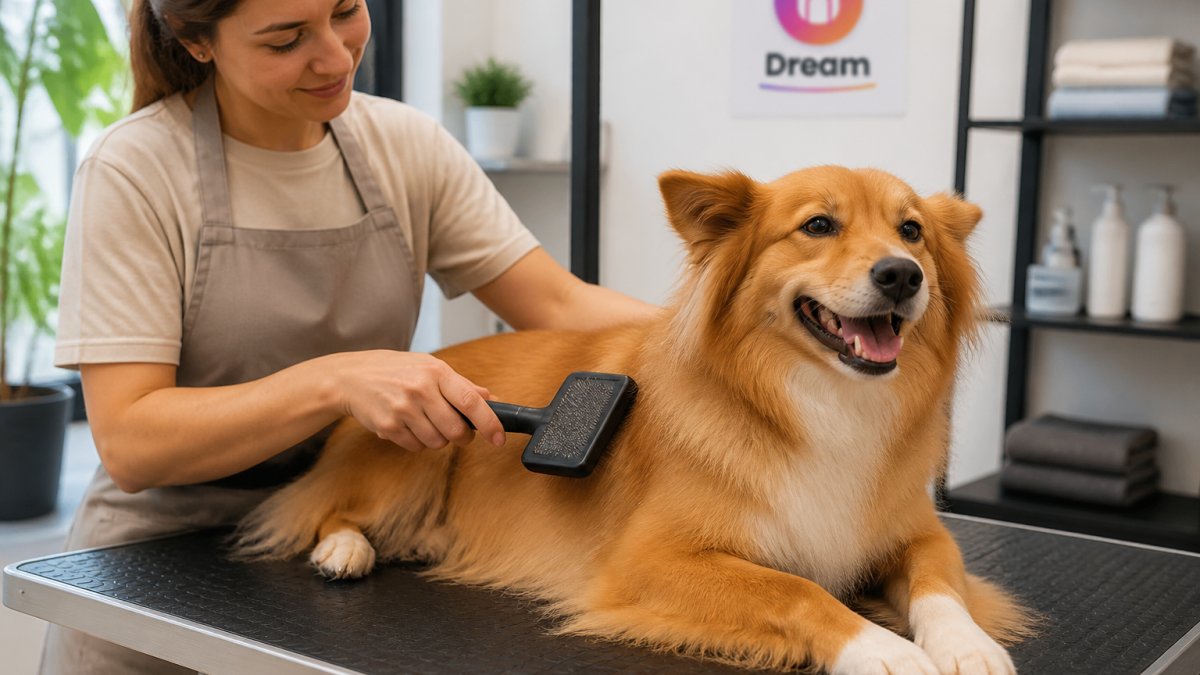
Start with a calm dog in a comfortable position, a grooming table or your lap, depending on size. Let your dog sniff the brush first so it isn't a surprise.
Brush in the direction of hair growth. Light to medium pressure is all you need, you're gently removing loose hair and tangles, not scrubbing the skin. If the brush leaves red marks or your dog flinches, you're pressing too hard.
Work systematically from head to tail. Divide longer coats into smaller sections and brush each thoroughly before moving on, using your free hand to hold the skin taut so the brush doesn't pull.
Working Through Tangles and Mats
If you find a mat, don't force the brush through it. Use your fingers or a mat splitter to gently separate the mat into smaller pieces, then brush through each piece from the tip toward the skin.
Work slowly and keep the skin held taut so the mat doesn't pull. Forcing a brush through a mat hurts and can damage healthy hair.
Stop Signals to Watch For
Stop if your dog shows signs of discomfort. Yelping, flinching, trying to move away, lip licking, or a tucked tail means you're using too much pressure or hitting a sensitive area. Give your dog a break and try again later.
When Brushing Isn't Enough
Some mats are too tight for at-home grooming. If a mat is close to the skin or your dog is in pain, stop and see a professional groomer. Severely matted coats sometimes need professional de-matting or shaving to prevent skin damage; forcing mats out at home can cause injury and stress.
Dogs with ear infections, skin infections, or open wounds need veterinary attention before grooming. Brushing can make these conditions worse.
Professional groomers have the tools and experience for difficult coats and can spot health issues you might miss.
Hygiene and Brush Maintenance
A dirty brush can spread dirt and oils back onto your dog. After each session, remove trapped hair from the bristles. Wash brushes with mild soap and warm water every few weeks, and let them dry completely before use.
Replace brushes when the pins or bristles are bent, missing, or worn, a damaged brush can scratch skin or fail to reach the coat. Keeping your tools clean and in good condition makes every session safer and more effective.
Dream Deal Shop carries grooming tools. First-time customers get 10% off their first order.
Brushing for Puppies and Senior Dogs
Young and older dogs have special grooming needs.
Puppies need early exposure to brushing so they grow comfortable with it.
Puppy coats are softer and more prone to tangling than adult coats. Brush gently and frequently to prevent mats from forming.
Senior dogs often have thinner, more sensitive skin. Use a softer brush and lighter pressure.
Check senior dogs more frequently for lumps, bumps, or skin changes. Grooming is a good time to spot health issues early.
Both puppies and senior dogs benefit from a grooming routine that's predictable and positive. Short, frequent sessions work better than long, infrequent ones.
Getting Started with the Right Tools
Choosing your first grooming brush depends on your dog's coat type. Start with one versatile tool that matches your dog's needs.
For most dogs, a slicker brush or pin brush is a good starting point.
The International Association of Canine Professionals' tool selection guide recommends matching brush type to coat texture and shedding pattern for best results.
If you have a double-coated breed, add an undercoat rake to your toolkit.
Dream Deal Shop carries several grooming options that work well for different coat types.
First-time customers at Dream Deal Shop get 10% off their first order, making it a good time to stock up on grooming essentials.
Frequently Asked Questions
Why is brushing important for dogs?
Regular brushing removes loose hair, prevents mats and tangles, and keeps your dog's coat healthy. It distributes natural oils throughout the fur, reduces shedding around your home, and allows you to spot skin issues early. Brushing also strengthens the bond between you and your dog during grooming time.
How often should you brush your dog?
Brushing frequency depends on coat type. Short-coated dogs benefit from 1-2 times weekly brushing, while long and double-coated breeds need 3-4 times per week or daily during shedding season. Curly-coated dogs require regular brushing to prevent mats. Start with a few minutes a day and adjust based on your dog's shedding and your coat goals.
What type of brush is best for my dog's coat?
Match the brush to your dog's coat type. Slicker brushes work well for long and curly coats, pin brushes suit medium to long hair, and undercoat rakes target shedding in double-coated breeds. Short-coated dogs do fine with bristle brushes or rubber grooming gloves. Self-cleaning brushes like our Self-Cleaning Pet Grooming Comb save time by releasing collected hair with a button press.
Can brushing help prevent mats in a dog's fur?
Yes, regular brushing is one of the best ways to prevent mats and tangles. Mats form when loose hair tangles with the undercoat, so removing loose hair before it knots up stops the problem. For dogs prone to matting, brush every 2-3 days using gentle strokes in the direction of hair growth. If mats do form, use a detangling comb or seek professional help.
Regular brushing keeps your dog comfortable, prevents painful mats, and catches health issues early. The right brush for your dog's coat type makes grooming faster and easier. Start with a quality tool that fits your dog's needs, and commit to a consistent routine. Your dog's coat, and your furniture, will thank you.