


Best Budget Friendly Yoga Accessories 2026: Top Picks
Table of Contents
- Why Budget Yoga Accessories in 2026 Are Better Than Ever
- Quick Comparison: Best Budget Yoga Accessories at a Glance
- Best Yoga Props for Beginners: What You Actually Need
- Budget Yoga Mat: Cushioning, Grip, and What to Skip
- Yoga Blocks for Beginners: Support, Alignment, and Flexibility
- Yoga Strap Benefits: Reach, Traction, and Daily Practice
- Complete Your Kit: Towels, Bottles, and Recovery Tools
- Total Cost of a Beginner Setup and Value Over Time
- Frequently Asked Questions
Last Updated: October 9, 2026
Why Budget Yoga Accessories in 2026 Are Better Than Ever
Building a home yoga setup with the best budget friendly yoga accessories 2026 has to offer no longer means spending a fortune. First-time customers get 10% off your first order.
The real shift is materials. Latex-free and recycled options now appear at entry-level prices, not just in premium ranges. That means beginners can buy a full kit without gambling on quality.
Quick Comparison: Best Budget Yoga Accessories at a Glance
Here is how the core pieces compare, so you can scan the whole kit in seconds.
| Accessory | Typical Price Band | Best For | Skip If |
|---|---|---|---|
| Yoga mat | Low | Daily practice, cushioning | You only do restorative floor work |
| Yoga blocks (pair) | Low | Alignment, flexibility | You have full floor reach already |
| Yoga strap | Low | Tight hamstrings, reach | You're already very flexible |
| Resistance bands | Low | Strength, warm-ups | You want weights instead |
| Towel | Low | Hot yoga, sweat grip | You practice in a cool room |
| Water bottle | Low | Hydration, portability | You keep a glass nearby |
| Massage stick | Mid | Recovery, muscle relief | You never get sore |
Most beginners only need the first three. Everything after that is comfort, not requirement.

Best Yoga Props for Beginners: What You Actually Need
The best yoga props for beginners are a mat, a pair of blocks, and a strap. Those three cover cushioning, alignment, and reach. Everything else is optional.
A common mistake is buying ten items before your first class. In practice, most people use three props consistently and ignore the rest. Start small, then add pieces as your practice tells you what's missing.
The Four Core Props Every Beginner Should Own
- Mat: your base for grip and cushioning
- Blocks: bring the floor closer when you can't reach
- Strap: extend your arms for tight shoulders and hamstrings
If you practice at home, add a water bottle. If you get sore afterward, add a massage stick. That's the whole kit.

Budget Yoga Mat: Cushioning, Grip, and What to Skip
A budget yoga mat is worth buying when it balances thickness, grip, and material. Get the thickness wrong and you'll feel unstable in standing poses or sore in seated ones. Get the material wrong and you'll slide, smell rubber for weeks, or react to latex.
Here's the practical breakdown most roundups skip.
Thickness: What the Numbers Actually Mean
- 1-3 mm (travel mats): fold or roll tiny, great for studio classes and packing, but offer almost no knee or wrist cushioning. Best for experienced practitioners on hard studio floors.
- 4-5 mm (the sweet spot): enough cushioning for daily home practice without wobbling in Warrior or Tree. This is the range most beginners should start in.
- 6-8 mm (comfort mats): plush for restorative work, yin, and sensitive knees, but the extra foam makes balance poses harder because your feet sink and the mat compresses unevenly.
A common pattern is beginners buying the thickest mat they can find, then discovering it's the worst one for balance. If you only buy one mat, aim for the 4-5 mm range and add a folded blanket under your knees for restorative days.
Material: PVC, TPE, Natural Rubber, Cork
- PVC: cheapest, densest, longest-lasting, but not biodegradable and can carry a plastic smell for the first week or two. Air it out before first use.
- TPE: latex-free, lighter than PVC, recyclable in some municipal streams, and now common at entry-level prices. Slightly less durable than PVC under heavy daily use.
- Natural rubber: excellent dry and wet grip, latex-based, so not suitable if you have a latex allergy. Heavier to carry.
If you have a latex sensitivity, look for TPE or PVC and confirm the label says latex-free. If you sweat heavily, cork or a textured TPE surface beats a smooth PVC mat every time.
Grip: Dry vs Sweaty Practice
Grip is not one property. A mat that holds beautifully in a dry vinyasa can turn into a slip-and-slide in a heated room. Two things fix this without buying a specialty mat:
- A quick-drying towel laid over the mat. This is the cheapest hot-yoga upgrade and it doubles as a hygiene layer in shared studios.
- A short break-in period. Most new mats have a manufacturing film that makes them slick for the first few sessions. Wipe with a damp cloth and use it a handful of times before deciding it's wrong for you.
What to Skip
- Ultra-thin designer mats if you have sensitive knees or wrists.
- Extra-thick foam mats if your practice includes balance poses.
- Specialty heated-room mats if you're not yet sure you'll stick with hot yoga, a towel over a standard mat gets you most of the way.
Care That Makes a Cheap Mat Last
Wipe after every sweaty session, air it fully before rolling, and store it out of direct sun (UV breaks down foam and rubber). Avoid harsh cleaners on cork and natural rubber. A well-cared-for budget mat in the 4-5 mm range can offer good value for regular home practice.
Yoga Blocks for Beginners: Support, Alignment, and Flexibility
Yoga blocks for beginners are the fastest way to improve alignment without forcing your body. They raise the floor so your hands and hips can rest where they actually land. That support lets you hold poses longer and build flexibility gradually.
Buy two, not one. Most poses that use a block use a pair, and mismatched heights feel awkward.
Yoga Strap Benefits: Reach, Traction, and Daily Practice
The main yoga strap benefits are reach and control. A strap extends your arms so you can work on flexibility in tight hamstrings and shoulders without rounding your back. It also helps with traction in seated forward folds and supine stretches.
For daily practice, a strap is the single cheapest upgrade to your range of motion. It weighs almost nothing, so it travels well.
NHS guidance on stretching and flexibility
Complete Your Kit: Towels, Bottles, and Recovery Tools
The extras turn a mat into a routine. A quick-drying bamboo fibre towel handles sweat, a leak-proof bottle keeps you hydrated, and a massage stick eases sore muscles after class.
Different Resistance Bands Yoga Band Fitness Exercise Training Hip Tension Band →
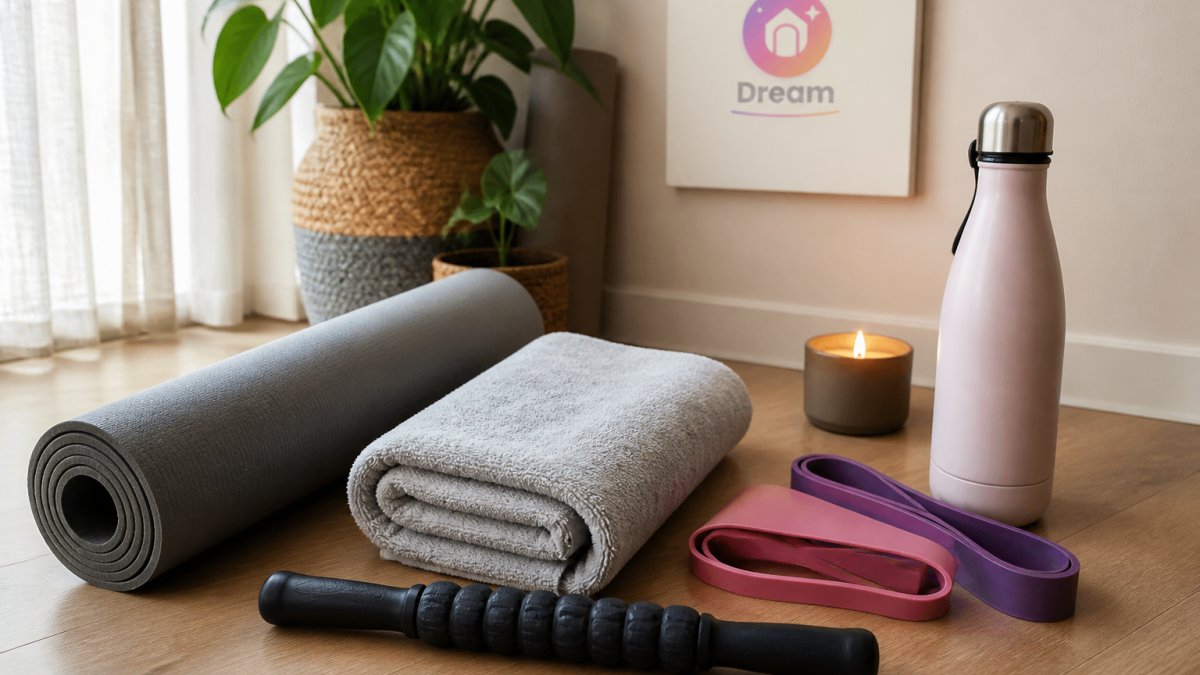
Our picks for rounding out the kit:
- Bamboo Fibre Towel in hand or bath size, soft and quick-drying
- Gradient Water Bottle in 600ml, 750ml, or 1000ml, BPA-free and leak-proof
- Gear Massage Stick for deep muscle relaxation after practice
- Resistance Bands for strength work and warm-ups
- Flower-Shaped Scented Candles in lavender or lemongrass for a calmer room
If you'd rather browse the whole range in one place, our Home Essentials collection covers the practical bits, towels, bottles, and storage, while the Candles & Aroma section is where the ambience pieces live.

Total Cost of a Beginner Setup and Value Over Time
Most budget roundups list items but never add them up. That's the gap this section fills: what a complete beginner kit actually looks like, how to think about value over years rather than weeks, and which pieces change depending on how and where you practice.
The Three-Tier Beginner Kit
Think in tiers, not in one big shopping list. Add the next tier only when your practice asks for it.
Tier 1, The essentials (mat, two blocks, one strap) Covers cushioning, alignment, and reach for nearly every beginner class and home session.
Tier 2, The comfort add-ons (towel, water bottle) Matters most if you sweat heavily, practice in a heated room, or take longer sessions.
Tier 3, The recovery and ambience extras (massage stick, resistance bands, candles) Nice-to-have.
Value Over Time: Cost-Per-Use, Not Sticker Price
A cheap item you replace every few months is more expensive than a slightly better item that lasts years. The way to judge budget gear is cost-per-use:
- A mat used three times a week for two years is roughly 300 sessions. Even a modest mat becomes a very small per-session cost.
- Blocks and straps rarely wear out. They are effectively one-time purchases for most home practitioners.
- Towels and bottles take the most abuse (washing, dropping, travel), so buy those for durability and easy cleaning rather than for looks.
This is why "budget-friendly" and "cheap" are not the same thing. Budget-friendly means low cost per use over a realistic lifespan.
Care and Storage: The Cheapest Durability Upgrade
- Wipe your mat after sweaty sessions and let it dry fully before rolling. Storing it damp is the fastest way to shorten its life.
- Wash towels and fabric straps on a gentle cycle and air-dry where possible.
- Keep blocks and massage sticks out of direct sun; UV degrades foam and some plastics.
Match the Kit to Your Practice Style
One kit does not fit every practice. Use this to decide where to spend and where to save:
- Hot or sweaty yoga: prioritize a quick-drying towel and a grippy mat surface. Cork or textured TPE outperforms smooth PVC once you're damp.
- Restorative and yin: prioritize cushioning. A thicker mat, a bolster or firm cushion, and a blanket matter more than grip.
- Travel and studio classes: prioritize weight and packability. A thin travel mat plus a lightweight strap fits in a carry-on; leave the thick comfort mat at home.
Accessibility, Sizing, and Sensitivities
Budget gear can still be inclusive if you check three things:
- Latex allergies: choose TPE or PVC mats and confirm the label says latex-free. Natural rubber and many cork-on-rubber mats contain latex.
- Joint sensitivity: thicker mats and blocks reduce load on knees, wrists, and hips. Blocks are the cheapest way to make poses accessible without forcing range.
- Body size and reach: longer straps and a second pair of blocks help practitioners with longer limbs or limited floor reach. Straps are inexpensive and the single easiest fix for reach problems.
A Simple Buying Checklist
- Does it support my body in the poses I actually do?
- Can I clean and store it easily?
- Would I replace it if it wore out?
If the answer to all four is yes, it's the right buy. First-time customers at Dream Deal Shop get 10% off their first order, which is a straightforward way to stretch a starter budget further without compromising on the pieces that matter.
Frequently Asked Questions
What yoga accessories do beginners actually need?
Beginners need four core items: a mat, two blocks, a strap, and a towel. A budget yoga mat with 4-6mm cushioning handles most daily practice. Blocks help with alignment when flexibility is limited, and a strap extends your reach in poses you cannot hold yet. A towel keeps sweaty hands from slipping. Everything else, like bolsters or candles, is optional and can wait until you know your practice style.
Are yoga blocks worth buying for beginners?
Yes. Yoga blocks for beginners solve the most common problem: not being able to reach the floor in standing poses or support your back in restorative ones. Two foam or cork blocks let you modify lunges, triangle pose, and bridge without straining. They can be a valuable addition to your practice as your flexibility improves.
What should I look for in a budget yoga mat?
Look for 4-6mm thickness for joint cushioning, a textured surface for dry grip, and a latex-free or rubber-free material if you have sensitivities. Avoid mats under 3mm unless you only do restorative practice. A budget yoga mat that rolls and unrolls flat, wipes clean, and does not slide on hardwood covers everything a beginner needs. Heavier mats grip better but are harder to carry.
Do I need a yoga strap to practice yoga?
Not strictly, but yoga strap benefits show up fast. A strap lets you reach your feet in forward folds, open your shoulders in chest stretches, and hold poses longer without straining. If you cannot touch your toes or clasp your hands behind your back, a strap bridges that gap. It also doubles as a carry aid for your mat, which makes it one of the most versatile cheap accessories you can buy.
How can I build a basic yoga kit without buying unnecessary gear?
Start with a mat, two blocks, and a strap. Add a towel if you sweat heavily and a water bottle for longer sessions. Skip bolsters, blankets, and specialty props until you know which styles you practice most. A resistance band set also earns its place because it supports strength work, warm-ups, and recovery. Total spend stays low, and every item gets used weekly.
The hard part isn't finding cheap gear. It's finding gear that lasts past the first month. Dream Deal Shop curates daily drops of wellness and lifestyle products at real discounts, with hand-picked items that sell out and don't come back. Start with our Home Essentials range, and remember that first-time customers get 10% off their first order. Shop today's drop now.