


Are Vacuum Storage Bags Worth It for Seasonal Clothes?
Table of Contents
- Do Vacuum Storage Bags Actually Save Space?
- How Vacuum Storage Bags Work and What They Protect
- Clothes That Should Not Be Vacuum Sealed
- How Long to Store Clothes in Vacuum Bags Safely
- How to Prepare Clothes for Storage in Vacuum Bags
- Vacuum Bags vs Storage Bins for Clothes: Which Wins?
- The Verdict: When Vacuum Storage Bags Are Worth It
- Frequently Asked Questions
Last Updated: October 19, 2026
Do Vacuum Storage Bags Actually Save Space?
Vacuum storage bags work by removing air from sealed compartments, which reduces the volume occupied by soft items like clothes, bedding, and blankets. The compression can reclaim significant closet or under-bed space, but the actual savings depend on what you're storing and how tightly you pack them.

Most vacuum storage bags claim to reduce bulk by compressing items down. The real question is whether that space savings justifies the cost and the potential trade-offs. If you're storing seasonal clothes in a tiny apartment or trying to fit winter coats into a suitcase, the answer is often yes. If you have plenty of closet space already, vacuum bags may be overkill.
The compression works best on bulky, soft items: down jackets, comforters, pillows, and sweaters. Denim, structured garments, and items with zippers don't compress as dramatically. Think of it this way: you're trading convenience and temporary space gains for the risk of long-term fabric stress.
At Dream Deal Shop, we stock vacuum storage bags in multiple sizes to fit different needs. Our Vacuum Storage Bags with Hand Pump come in five sizes, from extra-small to extra-large, so you can match the bag to your items. First-time customers get 10% off their first order.
How Vacuum Storage Bags Work and What They Protect
A vacuum storage bag seals with a double zip and one-way valve. You fill it with clothes or bedding, seal the zip fully, then use a vacuum cleaner or hand pump to extract the air. The one-way valve prevents air from leaking back in, keeping the bag compressed for weeks or months.

The triple-seal design (double zip plus valve) is the key to protecting contents. It blocks dust, moisture, insects, and mold from entering the bag. This matters if you're storing seasonal clothes in a damp basement or an attic prone to pests.
Hand pumps are convenient because they work anywhere, no vacuum cleaner needed. Our Vacuum Compression Storage Bags with Hand Pump include a pump and are built with thickened material to resist punctures during repeated use.
For maximum convenience, electric pumps save time and effort. Our Travel Vacuum Storage Bag with Electric Air Pump features a rechargeable pump and IP67 airtight zipper rated for durability. It's ideal if you're packing and unpacking frequently or storing multiple bags.

Clothes That Should Not Be Vacuum Sealed
Most guides give you a short 'don't do this' list. A more useful approach is fabric by fabric: how each material responds to compression, how well it recovers, and what to do instead.
Down and feathers (jackets, comforters, pillows). Down is the best-case scenario for vacuum bags. The clusters compress dramatically and loft back up when aired.
Heavy wool (coats, thick knits). Heavy wool compresses well and recovers reasonably, but fine merino and cashmere are a different story. Prolonged compression can flatten the loft and, in fine gauges, encourage felting.
Cotton and linen. Sturdy cotton tolerates compression, but natural fibers crease sharply along fold lines. Linen is the worst offender. Roll rather than fold these items, and expect to steam or iron after unpacking.
Silk, lace, and fine knits. These are poor candidates. Compression sets creases that can be permanent, and delicate trims can snag on the bag material.
Leather and suede. Leather needs air circulation to stay supple. Sealing it can trap residual moisture and encourage mold or mildew on the surface. Hang leather jackets and use breathable garment bags.
Structured garments (blazers, tailored coats, stiff denim). Compression flattens shoulder structure and creates stubborn creases. Hang these or store them flat in a breathable container.
Embellished items (beading, sequins, embroidery). Pressure from compression can snag or tear trims. If you must store them compressed, place acid-free tissue over the embellished side and keep compression light.
Elastic and stretch items. Waistbands, cuffs, and elastic panels can lose stretch after months of tight compression. Store these loosely folded in bins.
A simple rule: if the item has structure, delicate trim, or fine natural fibers, skip the vacuum bag. If it's bulky and resilient, down, heavy wool, sturdy cotton, synthetics, compression is usually safe for a seasonal cycle.
How Long to Store Clothes in Vacuum Bags Safely
There's no single safe number, but a practical schedule helps. Most people store seasonal clothes for one cycle, roughly four to six months, and that window works for resilient fabrics. The variables that matter are fabric type, storage conditions, and how tightly you compressed the item.
A realistic unpacking schedule:
- Down, heavy wool, sturdy cotton, synthetics: one seasonal cycle (about 4-6 months) is generally fine. Unpack, air, and refold before the next season.
- Fine wool, cashmere, silk blends: shorter windows are safer. Unpack and air these every 2-3 months if they stay compressed.
- Delicate or structured items: don't compress them at all. Use breathable storage instead.
Storage conditions change the math. A cool, dry closet is the safest environment for long-term compression. A damp basement or a hot attic adds moisture and temperature swings that accelerate creasing and raise mold risk. If your storage area is humid or unheated, shorten the window and check bags periodically.
Watch for these signals to unpack early:
- The bag has partially re-inflated, meaning the seal is failing and air or moisture is getting in.
- You notice condensation or a musty smell when you open the storage area.
- The item feels stiff or has sharp creases along fold lines.
After unpacking, air before wearing. Hang or fold items loosely and let them sit for a day. This lets fibers relax and wrinkles ease out naturally. For down, shake and loft the item. For wool, a light steam helps.
Vacuum Storage Bags with Hand Pump | 5 Sizes, 1–5 Pack | Space Saver Bags →
If you store the same wardrobe year after year, treat the unpacking as part of the seasonal routine: unseal, air, inspect for pests or moisture, then repack or move to breathable storage. That habit matters more than any single month count.
How to Prepare Clothes for Storage in Vacuum Bags
Start by cleaning everything. Dirt, sweat, and oils attract insects and can set stains over time. Wash or dry-clean items, then let them dry completely before packing. Any residual moisture creates mold risk.
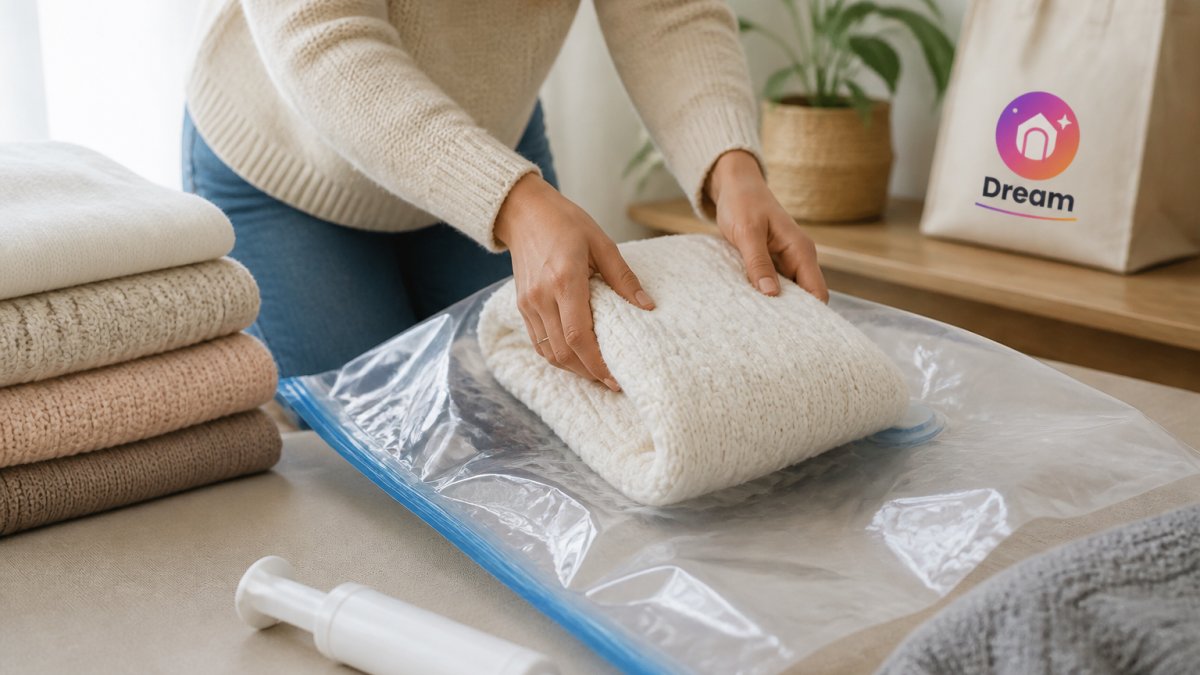
Fold or roll items loosely rather than stuffing them in haphazardly. Neat packing means more efficient compression and fewer creases. Don't overstuff the bag, leave some room so the seal closes smoothly and the valve works properly.
Use acid-free tissue paper between delicate items if you're storing them together. This adds a tiny layer of protection against friction and creasing.
Seal the zip all the way. A partially sealed bag will leak air gradually, and your compression won't hold. Press the seal with your fingers to ensure it's fully closed along the entire edge.
Attach the pump securely to the valve. If it's loose, air will escape and you'll waste effort. Compress slowly and evenly, rushing can damage the valve or cause the bag to wrinkle unevenly.
Label each bag with a permanent marker: what's inside and the date you sealed it. This helps you remember what you stored and when, so you don't accidentally leave clothes compressed too long.
Vacuum Bags vs Storage Bins for Clothes: Which Wins?
| Factor | Vacuum Bags | Storage Bins | Best For |
|---|---|---|---|
| Space savings | Reduces bulk by 50-80% | Minimal compression | Tight storage areas |
| Fabric protection | Sealed against dust, pests, moisture | Breathable, but dust enters | Delicate, long-term storage |
| Setup time | 5-10 minutes per bag | Immediate | Quick, frequent access |
| Cost per bag | Reusable | Low upfront | Budget-conscious storage |
| Fabric risk | Creasing, wrinkles, elastic stress | Minimal fabric stress | Delicate garments |
| Durability | Bags wear out after repeated use | Bins last years | Frequent packing |
Vacuum bags win for space-constrained situations. If you need to fit winter coats under a bed or pack a suitcase efficiently, compression is unbeatable. They also offer better protection against dust and insects than open bins.
Storage bins win for delicate fabrics and items you access frequently. Breathable bins let air circulate, reducing mold risk. You can grab what you need without unsealing the entire bag.
The hybrid approach works too: use vacuum bags for bulky, hardy items like comforters and winter coats, and storage bins for delicate pieces or things you'll need to access mid-season.
The Verdict: When Vacuum Storage Bags Are Worth It
Are vacuum storage bags worth it for seasonal clothes? The answer depends on your situation.
They're worth it if you:
- Live in a small space with limited closet or storage room
- Store bulky items like down jackets, comforters, or pillows
- Pack frequently for travel
- Need protection from dust, moisture, and pests
- Have hardy fabrics that tolerate compression (cotton, synthetics, heavy wool)
Skip them if you:
- Have plenty of storage space already
- Store mostly delicate fabrics (silk, cashmere, lace)
- Access your seasonal clothes frequently mid-season
- Prefer minimal fabric handling and stress
- Store clothes for longer than 6 months at a time
The real value isn't just the space savings, it's the protection. A sealed vacuum bag keeps moths, dust, and humidity away from your clothes far better than an open bin or a closet corner. That protection justifies the cost for most people storing seasonal wardrobes.
Quality matters. Our vacuum storage bags use durable PA+PE material and triple-seal designs that hold up through repeated compression cycles. For first-time buyers, Dream Deal Shop offers 10% off your first order.
Start with one or two bags in the size that fits your bulkiest items, a large comforter bag or a jacket-sized bag. If you like the results, expand to a full set for your entire seasonal wardrobe.
Frequently Asked Questions
Do vacuum storage bags damage clothes over time?
Vacuum storage bags are generally safe for most fabrics when used correctly. The compression itself doesn't permanently damage clothes, but prolonged pressure can crease delicate items or those with embellishments. Natural fabrics like cotton and wool tolerate compression better than synthetics. The real risk comes from moisture trapped inside if the seal fails or if bags sit in damp environments. Keep bags in dry spaces and check seals regularly to prevent mold or mildew.
Which clothes should not be stored in vacuum bags?
Avoid vacuum sealing delicate fabrics like silk, satin, and lace, as compression can damage fibers and cause permanent creasing. Leather, suede, and faux leather can crack under pressure. Anything with beading, sequins, or embroidery risks damage to decorations. Knits with loose stitching may snag. Stick to sturdy, densely woven fabrics like denim, cotton, wool blends, and polyester for best results.
How long can seasonal clothes stay in vacuum storage bags?
For items you rotate seasonally, this timeframe works well. If you're storing something longer, check bags every few months for seal integrity and moisture. Delicate fabrics should come out sooner, ideally within 3 to 6 months, to prevent lasting wrinkles and fiber damage.
Are vacuum storage bags better than plastic bins for clothes?
Vacuum bags save significantly more space than plastic bins, which matters if you're tight on closet or under-bed room. Bins work better for delicate items and longer storage. Vacuum bags excel for seasonal rotation, travel, and maximizing space. For most households storing seasonal clothes, vacuum bags win on space efficiency, but bins are safer for fine fabrics and fragile garments.
How should you prepare clothes before vacuum-sealing them?
Always wash or dry-clean clothes before packing them; insects and mold thrive on dirt and body oils. Ensure everything is completely dry to prevent mold growth inside sealed bags. Fold items neatly to maximize space and minimize creasing. Remove any items with delicate trims or embellishments. Seal bags tightly and test the seal before storing. Label bags by season or item type so you know what's inside without opening them.
Seasonal clothing storage doesn't have to mean cluttered closets or overflowing suitcases. Vacuum storage bags solve the space problem when you choose the right type for your fabrics and commit to a reasonable storage timeline. Shop Dream Deal Shop's selection of vacuum bags with hand pumps and electric options today to secure your favorite storage solution before it sells out.