

Are Reusable Silicone Food Bags Worth It? 2026 Review
Table of Contents
- Are Reusable Silicone Food Bags Worth It? The Short Answer
- Silicone Bags vs Plastic Bags: Cost, Waste and Performance
- Silicone Food Bags for Freezer Storage
- How to Clean Silicone Food Bags (Without the Smell)
- How Long Do Silicone Food Bags Last?
- Microwave, Sous Vide and Boiling Water: What Silicone Bags Handle
- When Silicone Bags Aren't the Right Pick
- Verdict: Who Should Buy Reusable Silicone Food Bags
- Frequently Asked Questions
Last Updated: October 8, 2026
Are Reusable Silicone Food Bags Worth It? The Short Answer
Yes, for most households that cook, freeze, and pack food regularly, reusable silicone food bags are worth it.
Silicone food bags are flexible, resealable pouches made from food-grade silicone, designed to replace single-use plastic bags for storage, freezing, and cooking. They seal with a press-fit or zip closure, wipe clean, and go back in the drawer instead of the bin.
Here's what most buying guides get wrong: they sell you on the environmental angle and skip the two things that actually decide whether you'll still be using these bags a year from now. Cleaning effort and failure points.
Below, we cover freezer performance, odor removal, lifespan, and heat limits, so you can decide with real information instead of vibes.
Silicone Bags vs Plastic Bags: Cost, Waste and Performance
Silicone wins on waste, while plastic wins on upfront price and convenience. That trade-off is the whole story.
A box of disposable plastic food bags is cheap at the till. It's also gone in a few weeks, and every one of those bags is single-use plastic headed for landfill. Silicone bags cost more once, then keep working. The U.S.
Performance differs too. Plastic bags are thin, tear at the seal, and can't take heat. Silicone is thicker, holds its shape, and tolerates the freezer, microwave, and boiling water. The trade-off is weight and bulk: silicone bags don't crumple into nothing the way plastic does, so they take up drawer space.
The Break-Even Math: Cost Per Use
Cost per use is the number that matters, not the sticker price. Divide what you pay by how many times you actually use the bag, and silicone usually beats disposables with regular cooking.
Run it honestly:
- Count how many disposable bags your household goes through in a month
- Note how often you rebuy disposable bags
- Compare the reusability of silicone against a realistic reuse count
If you cook at home several nights a week and freeze leftovers, the silicone bag offers long-term value. If you use one bag a month, it may not. That's the honest answer, and most reviews skip it.
Lifecycle Environmental Impact
The environmental case for silicone is real but not infinite. Silicone is durable and replaces hundreds of disposables over its life, which is where the waste reduction comes from. It is not biodegradable, so when it finally fails, it goes to landfill like anything else.
The honest framing: one silicone bag that replaces several hundred single-use plastic bags is a clear net win on plastic waste. One silicone bag that replaces ten plastic bags is not. Reusability is the entire point, so buy fewer, better bags and actually use them.
Silicone Food Bags for Freezer Storage
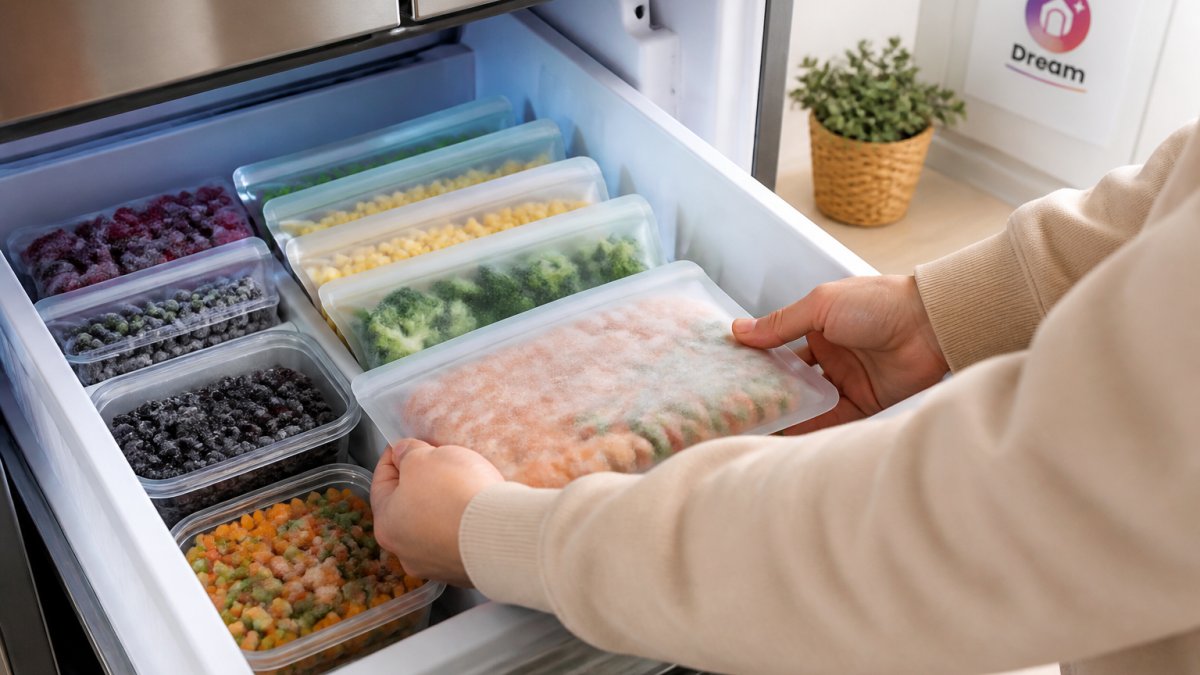
Silicone food bags handle freezer storage well, and they beat rigid containers on space. They lie flat, stack, and squeeze into gaps that tubs can't.
Freezer storage is where silicone earns its keep. Fill the bag, press out the air, seal it, and lay it flat to freeze. Flat bags thaw faster than a solid block of frozen stew, and they organize a drawer far better than a pile of mismatched tubs.
A few practical notes from daily use:
- Leave headroom. Liquids expand when they freeze, and an overfilled bag splits at the seam.
- Freeze flat first, then stack upright once solid.
- Label with a marker or tape. Silicone wipes clean, so nothing sticks permanently.
- Keep strong-smelling foods in dedicated bags. More on that below.
Freezer Burn, Stacking and Thawing
Freezer burn comes from air, not from cold.
Thawing is where silicone pulls ahead. A flat-frozen bag defrosts in the fridge overnight far more evenly than a dense container.
For produce specifically, silicone bags aren't the only tool. Our 6-Piece Fridge Produce Containers with Drain Baskets & Sealed Lids solve the opposite problem: berries and greens that go soggy from trapped water.

How to Clean Silicone Food Bags (Without the Smell)
Wash silicone bags by hand with hot water and dish soap, then let them air dry fully open. That routine prevents most odor problems before they start.
The smell complaints you read online almost always trace back to one mistake: sealing a damp bag. Moisture plus no airflow equals trapped odor, and once it sets in, it takes real effort to shift.
How to clean silicone food bags, step by step:
- Empty and rinse immediately after use. Don't let residue sit overnight.
- Wash with hot water and grease-cutting dish soap, working the corners.
- Turn the bag inside out and scrub the seal track, where gunk hides.
- Rinse thoroughly. Soap residue holds onto smell.
- Prop the bag open over a rack or a bottle brush so air circulates inside.
- Dry completely before sealing or storing.
Dishwasher, Boiling Water and Odor Removal
Most silicone bags are dishwasher safe on the top rack, which handles routine cleaning fine. For stubborn odors, boiling water is the reset button.
Try these in order, from gentlest to strongest:
- Baking soda paste. Scrub it in, let it sit, rinse.
- Boiling water soak. Submerge the bag in boiling water for several minutes. Silicone handles heat well, so this is safe for the material.
- White vinegar soak. Good for lingering savory smells.
- Lemon juice. Works on lighter odors and leaves a cleaner scent.
For covering bowls and containers, our Silicone Stretch Lids - 6-Piece Reusable Food & Bowl Covers do the same job in lid form, and they rinse clean in seconds.
Silicone Stretch Lids – 6-Piece Reusable Food & Bowl Covers →

How Long Do Silicone Food Bags Last?
A well-made silicone bag lasts years with normal use, often far longer than the plastic bags it replaces. Lifespan depends on thickness, how you clean it, and how roughly you handle the seal.
Two things kill silicone bags early. Cheap, thin material that tears at the corners, and heat abuse, like pressing a bag directly against a hot pan or a dry heat source. Normal microwave and boiling-water use is fine. Direct flame or a dry hot element is not.
Signs it's time to replace a bag:
- The seal no longer closes or pops open in the freezer
- Cracks or splits at the corners
- A permanent odor that survives a boiling-water soak
- Sticky or tacky surface texture
Buy thicker bags and treat them reasonably, and you'll replace them rarely. That long life is exactly what makes the cost-per-use math work.
Microwave, Sous Vide and Boiling Water: What Silicone Bags Handle
Silicone bags handle microwave reheating, boiling water, and sous vide cooking, which is more than any plastic bag can claim. That range is the strongest practical argument for them.
Microwave safe. Reheat leftovers right in the bag. Leave the seal open so steam can escape, and you skip dirtying another bowl.
Boiling water. Drop a sealed bag into a pot to reheat. Silicone takes the heat without leaching or melting.
Sous vide. This is where silicone shines.
Food safety. Food-grade silicone is made for contact with food and doesn't carry the concerns tied to single-use plastics. The U.S.
One caveat: not every bag is rated for every use. Check the manufacturer's stated heat range before you push it.
When Silicone Bags Aren't the Right Pick
Silicone bags are the wrong choice if you rarely cook, hate hand-washing, or need a single-use solution for messy raw meat. Being honest about that helps you make the right choice.
Skip silicone if:
- You use one or two bags a month. They may not be the most practical choice.
- You refuse to hand-wash. Dishwasher-only use wears bags out faster and odor builds.
- You're storing raw meat juices. Dedicated disposable bags are more hygienic for that job.
- You need a low-cost option, right now. Disposable bags are a lower upfront cost today.
There's also the drawer-space issue. Silicone doesn't flatten to nothing, so a tiny kitchen with no spare room may not have a home for them.
For pantry items rather than fridge and freezer, our Sealed Kitchen Storage Jars Set - Airtight Plastic Canisters for Grain, Spices & Pantry keep dry goods moisture-free, which is a different job from what a silicone bag does well.

Verdict: Who Should Buy Reusable Silicone Food Bags
Buy them if you cook often, freeze leftovers, and pack food to go. Skip them if you're a light user who won't hand-wash. That's the whole verdict.
Here's how the options stack up:
| Buyer Type | Best Choice | Why |
|---|---|---|
| Frequent cook, freezes leftovers | Silicone bags | Break-even arrives fast, handles freezer and microwave |
| Sous vide regular | Silicone bags | Goes straight into the water bath |
| Light user, 1-2 bags a month | Disposable bags | Break-even never arrives |
| Raw meat storage | Disposable bags | More hygienic for juices |
| Produce that goes soggy | Drain-basket containers | Bags don't solve trapped moisture |
| Bowl and container covering | Silicone stretch lids | Same reusable logic, lid form |
One more angle most reviews miss: silicone bags aren't a replacement for every plastic bag in your kitchen. They replace the ones you use constantly.
The European Commission's guidance on single-use plastics is a useful reference if you want to understand where plastic-bag rules are heading, since that direction shapes what's worth buying now.
The real question isn't whether silicone bags are good. At Dream Deal Shop, we stock practical kitchen gear like our reusable stretch lids, drain-basket produce containers, and airtight pantry jars, all at real discounts, and first-time customers get 10% off your first order.
Frequently Asked Questions
Are reusable silicone food bags worth the investment?
It depends on how often you'd otherwise use disposable bags. Silicone food bags are a larger upfront investment, but a single bag can replace hundreds of single-use plastic bags over its life. If you pack lunches, freeze leftovers, or meal prep weekly, they offer significant value. If you rarely store food, they may not be the most practical choice. Their value becomes clear once you've reused one bag enough times to outweigh the disposables you'd have thrown away.
How do you clean reusable silicone food bags?
Turn the bag inside out, wash it with warm water and dish soap, then scrub the corners where residue collects. Rinse well and air dry upright so water drains out. For stubborn smells, soak the bag in a baking soda and warm water solution, or run it through the dishwasher on the top rack if the manufacturer allows it. Avoid abrasive sponges, which can scratch the silicone surface and trap odors over time.
Can you use silicone food bags in the freezer?
Yes, silicone food bags for freezer use are one of their strongest applications. Silicone stays flexible at low temperatures, so bags don't crack the way stiff plastic can. Freeze bags flat for stackable storage, leave a little headspace for expansion, and press out excess air before sealing. Thaw in the fridge overnight or under cool running water. Avoid direct high heat when thawing, which can warp the seal over time.
How long do reusable silicone food bags last?
With regular use and proper care, most silicone food bags last anywhere from one to several years. Lifespan depends on bag thickness, seal quality, and how you treat them. Signs it's time to replace one: the seal no longer closes tightly, the silicone tears at the corners, or a persistent smell won't wash out. Hand washing and avoiding sharp utensils inside the bag both extend usable life significantly.
What foods should you avoid storing in silicone bags?
Silicone absorbs strong odors and pigments over time, so turmeric-heavy curries, fish, and garlic-heavy sauces can leave lingering smells. Very oily foods may also be harder to fully wash out. If you store these often, keep a dedicated bag for them. Avoid raw meat juice left too long, and never use silicone bags for high-acid foods over long periods without thorough cleaning afterward. Rotation and prompt washing solve most of these issues.