


Are Eco-Friendly Kitchen Sponges Worth It for Beginners?
Last Updated: October 30, 2026
Quick Summary
Eco-friendly sponges are worth it for beginners because they are made from plant-based materials like cellulose, coir, loofah and sisal that break down far faster than plastic. They cost little to try, last a few weeks with proper care, and remove a daily source of plastic waste from your kitchen.
- Cellulose is the most heat-tolerant natural sponge and the most home-compost-friendly option.
- Rinse, wring firmly and stand your sponge upright after every use to prevent odor.
- Skip the microwave trick on natural sponges; use vinegar soaks and dishwasher cycles instead.
- Replace any sponge that still smells after sanitizing, frays, or shows dark spots.
- Check the disposal instructions before buying, since some sponges only break down industrially.
Table of Contents
- Why Beginners Are Switching to Eco-Friendly Sponges
- Eco-Friendly Kitchen Sponge Alternatives: Materials That Actually Work
- Biodegradable Dish Sponges vs Synthetic Sponges: An Honest Comparison
- How to Clean Reusable Kitchen Sponges So They Last
- Compostable Kitchen Sponge Disposal: A Simple End-of-Life Guide
- Allergy and Hygiene Checks Before You Buy
- Pick Your First Eco Sponge From Today's Drop
- Frequently Asked Questions
Why Beginners Are Switching to Eco-Friendly Sponges
Eco-friendly sponges are cleaning tools made from plant-based or renewable materials that break down far faster than plastic ones. At Dream Deal Shop, we hear the same question from new shoppers: are they actually worth switching to? The short answer is yes, with a few caveats worth knowing before you buy.
A conventional sponge is a small piece of plastic you use for a week and then throw away. Natural options avoid that problem from the start.
That single change is why beginners are moving over. If you are still weighing other reusable swaps, our review of reusable silicone food bags shows how they compare as another beginner-friendly alternative. Not because eco sponges are trendy, but because the swap costs little and removes a daily source of plastic waste from the kitchen.
Eco-Friendly Kitchen Sponge Alternatives: Materials That Actually Work
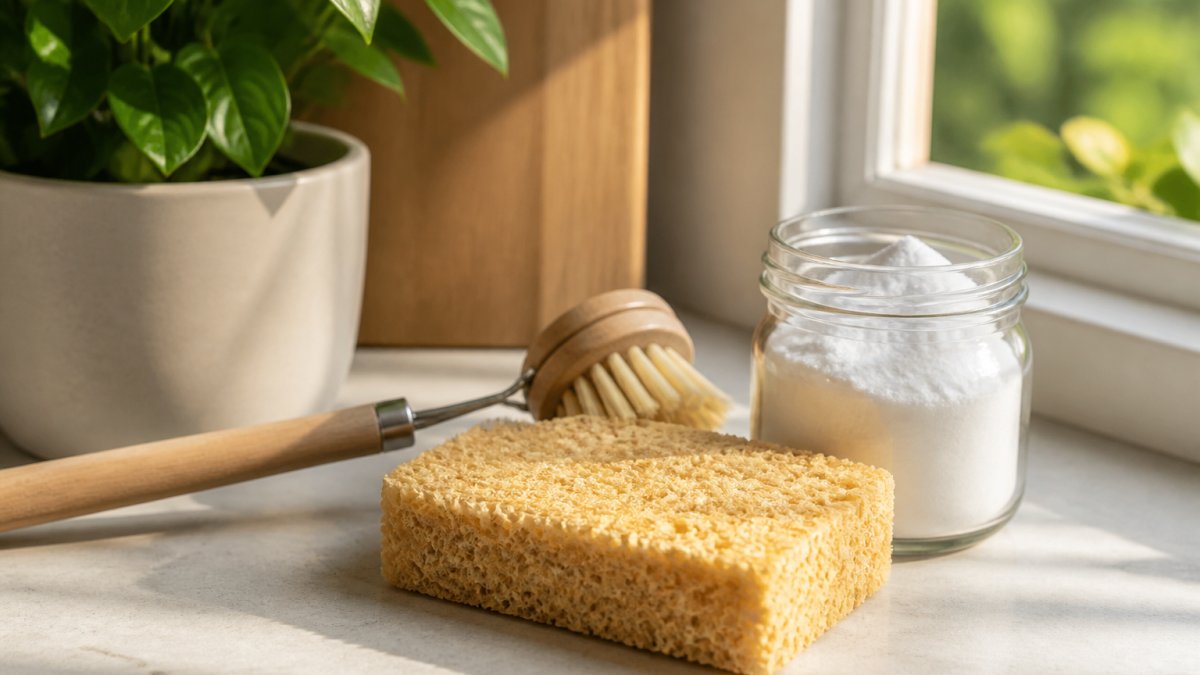
Not every natural sponge performs the same. The material decides how it scrubs, how long it lasts, and how you care for it. Here are the main eco-friendly kitchen sponge alternatives you will see on shelves.
Cellulose and Coconut Coir
Cellulose sponges come from wood pulp. They absorb water well, feel soft when wet, and handle everyday plates and glasses without scratching. Coconut coir is the opposite: coarse, stiff, and built for scouring. Many sets pair the two, with a soft side for washing and a rough side for pots.
Loofah, Sisal and Bamboo
Loofah is a dried plant fiber that works as a gentle scrubber. Sisal, from the agave plant, is tougher and holds up to heavier scouring. Bamboo shows up mostly in brushes and handles rather than sponges, and it is a sturdy, renewable option for a dish brush.
Watch out: a stiff coir or sisal pad can dull a non-stick pan's coating if you press hard. Keep those for stainless steel and cast iron, and use cellulose or loofah on delicate cookware.
Biodegradable Dish Sponges vs Synthetic Sponges: An Honest Comparison
Biodegradable dish sponges break down in home or industrial compost, while synthetic sponges are plastic-based and do not. That is the core difference, and it drives most of the trade-offs below.
| Feature | Biodegradable sponges | Synthetic sponges |
|---|---|---|
| Material | Cellulose, coir, loofah, sisal | Polyurethane foam, plastic scrub pads |
| Absorbency | Good, softens when wet | High, holds more water |
| Scrubbing power | Moderate to strong by type | Consistent, aggressive |
| Lifespan | Weeks with proper care | Weeks, then sheds fibers |
| End of life | Home or industrial compost | Landfill, sheds microplastics |
| Best for | Beginners cutting plastic waste | Heavy grease, quick jobs |
Synthetic sponges win on raw scrubbing and stay cheap. Natural ones win on waste and smell better over time because they dry out and resist odor. For most kitchens, the honest answer is that a natural sponge does the job if you maintain it. Before you buy, it also helps to know the signs of low quality discount items to avoid.
How to Clean Reusable Kitchen Sponges So They Last
Here is a material-aware routine for cleaning natural sponges.
Daily care (the part that actually prevents odor)
Rinse under warm water after every use, wring it out firmly, and stand it upright so air reaches all sides. A sponge left flat in the sink stays wet for hours, and that trapped moisture is where smell and bacteria start.
Weekly sanitization by material
This is where natural sponges differ from synthetic ones. Heat and harsh chemicals that are fine for polyurethane foam can shorten the life of plant-based fibers.
- Cellulose: The most heat-tolerant natural option. A common pattern is a short soak in a bowl of white vinegar and water, then a rinse. Many people also run cellulose through the dishwasher on a hot top-rack cycle, but check the manufacturer's care label first, since some cellulose blends are pressed with adhesives that weaken with repeated high heat.
- Loofah: Porous and slow to dry, so it needs more attention. Vinegar soaks work well; boiling is riskier because the fiber can soften and lose structure. Let it dry fully between uses, and retire it sooner than cellulose.
- Coconut coir and sisal: These are scrubbing fibers, not absorbent sponges, so they dry faster and harbor less moisture. A vinegar soak is usually enough. Avoid prolonged boiling, which can make coir brittle.
- Sponges with an attached scrub layer: Sanitize the sponge portion, but expect the abrasive layer to wear out first. If the scrub pad is a separate stitched piece, some people remove it before sanitizing to protect the bond.
When to replace, not just clean
Replace any sponge once it smells even after sanitizing, starts to fray or crumble, or develops dark spots that do not rinse away. Natural sponges typically last a few weeks with good care, which is comparable to synthetic foam but without the microplastic shedding. Rotating two sponges so one dries while the other is in use is a simple way to extend the life of both. For more practical tips, see our guide to affordable daily essentials for home.
Highly Absorbent Double-Sided Sponge Magic Cleaning Pot Rust Sponge Cleaning →
For more on getting the most from everyday items, see our tips on buying durable home essentials.
Compostable Kitchen Sponge Disposal: A Simple End-of-Life Guide
"Compostable" on a label does not mean "toss it in your backyard bin and forget it." Different plant-based materials break down at different rates and under different conditions, and some sponges are only compostable in an industrial facility. Here is how to dispose of each type without guesswork.
Home compost vs. industrial compost
Home compost piles reach lower, more variable temperatures than commercial facilities. Materials that break down quickly in an industrial system can sit for a long time in a backyard bin. As a rule of thumb:
- Cellulose is the most home-compost-friendly natural sponge material. Cut it into smaller pieces to speed breakdown and bury it in the active part of the pile.
- Loofah is a plant fiber and generally composts at home, but it breaks down slowly. Chop it up and keep the pile turned.
- Coconut coir and sisal are sturdy fibers. They will compost eventually, but they are slow. Smaller pieces and a hot, active pile help.
- Sponges bonded with a plastic scrub layer or synthetic adhesive are not fully home-compostable. Remove and bin the scrub layer first, and check the packaging, because some "plant-based" sponges use binders that only break down industrially.
If you do not compost at home
Look for a municipal compost drop-off or a community garden that accepts food-scrap-style waste. If neither is available, landfill is the fallback, and it still beats plastic: a plant-based sponge breaks down far faster than polyurethane foam and does not shed plastic microfibers while in use. The point of the swap is that the material returns to the earth rather than lingering for years.
A quick pre-purchase check
Before you buy, read the disposal instructions on the packaging. A sponge that is easy to compost at home is a better beginner pick than one that requires an industrial facility you do not have access to. That single check saves you from a well-intentioned purchase that ends up in the trash anyway.
Allergy and Hygiene Checks Before You Buy
Hygiene matters just as much. Any sponge, natural or synthetic, collects food particles and moisture. The fix is the same: rinse, squeeze, dry, and sanitize weekly. Do not keep a sponge past the point where it smells, and never use the same one for raw meat prep and dishes without sanitizing in between.
Pick Your First Eco Sponge From Today's Drop
Starting with one product is the easiest way to test the switch. Our highly absorbent double-sided cleaning sponge is a sponge with a fiber scouring pad for dishes, stoves and pots. Our highly absorbent double-sided cleaning sponge is a sponge with a fiber scouring pad for dishes, stoves and pots. It is available in 10, 30 or 50-piece packs.

If you are still weighing other reusable swaps, And if you want to stock up on everyday basics without overspending,
First-time customers get 10% off their first order, which makes trying a natural sponge even easier. Our drops are hand-picked and limited, so once an item sells out, it is gone.
Frequently Asked Questions
What is the most eco-friendly type of kitchen sponge for a beginner?
A plant-based cellulose sponge is the easiest starting point. It absorbs well, feels familiar in the hand, and breaks down far faster than a synthetic foam sponge. Pair it with a non-scratch scouring pad for tough pots. If you want extra scrubbing power, a coconut coir or sisal pad handles baked-on grease. Buy one of each, test them on your normal dishwashing load for a week, then stock up on whichever you reach for most.
Are biodegradable dish sponges as good as regular sponges?
For everyday plates, mugs and light grease, biodegradable dish sponges clean just as well. Wring them out after each use and let them dry on a rack.
How do you clean and care for a reusable kitchen sponge?
Rinse it thoroughly after every use, squeeze out the water, and store it somewhere it can air dry rather than in the sink basin. Replace it when it starts to smell or fray. For compostable kitchen sponge disposal, cut off any plastic scouring layer first, then add the natural part to your home compost.
Can compostable kitchen sponges go in a home compost bin?
Only the plant-based part. Tear off the natural section, cut it into smaller pieces to speed things up, and bin the rest. Check the listing before you buy so you know which parts are compostable and which need to go in regular waste.
The hardest part of going plastic-free in the kitchen is starting, and a single sponge is the simplest place to begin. At Dream Deal Shop, we curate daily drops of practical home goods at real discounts, with hand-picked items and limited stock so you can grab a good deal before it disappears. Browse today's drop, take 10% off your first order, and make your first eco swap a small one.
