


7 Best Budget-Friendly Air Purifiers for Pet Owners
Last Updated: October 29, 2026
Quick Summary
The best budget friendly air purifiers for pet owners prioritize a true HEPA filter for dander, a washable pre-filter for hair, and activated carbon for odor. Match the unit's clean-air delivery rate to your actual room size, and check replacement filter price and availability before buying.
- Pet odor is a gas problem, so you need activated carbon, ideally pelleted carbon.
- A washable pre-filter traps fur before it reaches the HEPA filter and extends filter life.
- Size up one room category from the manufacturer's rating for pet households.
- Multiply replacement filter price by expected changes over two years, then add purchase price.
- First-time customers get 10% off their first order at Dream Deal Shop.
Table of Contents
- Why Pet Owners Need a Budget-Friendly Air Purifier
- Quick Comparison: Best Budget Air Purifiers for Pet Owners
- How We Evaluated These Budget Air Purifiers
- Best Air Purifier for Pet Odor
- Air Purifier for Pet Hair and Dander: What to Look For
- Air Purifier Room Size and CADR: Matching a Unit to Your Space
- Air Purifier Filter Replacement for Pets: The Real Cost
- Cut Pet Hair at the Source Before It Reaches the Filter
- Frequently Asked Questions
Why Pet Owners Need a Budget-Friendly Air Purifier
Pet hair and dander settle into every corner of a home, and a good air purifier is often the first thing pet owners look for. At Dream Deal Shop, we hear the same question constantly: can you clean the air without spending a fortune? Yes, and the best budget friendly air purifiers for pet owners prove it.
The trick is knowing what actually matters. A purifier is a box with a fan, a filter, and a motor. Once you understand how those three parts handle pet dander, pet hair, and pet odor, it becomes much easier to compare one unit against another.
Below, we break down what to look for, what to skip, and how to keep total costs low over a year or more. We also show you how to cut the hair problem off at the source, which is cheaper than any filter.
Quick Comparison: Best Budget Air Purifiers for Pet Owners
Here is the short version. Match the unit to your biggest problem first, then to your room size.
| Pet problem | What to prioritize | What to skip | Budget approach |
|---|---|---|---|
| Pet odor | Activated carbon, ideally pelleted carbon | Thin carbon sheets | Buy a smaller unit and run it continuously |
| Pet hair | A washable pre-filter | Units with no pre-filter | Clean the pre-filter weekly |
| Pet dander and allergens | True HEPA filter | "HEPA-like" claims | Size up one room category |
| Large room or multiple pets | Higher clean-air delivery rate | Small desktop units | One bigger unit beats two small ones |
| Noise sensitivity | Low fan speed on quiet mode | High maximum speeds | Run low all day, boost when you leave |
The pattern is simple: odor needs carbon, dander needs HEPA, and hair needs a pre-filter you can rinse. A budget unit that nails one of these beats a fancy unit that does none of them well.
How We Evaluated These Budget Air Purifiers
A useful comparison looks at filter type, replacement-filter cost, room coverage, noise level, and how easy a unit is to live with. The cheapest unit on day one is often the most expensive after two years of filters.
A quick definition helps here. Clean-air delivery rate is the volume of filtered air a purifier moves per minute, and it is the single best predictor of whether a unit can keep up with a pet household.
We also weigh what most roundups ignore: whether replacement filters stay available and affordable. A purifier you cannot re-filter becomes a very expensive fan. If a unit's filters are hard to find, we mark it down regardless of how well it performs on paper.
Best Air Purifier for Pet Odor
Pet odor is a gas problem, not a particle problem. HEPA filters capture dander and hair, but odors pass straight through them. You need activated carbon, and more of it than a budget unit usually ships with.
Pelleted carbon outperforms thin carbon sheets because it has more surface area and lasts longer. If a listing mentions only a "carbon layer," expect to replace it more often. That is the trade-off at this price point, and it is worth knowing before you buy.
Watch out: a heavily soiled pre-filter makes any unit smell worse, because air bypasses the clogged carbon. A scented gel air freshener for sinks and drains can also help eliminate lingering pet-related smells at the source while the purifier handles the air. Rinse the pre-filter weekly in a pet home.
Air Purifier for Pet Hair and Dander: What to Look For
For hair and dander, the pre-filter is your first line of defense. A washable fabric or mesh pre-filter traps fur before it reaches the HEPA filter, which extends filter life and keeps airflow strong.
Look for three things:
- A true HEPA filter, stated plainly, not "HEPA-style" or "HEPA-like"
- A removable, washable pre-filter you can rinse in the sink
- A sealed filter housing, so air cannot sneak around the filter
Dander particles are tiny and stay airborne for hours, so continuous operation on a low setting beats an hour on high. Run the unit where your pet sleeps, and keep it a hand's width from the wall so airflow is not blocked.
Air Purifier Room Size and CADR: Matching a Unit to Your Space
Match the purifier to the room, not the whole house. A unit rated for a small room will struggle in an open-plan living area, and you will run it on high all day, which is loud and wears the filter faster. This is where budget shoppers get burned most often: an underpowered low-cost unit in a large room is not a bargain, it is a fan with a filter.
Clean-air delivery rate (CADR) is the volume of filtered air a purifier moves per minute. Compare a unit's stated room rating against your actual room, not the room you wish you had.
Use this rough guide:
Pet Grooming Brush Pet-specific Hair Cleaning Comb Applicable To Dogs Cats →
- Small room or bedroom: a compact unit is enough for one cat or a small dog.
- Living room: size up one category from the manufacturer's rating.
- Large room or multiple pets: choose the highest clean-air delivery rate your budget allows.
- Open-plan spaces: treat the space as one large room, or use two units, a single small unit will not cover it.
A bigger unit running on low can be quieter than a small unit running on high. Paying a little more upfront for clean-air capacity can be worthwhile for a pet household.
Keep the unit a hand's width from the wall so airflow is not blocked, and place it where your pet sleeps or where odor concentrates. Continuous operation on a low setting beats an hour on high, both for air quality and for filter life.
Air Purifier Filter Replacement for Pets: The Real Cost
The purchase price is only the entry fee. In a pet home, filters can clog faster, so replacement cost often decides whether a purifier stays budget-friendly. Estimating total cost of ownership over one to three years before you commit can help.
Here is a useful framework for comparing units:
- Purchase price, the entry fee, not the whole story.
- Replacement filter cost × frequency, the biggest variable. A cheap unit with pricey, hard-to-find filters is the most expensive option after two years.
- Energy use, continuous operation on low is modest for most units, but a small unit forced to run on high all day draws more than a larger unit on low.
- Pre-filter replacement, washable pre-filters cost nothing to maintain; disposable ones add up.
Replacement intervals vary by household, and filters may need changing more often when there are several pets or odor is a main concern. Add the electricity cost of continuous operation, which is modest for most units but not zero.
One practical way to compare is to multiply the replacement filter price by the number of changes you expect in two years, then add the purchase price. Filter availability matters as much as filter price.
We also weigh what most roundups ignore: whether replacement filters stay available and affordable. A purifier you cannot re-filter becomes a very expensive fan. If a unit's filters are hard to find, we mark it down regardless of how well it performs on paper.
Cut Pet Hair at the Source Before It Reaches the Filter
The cheapest filter is the hair that never reaches it. Grooming removes loose fur before it becomes airborne, which reduces dander, odor, and filter changes all at once.
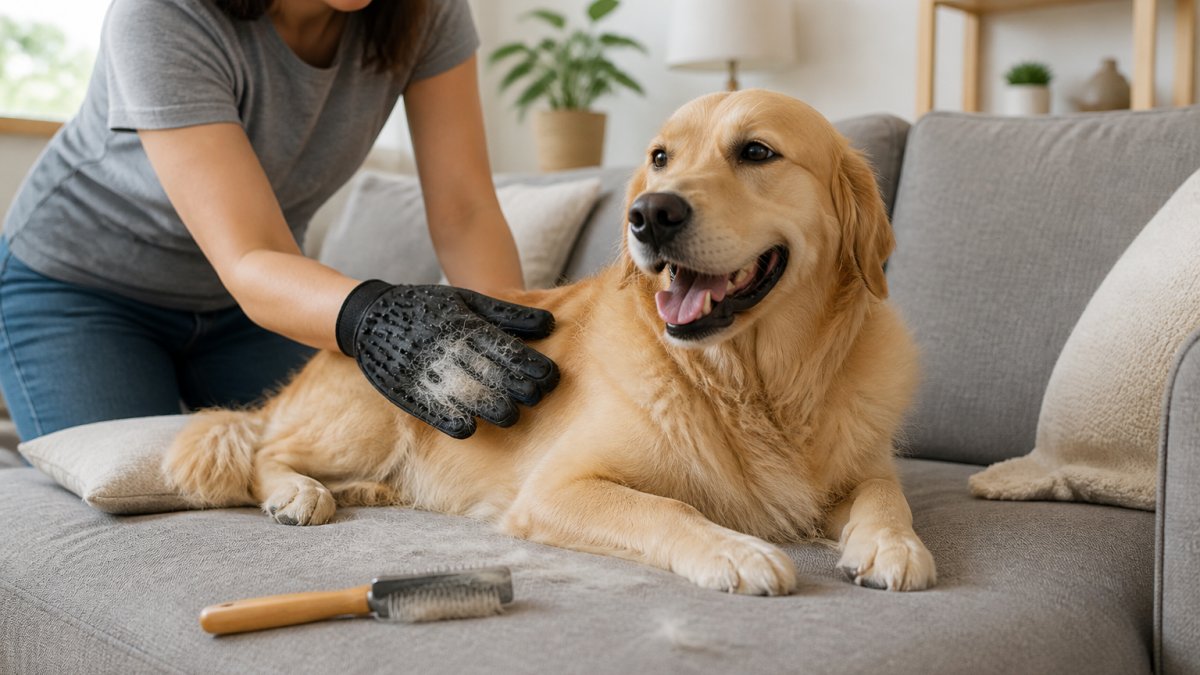
A pet grooming brush with a bottom rake comb lifts undercoat fur that a normal brush glides over. Use it outdoors or over a hard floor, and clean the teeth after each session.

For sofas, carpets, and car seats, a pair of grooming gloves picks up embedded hair that a vacuum misses. Keep them by the door and use them during TV time. Five minutes a day makes a visible difference in how often your purifier filter needs changing.
If you groom regularly, a foldable pet grooming table keeps the mess in one place and makes the routine easier to stick with. Less loose hair in the air means the purifier works less and lasts longer.
Keeping pet hair and odor under control is a routine, not a purchase. The right budget purifier handles the air, but grooming, a washable pre-filter, and a sensible filter schedule do most of the work.
Dream Deal Shop stocks practical pet grooming tools at real discounts, with new drops added regularly. First-time customers get 10% off their first order. Browse the pet grooming collection, grab a brush and a pair of gloves, and pair them with a purifier that fits your room.
Frequently Asked Questions
Which air purifier is best for pet owners on a budget?
The right pick depends on your biggest problem. For odor, look for a unit with plenty of activated carbon alongside a HEPA filter. For hair and dander, prioritize a true HEPA filter and a pre-filter you can vacuum. For a small bedroom, a compact unit with a lower CADR keeps the price down. Budget-friendly air purifiers for pet owners are the ones with cheap, easy-to-find replacement filters, because that ongoing cost decides whether you keep running it.
Do air purifiers actually help with pet odors?
They help, but only the carbon stage does the odor work. A HEPA filter captures particles, not smell molecules. Look for activated carbon or pelleted carbon in the filter stack, and check how much carbon the filter holds. Thin carbon sheets lose effectiveness quickly in a pet household. Running the unit on a higher speed for a short period after your pet comes in from outside often controls odor better than leaving it on low all day.
Can an air purifier remove pet hair and dander?
It captures what is already airborne, which is mostly dander and fine hair, not the clumps you see on the floor. A pre-filter catches the larger hair and protects the HEPA stage, and you should vacuum that pre-filter regularly. Realistically, an air purifier reduces airborne irritants but will not clear hair from carpets, sofas or bedding. Brushing your pet with a deshedding comb or a grooming glove before it sheds indoors cuts the load the filter has to handle.
How often should you replace an air purifier filter in a home with pets?
More often than the manufacturer's general guidance suggests. Pet hair and dander clog a filter faster, so check it monthly and expect to replace the HEPA stage sooner than a pet-free household would. The pre-filter is the exception: vacuum it every couple of weeks and it will last far longer. Before buying any unit, price the replacement filter and confirm it is regularly stocked, because a cheap purifier with an expensive or unavailable filter is not a budget pick.
What is the 2/3 rule for air purifiers?
It is a shorthand for sizing: aim for a unit whose clean-air delivery rate suits a room around two-thirds the size of your open space, so it can cycle the air several times per hour rather than just once. The practical version is to check the stated room coverage against your actual room size and go up a step if you have multiple pets or an open-plan layout. Undersizing is the most common reason people feel a purifier is not working.
