

Tips for Buying Durable Home Essentials
Table of Contents
- Why Durability Matters When Buying Home Essentials
- How to Choose Quality Home Products
- Best Materials for Household Items
- How to Compare Product Reviews
- New Home Essentials Checklist
- Balancing Cost and Lifespan
- Care and Maintenance for Long-Term Value
- Frequently Asked Questions
Last Updated: October 10, 2026
Why Durability Matters When Buying Home Essentials
Durable home essentials save money over time. A cheap cutting board might last six months; a quality one lasts years.
At Dream Deal Shop, our hand-picked daily drops include practical home essentials designed to perform. When you invest in durable home essentials, you're investing in your home's future.
How to Choose Quality Home Products
Spot quality by checking a few key details before you buy.
Check weight and feel
Hold the item in your hands. Quality usually feels substantial. A heavier utensil suggests dense materials and better craftsmanship. Compare similar items side by side.
Inspect joints and seams
Joints and seams reveal how well something is made. Check where handles attach, corners on containers, seams on textiles, and hinges. Tight, reinforced joints last longer.
Look for reinforced construction
Reinforced construction means extra support where stress happens. A storage jar with thick walls resists cracks. A towel with tight stitching holds up through dozens of washes.
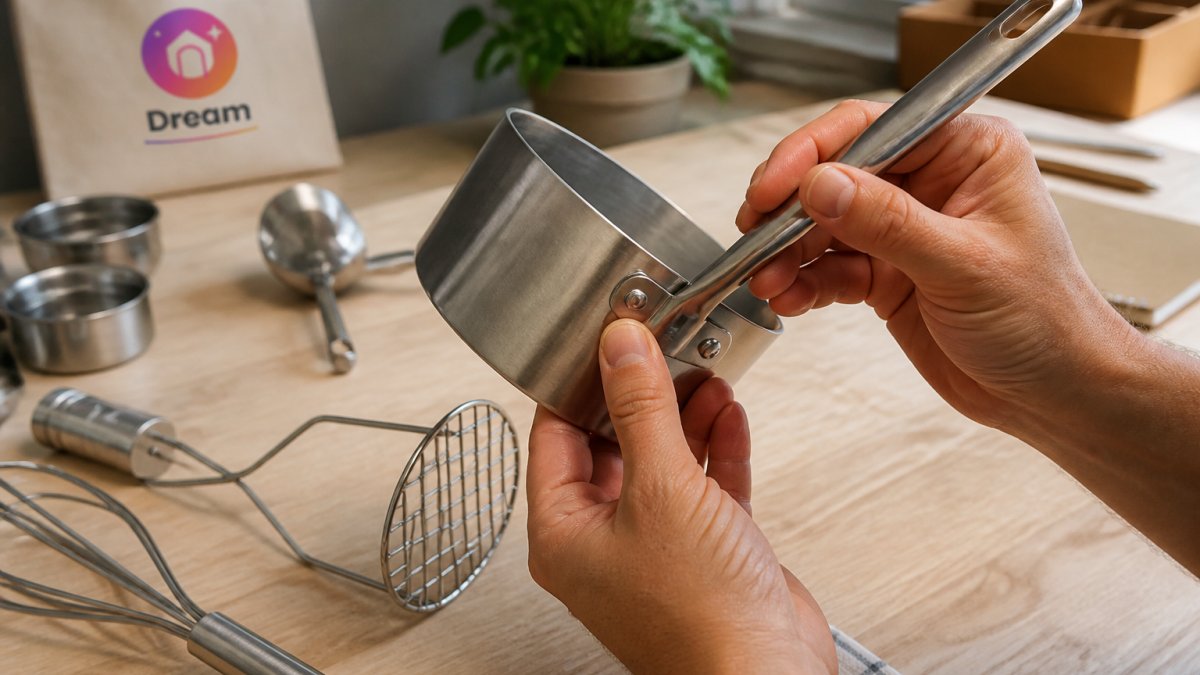
Look for:
- Double stitching on fabric items
- Reinforced corners on containers
- Thicker material in high-stress areas
Best Materials for Household Items
The right material for the job lasts longer and performs better.
Kitchen and cooking essentials
Stainless steel dominates kitchen durability, it resists rust, handles heat, and cleans easily. Look for 316 stainless steel, which is more corrosion-resistant than standard grades.
For example, the Snainy 316 Stainless-Steel Kitchen Utensil combines brushed stainless steel with solid ebony handles.

Rigid, thick plastic storage containers work best. The Sealed Kitchen Storage Jars Set uses PET material with reinforced sealing rings that resist cracking and keep food fresh longer.

Textiles and soft goods
100% cotton towels outlast synthetic blends. Look for terry weave construction, which creates loops that hold up through washing.
The Striped Cotton Hand Towels are made from 100% cotton terry. This construction means they stay soft and absorbent after years of use. Proper care extends their lifespan even further.

Storage and organization
Rigid plastic or metal works best for storage. These materials resist denting and maintain their shape. Avoid flimsy containers that collapse or warp.
For bath items, PVC with suction-cup backing offers both durability and safety. The Non-Slip PVC Bath Mat resists mold and mildew while providing comfortable cushioning.
How to Compare Product Reviews
Real users spot construction failures, material degradation, and longevity patterns that spec sheets hide. Not all reviews are equally useful for assessing durability.
Look for durability-specific language
Hunt for reviews mentioning:
- Longevity claims: "Still using after 3 years" or "held up through 100+ washes"
- Failure patterns: Multiple reviews mentioning the same problem signal a design flaw
- Comparison to predecessors: "Better than the last one I bought" tells you expected lifespan
Check review dates and product versions
Recent reviews (within the last 6-12 months) reflect current manufacturing. If you see a sudden shift in tone, five-star reviews followed by one-star reviews, the manufacturer may have changed suppliers. Look for mentions of "new version" or "updated model."
Evaluate reviewer credibility
Prioritize reviews from users whose situation matches yours:
- Heavy daily use: Weight reviews from people who cook multiple times per week over casual users
- Similar environment: A bathroom mat review from a humid climate is more relevant than one from a dry region
- Verified purchases: Indicate the reviewer actually bought and used the item
Watch for warranty and return mentions
Reviews mentioning warranty claims reveal whether the manufacturer stands behind durability and how responsive they are to failures. If multiple reviews say "manufacturer replaced it no questions asked," that signals confidence and good service. If reviews mention "warranty didn't cover this," that's a red flag.
Identify fake or unhelpful reviews
Skip reviews that use generic language, mention unrelated products, lack detail, or contradict the product's basic function.
Build a durability profile from patterns
Read 10-15 reviews and note patterns: consensus lifespan, common failure points, maintenance requirements, and value perception. This pattern-based approach beats cherry-picking the best or worst review.
New Home Essentials Checklist
Starting fresh or replacing worn items? Focus on basics that earn their place.
Essential categories to prioritize:
| Category | Why It Matters | Key Feature |
|---|---|---|
| Kitchen utensils | Daily use, high stress | Reinforced joints, solid handles |
| Storage containers | Protects food, stays organized | Tight seals, rigid walls |
| Textiles | Frequent washing, comfort | 100% natural fiber, tight weave |
| Bath items | Daily use, moisture exposure | Non-slip backing, mold resistance |
| Basic tools | Occasional heavy use | Solid construction, clear purpose |
Build your collection slowly. Buy the best quality you can afford for items you use daily. Upgrade cheaper items as they wear out.
Balancing Cost and Lifespan
Price and durability don't always align. A cheap item might fail in months. An expensive item might be overpriced for what you actually get. The real measure isn't the sticker price, it's the total cost of ownership over the item's lifetime.
Calculate cost per year of use
Cost per year reveals which option truly saves money. Here's how to think about it:
Example: Kitchen utensils
Sealed Kitchen Storage Jars Set – Airtight Plastic Canisters for Grain, Spices →
- Cheap utensil: $5, lasts 1 year = $5 per year
- Mid-range utensil: $15, lasts 5 years = $3 per year
- Premium utensil: $25, lasts 10 years = $2.50 per year
Example: Cotton towels
- Budget towel: $8, lasts 2 years = $4 per year
- Quality towel: $18, lasts 8 years = $2.25 per year
To calculate your own cost per year:
- Estimate realistic lifespan from reviews and product specs (how long do similar items last in your household?)
- Divide purchase price by lifespan in years
- Compare across options, the lowest annual cost wins
Factor in replacement frequency and waste
Beyond the math, consider the hidden costs of cheap items:
- Shopping time: Replacing items frequently means more trips to stores or repeat orders. Your time has value.
- Packaging and shipping waste: Buying the same item three times means three shipments, three boxes, three times the environmental cost.
- Disruption: When a kitchen utensil breaks mid-meal or a storage container fails, you lose the item and deal with the inconvenience.
These costs don't show up on a receipt, but they add up.
Account for maintenance and repair costs
Some durable items require maintenance; others don't. Factor this into your decision:
Low-maintenance items (stainless steel, rigid plastic, sealed containers):
- Minimal cleaning supplies needed
- No special storage required
- Repairs rare or impossible (usually replaced)
Higher-maintenance items (natural fiber textiles, wood, unsealed materials):
- May need special detergents or conditioners
- Require careful storage to prevent damage
- Often repairable (re-stitching, re-sealing, refinishing)
A cotton towel might cost more upfront but requires only standard laundry detergent. A cheaper synthetic blend might seem cheaper until you factor in the specialty fabric softener it needs to stay soft.
Similarly, a wooden cutting board lasts decades with proper care (mineral oil treatment, hand washing) but requires more attention than a plastic one.
Evaluate warranties and guarantees
A warranty is a manufacturer's bet on durability. Strong warranties suggest confidence in longevity:
- Lifetime warranty: Manufacturer replaces or repairs the item indefinitely. This signals exceptional durability and confidence.
- 10-year warranty: Common for high-quality home essentials. Suggests the item is designed to last that long.
- 1-year warranty: Standard but minimal. Covers manufacturing defects, not normal wear.
- No warranty: Either the item is cheap and disposable, or the manufacturer doesn't stand behind it. Proceed cautiously.
Warranties reduce your true cost of ownership because failures are covered. An item with a 10-year warranty that fails in year 8 is replaced free; without a warranty, you buy a new one.
Read the fine print: some warranties cover only manufacturing defects, not damage from normal use or accidents.
Consider your household's usage intensity
The same item has different lifespans in different homes:
- Heavy daily use (large family, frequent cooking, frequent laundry): Buy the most durable option. It will be used hard and often, so durability pays off fastest.
- Moderate use (couple, occasional entertaining): Mid-range quality often makes sense. You don't need the absolute best, but cheap items fail too quickly.
- Light or occasional use (small household, minimal cooking): A cheaper option might last long enough because you're not stressing it. Cost per year might favor the cheaper item if it lasts 3 years and you only use it lightly.
Honestly assess your household. If you rarely cook, a premium cookware set doesn't make financial sense. If you cook daily, it does.
Build durability into your budget
First-time shoppers at Dream Deal Shop get 10% off their first order, use this to invest in quality essentials without overspending. Rather than buying a full set of mediocre items, buy fewer high-quality pieces:
- Prioritize daily-use items: Kitchen utensils, bedding, towels, and storage containers earn their cost through constant use.
- Upgrade gradually: Start with basics, then replace cheaper items as they wear out. Over time, your collection becomes all quality pieces.
- Skip the complete sets: A matched set of unknown quality often includes items you don't need. Buy individual pieces you trust instead.
This approach spreads cost over time while ensuring every item you own is durable.
Care and Maintenance for Long-Term Value
Proper care extends the life of everything you own. Small habits make a big difference.
For kitchen items:
- Hand wash stainless steel utensils when possible
- Dry immediately to prevent water spots
- Store in ways that protect joints and handles
For textiles:
- Wash in cold water to preserve color
- Hang dry when possible
- Fold carefully to avoid permanent creases
For storage containers:
- Clean and dry completely before storing
- Check seals regularly for wear
- Replace if seals crack or loosen
For bath items:
- Rinse and dry thoroughly after each use
- Store in well-ventilated areas
- Replace suction cups if they lose grip
Regular maintenance costs almost nothing. It adds years to the life of your items.
Frequently Asked Questions
How can you tell if a household item is durable?
Look for solid construction: heavy weight relative to size, smooth edges with no rough spots, tight joints that don't rattle, and dense materials. Check product reviews for mentions of long-term use and how items hold up after months or years. Durable home essentials typically have reinforced seams, quality fasteners, and materials like stainless steel, solid wood, or high-grade plastics that resist wear.
Which materials tend to last longest for everyday home essentials?
Stainless steel (especially 316-grade) resists corrosion and outlasts cheaper metals for kitchen utensils and cookware. 100% cotton textiles hold up better than blends and improve with washing. Acrylic and PET plastics are more durable than thin polystyrene. Solid wood and reinforced joints outlast particle board for storage and furniture. Check product listings for material composition, higher-grade materials cost more upfront but deliver better value over time.
How do you balance quality and value when shopping for durable home essentials?
Calculate lifetime cost: divide the price by expected years of use. A item costing more but lasting twice as long is often cheaper per year. Prioritize durability on high-use items like kitchen utensils and storage containers you'll access daily. On seasonal or occasional-use items, acceptable quality at lower cost works fine. First-time shoppers at Dream Deal Shop get 10% off their first order, making it easier to test quality picks without overspending.
What should I look for in product reviews when buying durable home essentials?
Read reviews mentioning how long items lasted and whether they held up to regular use. Ignore single complaints about isolated defects; focus on patterns. Look for specific details: 'still holding strong after 2 years' or 'handle cracked after 6 months.' Check reviewer photos showing wear. Discount reviews that only praise appearance without mentioning durability. Real reviews discuss construction quality, material performance, and how items aged, not just whether they arrived on time.
When you're building a home, quality matters more than quantity. Durable home essentials perform better, last longer, and save money in the long run. Dream Deal Shop's curated selection includes practical items designed to perform. Shop today's collection and secure your favorites before they sell out, and remember, first-time customers get 10% off their first order.