


Is a No-Pull Harness Worth It for Training?
Table of Contents
- Do No-Pull Harnesses Actually Work for Training?
- Front-Clip vs Back-Clip Dog Harness: Which Design Matters More
- How to Fit a Dog Harness Properly for Comfort and Control
- How to Train a Dog to Walk on a Leash Without Pulling
- The Real Value: Equipment vs. Behavior Change
- Harness Options for Different Dog Sizes and Pulling Strength
- The Verdict: When a No-Pull Harness Is Worth the Investment
- Frequently Asked Questions
Last Updated: October 14, 2026
Do No-Pull Harnesses Actually Work for Training?
A no-pull harness won't train your dog by itself, but the question of whether a no-pull harness is a no-pull harness worth it for training depends on your dog's pulling strength and your commitment to consistent work. The real question is whether it fits your dog and your approach.
A no-pull harness is a tool, not a magic fix: it shifts pressure from the neck to the chest and shoulders, giving you control without the choking of traditional collars.
It makes walks safer while you teach loose-leash walking. Without training, your dog simply pulls against the harness; with training, it speeds up progress.
Front-Clip vs Back-Clip Dog Harness: Which Design Matters More
Front-clip harnesses are the better choice for most dogs learning loose-leash walking. When your dog pulls, the front clip turns their body sideways, disrupting forward momentum and redirecting them toward you.
Back-clip harnesses attach at the shoulder blades. They're comfortable for calm dogs, but they don't discourage pulling, they give a strong puller more leverage.
Dual-clip harnesses offer flexibility: use the front clip during training, then switch to the back clip once your dog has solid leash manners.
A head harness (halter) wraps around the muzzle and neck. It gives maximum control but feels restrictive and isn't ideal for anxious dogs. Reserve it for very large, powerful dogs where other designs haven't worked.
How to Fit a Dog Harness Properly for Comfort and Control
A poorly fitted harness defeats the purpose. Too loose and it slips. Too tight and it restricts breathing and shoulder movement. The fit check takes 30 seconds but prevents weeks of problems.
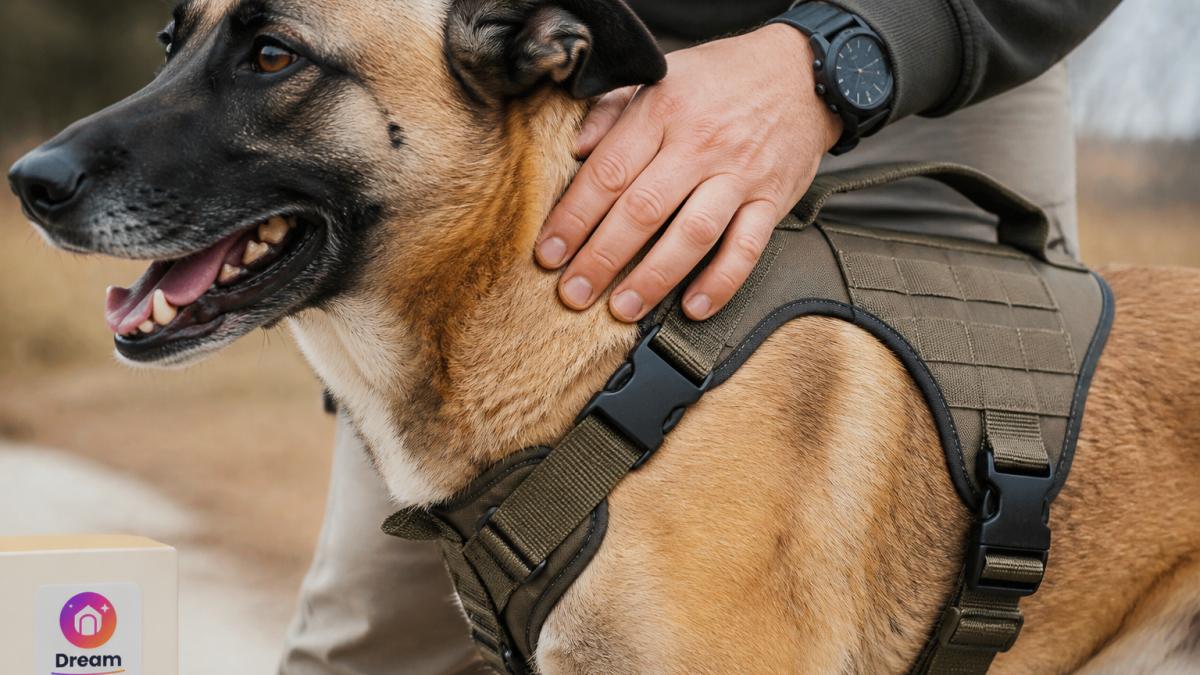
Start with the chest strap: it should sit just behind the front legs, not riding into the armpits, with room for one finger underneath. Shoulder straps need room for natural movement, if your dog's gait looks stiff, loosen it.
Check the belly strap next: snug enough not to slide, loose enough for deep breathing. Many owners overtighten here, but your dog needs full lung capacity during training.
Adjustability matters. Look for multiple buckle points, adjustable straps at the chest, shoulders, and belly let you customize the fit.
Reassess after a 5-minute walk, since harnesses settle as your dog moves. Recheck after a week, growing puppies especially need frequent fit checks.
How to Train a Dog to Walk on a Leash Without Pulling
Here's a practical plan with measurable markers so you can track progress.
Phase 1: Equipment acclimation (Days 1-5)
Put the harness on indoors with no leash for 5-10 minutes while you do normal things, rewarding calm behavior.
Phase 2: Leash introduction indoors (Days 6-12)
Attach a 4-6 foot fixed leash and stand still for 2-3 minutes.
Progress marker: Your dog can stand beside you on a loose leash for 10 seconds without pulling.
Phase 3: Movement indoors (Days 13-20)
Take one step: reward a loose leash, stop if your dog pulls, and wait for slack before continuing.
Phase 4: Quiet outdoor spaces (Days 21-35)
Move to a backyard, empty parking lot, or quiet sidewalk. Same rules: reward slack, stop for pulling.
Progress marker: Your dog can walk 50 steps outdoors with only 1-2 pulls.
Phase 5: Real-world distractions (Days 36-56)
Introduce light foot traffic, then normal neighborhood walks, using high-value rewards like chicken or cheese.
Leash-handling mechanics that make a difference
Hold the leash with both hands when you need control: one on the handle, one halfway down.
Signs pulling is improving
- Your dog checks in with you more often without being asked.
- The leash has slack more than half the time on a familiar route.
- Your dog responds to a gentle pressure cue by turning toward you instead of leaning forward.
- You can walk past a common trigger (squirrel, other dog, garbage truck) with only a brief pause instead of a full lunge.
When to adjust the plan
If you're stuck at the same phase for more than two weeks, shorten sessions, increase reward value, or reduce distractions.
Tactical Dog & Cat Harness with Leash | Adjustable No-Pull Mesh Vest →
If you're looking for a harness that supports this kind of training, our No-Pull Tactical Dog Harness with Handle is designed with a front-clip option and adjustable straps that let you fine-tune fit as your dog progresses. First-time customers get 10% off their first order.

The Real Value: Equipment vs. Behavior Change
A harness reduces pulling immediately; training eliminates it permanently. You need both for lasting results, but they do different jobs.
Management vs. training: two different goals
A no-pull harness is a management tool: it changes what your dog can do right now, redirecting forward momentum, reducing strain on your arm, and keeping them safe around traffic or triggers.
Training is the behavior-change tool: it teaches your dog that walking beside you on a loose leash earns rewards and pulling doesn't.
The verdict: when it's worth it
A no-pull harness is worth buying for training if:
- Your dog pulls hard enough that walks are stressful, unsafe, or painful for your arm or shoulder.
- You're starting a structured training plan and want a tool that prevents rehearsal of pulling.
- Your dog is large or strong enough that a collar creates neck-pressure concerns.
- You want to walk your dog safely while you train, not after training is finished.
A no-pull harness is not worth buying if:
- Your dog already walks calmly on a loose leash.
- You're not willing to commit to 4-8 weeks of consistent, short training sessions.
- Your dog has severe anxiety around restrictive gear and you haven't consulted a trainer or behaviorist.
The cost-benefit reality
Quality front-clip harnesses are widely available, and at Dream Deal Shop, first-time customers get 10% off their first order. But the real investment isn't the harness, it's the training time.
The unique angle: transition away from equipment
The real goal is to need the harness less over time. Here's how that transition works:
- Weeks 1-4: Harness on, front-clip, training every day. The harness prevents pulling and gives you control.
- Weeks 5-8: Continue training. Start noticing how often the leash is slack. If your dog is walking well, try a few minutes with the leash on the back-clip (if your harness has one) in a low-distraction area.
- Weeks 9-12: If your dog maintains loose-leash walking on the back-clip in quiet areas, try short sessions on a flat collar in your yard or hallway. Keep the harness handy for high-distraction walks.
- Ongoing: Use the harness for situations where you need extra control, busy streets, vet visits, new environments. Use the collar for familiar, low-distraction walks. The harness becomes a tool you choose, not a crutch you need.
What lasting behavior change looks like
You'll know the training worked when your dog walks on a loose leash without the harness in familiar settings. That doesn't mean the harness was unnecessary, it means it did its job.
If you're ready to start, our No-Pull Tactical Dog Harness with Handle is a solid front-clip option for large dogs, with adjustable straps and a top handle for quick control.
Harness Options for Different Dog Sizes and Pulling Strength
Small dogs and puppies need lightweight harnesses that don't restrict movement, with adjustable designs and multiple buckle points. A harness that fits a 5-pound puppy won't grow with them, so plan to upgrade as they mature.
Medium dogs need balanced designs, enough structure for control without cumbersome bulk. Most dogs in the 25-50 pound range do well with standard tactical harnesses.
Large and extra-large dogs are where harness choice becomes critical. The Tactical Military Dog Harness & Leash Set uses 1000D ripstop nylon with dual belt clips and X-shaped stitching, designed specifically for powerful breeds.

Dogs with anxiety or sensitivity need harnesses that don't feel restrictive, soft mesh feels less claustrophobic. The Tactical Dog & Cat Harness with Leash uses breathable mesh and a top handle for quick control without feeling constraining.

Breed shape matters too. Deep-chested dogs like German Shepherds need harnesses that don't cut into the chest. Barrel-chested dogs like Bulldogs need wider chest panels. Lean, tall dogs need taller harnesses that don't slip. Check adjustability before buying.
| Harness Type | Best For | Key Feature | Training Suitability |
|---|---|---|---|
| Front-clip tactical | Pullers learning loose-leash walking | Redirects forward momentum | Excellent, designed for behavior change |
| Back-clip vest | Calm dogs on established walks | Comfort and freedom of movement | Poor, reinforces pulling |
| Dual-clip design | Dogs transitioning from training | Flexibility between clips | Good, bridges training and maintenance |
| Head halter | Extreme pullers, very large dogs | Maximum control and redirection | Good, but requires acclimation time |
The Verdict: When a No-Pull Harness Is Worth the Investment
Whether a no-pull harness is a no-pull harness worth it for training comes down to your commitment, not if you expect it to solve pulling on its own.
The No-Pull Tactical Dog Harness with Handle is a solid choice for large dogs. It includes reflective strips for visibility, a top handle for quick control, and fully adjustable straps.
Quality matters: a cheap harness breaks seams and loses adjustability, while a good one lasts years and works reliably.
Start with a front-clip harness, pair it with consistent training, and expect results in 4-6 weeks. Then decide whether to transition to a back-clip design for maintenance or stick with front-clip for ongoing reinforcement.
A no-pull harness isn't magic, but combined with training it's one of the most effective tools for teaching loose-leash walking, faster, safer, and more enjoyable for both of you.
Frequently Asked Questions
Do no-pull harnesses actually work, or do they just mask the problem?
A no-pull harness reduces pulling in the moment by redirecting your dog's forward motion when they strain on the leash. It works, but it's a management tool, not a training solution. The harness makes walks easier immediately, yet your dog doesn't learn not to pull. To create lasting behavior change, pair the harness with reward-based training and loose-leash walking practice. Many owners find this combination effective: the harness keeps walks manageable while training builds better leash manners over weeks.
What's the difference between front-clip and back-clip dog harnesses for training?
Front-clip harnesses attach the leash at the chest and naturally turn your dog toward you when they pull, giving you more directional control. Back-clip harnesses attach at the shoulders and offer less redirection but more freedom of movement. For training a strong puller, front-clip designs provide better feedback and control. Back-clip works better for dogs with minimal pulling issues or those who need unrestricted movement. Your dog's size, strength, and pulling intensity should guide your choice.
How do I know if a no-pull harness is the right choice for my dog?
A no-pull harness makes sense if your dog pulls consistently and walks are stressful or unsafe. It's worth it for large breeds, strong pullers, or situations where you need immediate control (crowded areas, multiple dogs). However, if your dog walks reasonably well with light guidance, a standard harness and leash training may be enough. Consider a no-pull harness a temporary aid while you build better leash habits through training, not a permanent solution. First-time buyers at Dream Deal Shop get 10% off, so testing one is affordable.
Can a harness teach a dog not to pull, or will they still pull when I remove it?
A harness alone does not teach a dog not to pull, it only manages the behavior during wear. Once removed, your dog reverts to pulling unless you've done leash training separately. Real behavior change happens through reward-based training: rewarding loose-leash walking, reinforcing calm behavior on walks, and practicing consistently. Use the harness to make training walks safer and less exhausting, then gradually reduce pulling through repetition and positive reinforcement. This combination creates lasting change.
Walking a strong puller is exhausting and stressful. A quality no-pull harness combined with consistent training transforms those walks into something you both enjoy. At Dream Deal Shop, we stock tactical harnesses designed for real training scenarios. Shop today's drop now to secure the right harness before it sells out.