


How to Start a Zero Waste Kitchen in 2026
Last Updated: November 14, 2026
Quick Summary
To start a zero waste kitchen in 2026, run a one-week waste audit before buying anything, then fix your biggest waste leak first. Buy gear in tiers, starting with airtight containers that stop spoilage, and add produce and carry items only once the earlier tier is in daily use.
- Record everything your household bins for one week, about ten minutes a day.
- Buy one size range of clear, stackable containers rather than a full matching set.
- Add containers with a removable drain basket once you know which produce spoils fastest.
- Keep a use-it-first shelf in the fridge and cook those items tonight.
- Count bin bags weekly and review monthly instead of chasing a perfect zero.
Table of Contents
- Start With a Waste Audit, Not a Shopping Spree
- Zero-Waste Kitchen Essentials That Actually Earn Their Space
- How to Reduce Food Waste at Home: Plan, Cook, Store
- Plastic-Free Food Storage That Keeps Produce Crisp
- Zero-Waste Grocery Shopping: Bulk, Containers, and Less Packaging
- Small Kitchens, Renters, and Shared Households
- Track Your Progress Without Chasing Perfection
- Build Your Kitchen Starter Kit at Dream Deal Shop
- Frequently Asked Questions
Start With a Waste Audit, Not a Shopping Spree
The fastest way to start a zero waste kitchen in 2026 is to look at what you already throw away, then fix the biggest leak first. Most people buy a cart full of matching glass jars before they know what their kitchen actually wastes. That order is backwards, and it costs more.
A waste audit is a simple record of everything your household bins in one week. It takes about ten minutes a day and tells you exactly where to focus.
- Keep a small note or phone list by the bin
- Write down each item as you toss it
- Group items by type: food scraps, packaging, spoiled food, single-use items
- Count how many times each type appears
- Pick the single biggest group as your first target
Watch out: don't skip the audit and buy storage in bulk. You'll end up with containers that don't fit your shelves or your habits.
Zero-Waste Kitchen Essentials That Actually Earn Their Space
A zero waste kitchen needs very little gear, and the order you buy it in matters more than the gear itself.
Start with what you own. Most kitchens already have jars, bowls, a colander, and a few lidded containers that work fine. Fill the real gaps after the audit, not before.
Tier 1: Seal and store (buy first). These are the items that directly stop spoilage and single-use wrap. Clear, stackable containers with airtight lids earn their space because they do two jobs: they keep dry goods fresh and they make leftovers visible. Our sealed jar storage set fits this tier well, five sizes from 460ml to 1800ml, each lid with a silicone sealing ring to keep moisture and dust out, useful for grains, pasta, spices, and leftovers. A compact digital kitchen scale also belongs here if you cook rice, flour, or coffee by weight, since portioning by weight cuts both waste and overbuying.
Tier 2: Produce handling (buy second). Once you know which produce spoils fastest in your kitchen, add containers that manage moisture. A set with a removable drain basket, like our six-piece produce container set, lifts berries and greens above collected water. This tier is worth waiting on, the audit tells you whether produce or dry goods is your bigger leak.
Tier 3: Carry and reseal (buy last). These are convenience items that support bulk shopping and bag reuse. A sturdy insulated stainless steel bowl works for loose bulk goods and doubles as a serving bowl at home. A mini bag seal machine lets you reseal and reuse bags you already own instead of tossing them after one open. Neither is urgent, but both quietly cut single-use plastic once the first two tiers are in place.
A few rules we'd give any shopper:
- Buy one size range, not a full matching set
- Pick clear containers so you can see what's inside
- Choose stackable shapes for small shelves
- Skip anything you won't hand wash
- Add the next tier only after the current one is in daily use
Watch out: don't buy all three tiers at once. Containers that don't fit your shelves or your habits end up as clutter, and that defeats the purpose.
How to Reduce Food Waste at Home: Plan, Cook, Store
Reducing food waste at home comes down to three habits: plan meals before you shop, cook what's about to expire first, and store food so it lasts. Get those three right and most kitchen waste disappears without much effort.
Plan. Write a short meal list for the week. Check the fridge before you write it. A mini spoon scale makes portioning simple, and it's a small tool that pays for itself if you cook rice, flour, or coffee by weight. Here's our digital kitchen scale if you want a compact option.
Cook. Use a "use-it-first" shelf in the fridge. Anything close to turning goes there, and that's what you cook tonight. One-pot meals are your friend here.
Store. Match the storage to the food. Greens need airflow. Grains need a seal. Berries need to stay dry.
| Problem | Fix | What It Saves |
|---|---|---|
| Spoiled produce | Drain baskets and sealed lids | More of what you bought |
| Stale grains and flour | Airtight jars with sealing rings | Pantry staples |
| Oversized portions | Portion scale | Cooked leftovers |
| Mystery leftovers | Clear containers, labeled | Meals you forget |
Plastic-Free Food Storage That Keeps Produce Crisp
Plastic-free food storage means choosing reusable containers instead of single-use wrap and bags, then storing each food the way it actually keeps best. The container matters less than the conditions inside it.
Berries are the classic failure. Wet produce goes mushy fast in the crisper drawer. That's why we like containers with a removable drain basket, which lifts fruit and veg above any water that collects. Our six-piece produce container set lets you rinse in the basket, drain, then seal and store.
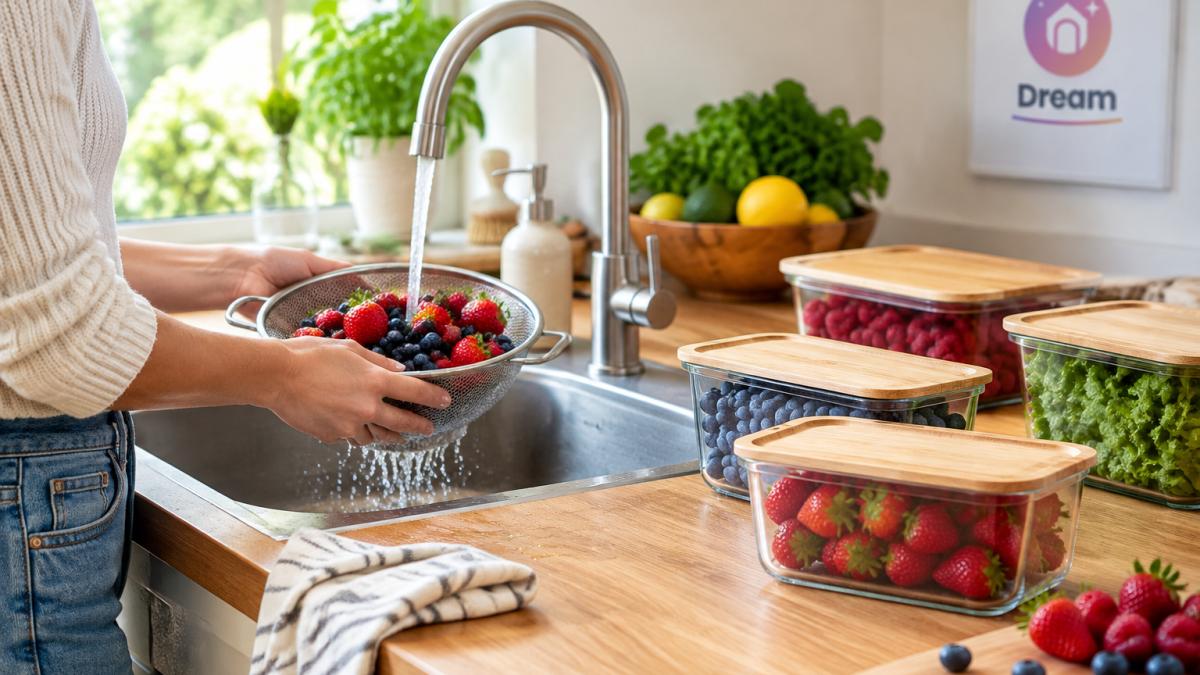
For dry goods, airtight is the whole game. Flour, rice, and cereal go stale when air and moisture get in.
For bags you already own, a mini heat sealer lets you reseal and reuse them instead of tossing them after one open. It's a small gadget that quietly cuts a lot of single-use plastic. Here's the bag seal machine we stock.
Zero-Waste Grocery Shopping: Bulk, Containers, and Less Packaging
Zero-waste grocery shopping means buying in bulk where you can, bringing your own reusable containers, and choosing products with less packaging. The goal is fewer trips and less plastic per trip, not a perfect plastic-free haul.
Bring containers that survive the trip. A sturdy stainless bowl with a handle works well for loose goods and doubles as a serving bowl at home. Our insulated stainless steel bowl is built for exactly that kind of carry-and-store use.
A simple bulk routine:
- Plan the list around meals you'll actually cook
- Bring containers sized to what you'll buy
- Buy dry staples in bulk and refill your jars at home
- Choose loose produce over pre-wrapped where the price is close
- Skip the impulse aisle
The European Environment Agency's waste prevention guidance is a useful read if you want the bigger picture on packaging waste.
Small Kitchens, Renters, and Shared Households
Small kitchens and shared homes need low-waste systems that fit in a drawer, not a pantry overhaul. Renters also can't drill shelves or swap appliances, so the setup has to be portable and removable.
- Use vertical space: stack jars, hang utensils
- Keep one "use-it-first" bin in the fridge
- Store condiments on a compact tray so they don't spread out
- Label shared food so housemates don't double-buy
Our wood condiment tray is a small fix for a common problem: sauces and jars taking over limited counter space. Two or three compartments keep them together and easy to wipe down.
If you share a kitchen, agree on one rule: whoever finishes a container rinses and refills it. That single habit cuts duplicate buying fast.
Track Your Progress Without Chasing Perfection
Tracking progress keeps a zero waste kitchen going, but the point is direction, not a perfect score. Perfectionism is the main reason people quit. One missed week doesn't undo the habit.
Pick one number to watch. Bin bags per week is the easiest. Count them for a month, then compare. If you want a second measure, note how many single-use items you avoided, a bag, a wrap, a takeout container.
- Weigh or count your bin bags weekly
- Note which food you still throw out
- Track single-use items avoided, not just waste created
- Check what your local council accepts for recycling and composting
- Adjust one habit at a time
- Review monthly, not daily
The cost side most guides skip. A more realistic approach is to tie spending to a leak you've actually measured: start with the audit, then buy tier by tier.
Local rules matter more than internet advice. Check your own municipality's recycling and organics guidance before you sort anything, since accepted materials differ by area, what's compostable in one city is landfill in another, and getting this wrong contaminates the whole bin. For broader context, the UN Environment Programme's food waste work explains why food scraps matter so much.
Common mistakes we see:
- Buying a full zero-waste kit before the audit
- Storing everything the same way regardless of the food
- Giving up after one bad week
- Measuring only waste created and ignoring disposables avoided
Watch out: don't chase a perfect zero. A household that cuts its bin bags in half and keeps going beats one that hits zero for two weeks and quits.
Build Your Kitchen Starter Kit at Dream Deal Shop
You don't need a big budget to start. Pick the two or three items that match your audit, use them daily, and add slowly. A starter kit that fits your kitchen beats a perfect one that sits in a cupboard.
We keep our home essentials collection stocked with practical pieces like these. First-time customers get 10% off their first order, so the first step costs less.
Your kitchen won't go zero waste overnight, and it doesn't need to. Start with one week of notes, fix the biggest leak, and build from there. Dream Deal Shop stocks the practical pieces that make the routine easier, from sealed jars with silicone rings to drain-basket produce containers that keep berries crisp. Get started with Dream Deal Shop and build a kitchen that wastes less without spending more.
Frequently Asked Questions
What should I buy first for a zero waste kitchen?
Start with storage, not gadgets. A set of sealed jars for grains and spices plus containers with drain baskets for produce will cut more waste than anything else, because they stop food from spoiling before you eat it. Add a fine-hole drainage basket for rinsing rice and vegetables. Skip the matching utensil sets and specialty tools until you know what you actually reach for. First-time customers at Dream Deal Shop get 10% off their first order, so the starter kit costs less than buying pieces one at a time.
Can you have a zero waste kitchen on a budget?
Yes, and a tight budget is an advantage. A waste audit costs nothing and usually shows that most of what you throw out is food you bought and forgot. Reusable containers and jars pay for themselves once they replace a few rounds of disposable bags and wrap. Buy in bulk where the unit price is lower, cook from what is already in the cupboard, and freeze leftovers instead of binning them. Spend on storage first, then on anything else.
How do you store food without single-use plastic?
Sealed jars and reusable containers do most of the work. Airtight canisters with silicone sealing rings keep grains, spices and dry goods moisture-free, and lidded produce containers with removable drain baskets keep berries and greens out of standing water. Use glass or stainless steel for hot food and anything acidic. Label containers with the date so you eat the oldest first. This is the core of plastic-free food storage: buy the container once, refill it for years.
What are the 5 R's of zero waste?
Refuse, reduce, reuse, recycle, rot. In a kitchen, refuse means skipping bags and single-use items you do not need. Reduce means buying only the food you will cook. Reuse covers containers, jars and utensils. Recycle handles what is genuinely recyclable in your area, and rot covers composting food scraps. The order matters: the first three cut the most waste, while recycling and composting handle what is left. Check your municipality's rules for what actually gets collected.
