

How to Shop Flash Sales Safely: 7 Smart Steps
Table of Contents
- What You'll Need Before You Start
- Step 1: Spot the Red Flags When Identifying Fake Online Stores
- Step 2: How to Verify Product Quality Before You Buy
- Step 3: Choose Secure Online Payment Methods
- Step 4: How to Shop Flash Sales Safely on Your Phone
- Step 5: Your Post-Purchase Rights After a Flash Sale
- Step 6: Common Mistakes That Make Flash Sales Risky
- Step 7: Build a Safe Flash Sale Routine
- Frequently Asked Questions
Last Updated: September 27, 2026
What You'll Need Before You Start
Shopping flash sales safely comes down to preparation, not luck. A little setup before a sale drops protects your money and your data.
Here's what to have ready:
- A credit card or payment app with buyer protection
- A separate email address for shopping sign-ups
- Two-factor authentication turned on for your bank and email
- A password manager to store logins securely
- A note of the retailer's return policy before you buy
Step 1: Spot the Red Flags When Identifying Fake Online Stores
Fake stores copy real ones closely. The clues are in the details, not the design.
Check the Domain and Contact Details
Look at the web address first. Scam sites often use misspelled brand names or odd endings like ".shop" on a site pretending to be a big retailer. Then check for:
- A real street address, not just a contact form
- A working phone number or chat option
- A business registration number where required
- Reviews on independent sites, not just the store's own page
Read the Fine Print on Returns and Final Sale
Flash sales often mark items as final sale. That's normal, but the terms should be clear and easy to find. Watch for:
- "All sales final" with no exceptions listed
- Return windows under 14 days
- Restocking fees buried in small print
- No mention of who pays return shipping
Step 2: How to Verify Product Quality Before You Buy
Checking product quality takes five minutes and saves a refund fight later. Real listings include:
- Clear photos from multiple angles
- Exact materials, sizes, and specs
- A brand name you can search elsewhere
- Honest condition notes for clearance items
Step 3: Choose Secure Online Payment Methods
The safest payment methods for flash sales are credit cards and trusted payment apps with buyer protection, which let you dispute charges if something goes wrong.
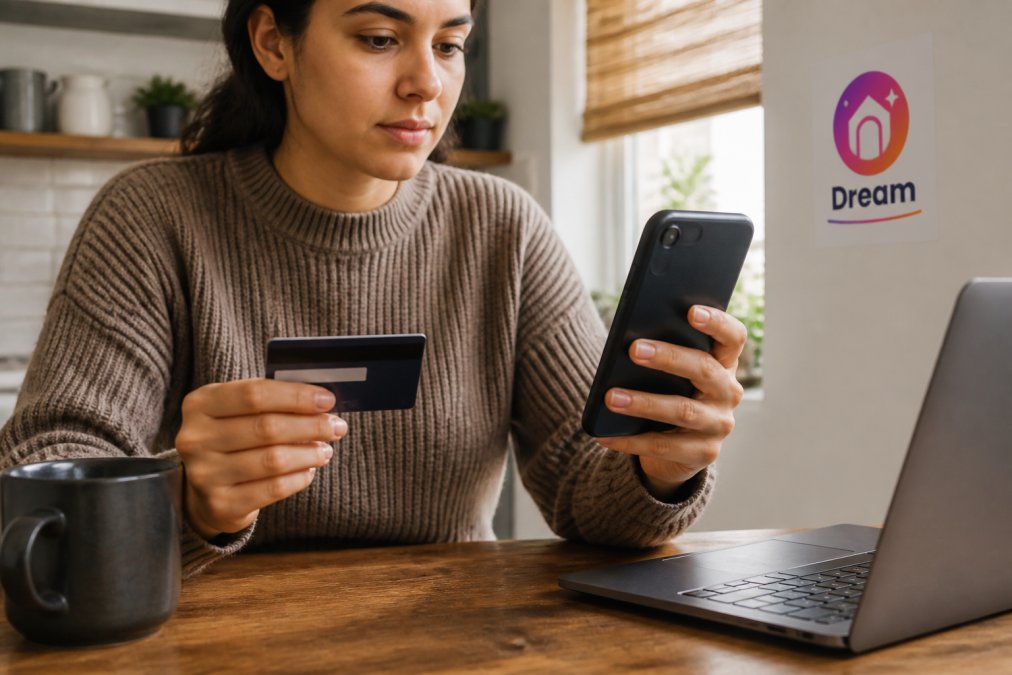
Ranked from safest to riskiest:
- Credit cards - strong fraud protection and chargeback rights
- Payment apps with buyer protection - disputes handled by the platform
- Debit cards - limited protection, money leaves your account fast
- Bank transfers - almost no recourse once sent
- Gift cards or crypto - treat as cash; scams love these
Step 4: How to Shop Flash Sales Safely on Your Phone
Mobile is where most flash sales get bought, and where most unique risks live. A phone hides the address bar, funnels you through in-app browsers, and pushes one-tap checkout. Each convenience is also an attack surface.
Why Mobile Is Riskier Than Desktop
Three structural differences matter:
-
The URL is hidden. In an in-app browser (opened from Instagram, TikTok, or a text), the address bar is often collapsed or missing. You can't see whether you're on
retailer.comorretailer-deals.shop. - Deep links can be hijacked. A malicious app can register the same URL scheme and intercept a link that looks like it opens the retailer's app, landing you in a fake checkout.
- Autofill removes your last checkpoint. Saved cards and addresses let you pay in two taps, which also means you can pay a scammer in two taps.
The Mobile Rules That Actually Matter
- Type the retailer's domain yourself or open the retailer's app from your home screen. Don't tap sale links from texts, DMs, or social ads.
- Skip public Wi-Fi for checkout. Use mobile data or a trusted network; public hotspots allow session hijacking and rogue access points.
- Turn on two-factor authentication for every shopping account and its email. Prefer an authenticator app or hardware key over SMS, which is vulnerable to SIM-swap attacks.
- Update the OS and shopping app before major sale days, when attackers time exploits for known, unpatched vulnerabilities.
- Buy inside the retailer's official app when one exists, app stores review and sign apps, a layer of vetting a random website lacks.
Mobile-Specific Security Habits That Matter
Phishing spikes during major sale events. Fake "your order failed" texts and emails are common and tuned to look like the retailer you just bought from.
- Check the sender's full address, not just the display name, display names are trivially spoofed.
- Long-press or hover a link before tapping to preview the real destination.
- Review app permissions. A shopping app requesting contacts, microphone, or SMS access is overstepping; SMS access can read one-time codes.
- Watch for sideloaded apps. If a "deal app" asks you to install it outside the App Store or Play Store, walk away, that's how banking trojans get onto phones.
- Cover your camera when not in use. A webcam slider blocks prying eyes and costs very little.
A 60-Second Mobile Pre-Checkout Routine
Before you tap "Pay" on your phone:

- Confirm the domain or app name is exactly right.
- Confirm you are on mobile data or a trusted network.
- Confirm the payment method is a credit card or protected payment app, not a bank transfer.
- Confirm the order total matches what you expected.
- Screenshot the confirmation page, if the order never arrives, that's your evidence.
That routine takes a minute and closes the gaps mobile design deliberately opens.
Step 5: Your Post-Purchase Rights After a Flash Sale
Buying on sale does not cancel your consumer rights. Sellers still owe you what you paid for, in most markets, the law says so explicitly. But flash sales add wrinkles: shortened return windows, "final sale" labels, and sellers counting on you not knowing the difference between a change-of-mind return and a faulty-goods claim.
What "Final Sale" Does and Does Not Mean
"Final sale" is a store policy, not a legal shield. It removes your right to return an item because you changed your mind, but does not remove your right to a remedy when:
Clear Trifold iPad Case with Pen Holder →
- The item never arrives.
- The item is materially different from the description (wrong size, wrong model, counterfeit).
- The item is faulty or damaged on arrival.
- The item was misrepresented, for example, an "original price" never actually charged.
The Rights You Can Rely On in Most Markets
Wording varies by country, but the pattern is consistent across the EU, UK, US, Canada, and Australia:
- Goods must match the description. If not, you're entitled to a repair, replacement, or refund, your choice in many jurisdictions.
- Goods must be of satisfactory quality. Faulty items are the seller's problem, even on sale.
- You must be told return terms before you buy. A policy buried after checkout is generally not enforceable.
- Unauthorized charges must be reversed via your card issuer's chargeback process.
- Distance-selling cooling-off periods (commonly 14 days in the EU and UK) usually apply online, but often exclude personalized items, perishables, and sometimes sealed hygiene goods. Check your country's exclusion list.
The Escalation Ladder (Use It in Order)
Most disputes resolve at step 1 or 2. Escalate only when the previous step fails.
- Contact the seller in writing. Use email or the platform's message system for a record. State the order number, the problem, and the remedy you want, with a seven-day deadline.
- Escalate within the platform. If you bought through a marketplace, open a dispute in its resolution center, marketplaces often have stronger buyer protections than individual sellers.
- File a chargeback with your card issuer. Your strongest lever. Most issuers accept disputes for billing errors and non-receipt, and many accept "goods not as described." Act within the issuer's window, commonly 60 to 120 days from the transaction; check your card's terms.
- Report to a consumer protection body. In the US, the FTC and your state attorney general. In the UK, Citizens Advice and Trading Standards. In the EU, your national consumer authority and the European Consumer Centre. In Australia, the ACCC and your state fair trading office.
Evidence to Keep From the Moment You Buy
Disputes are won on documentation. Save these the day you order:
- The order confirmation email and order number.
- A screenshot of the product listing, including price and description as shown at purchase.
- The payment receipt or card statement line.
- Any chat or email with the seller.
- Photos of the item and packaging if it arrives damaged or wrong.
Special Cases Worth Knowing
- Counterfeit goods. If you receive a fake, you're entitled to a refund in most jurisdictions, and in some (notably the US and EU) you can report the seller to customs or a brand-protection program.
- Never-arrived orders. A non-receipt dispute handled by your card issuer; the seller carries the burden of proving delivery.
- Subscription traps. Some flash-sale checkouts enroll you in a paid membership by default. Check your confirmation email for recurring charges and cancel immediately if you didn't intend to sign up.
- Cross-border purchases. Rights still apply, but enforcement is harder. Prefer sellers with a local presence or a marketplace that mediates disputes.
If something goes wrong, act within days, not weeks. The seller's clock and your card issuer's clock are both running, and the shopper who documents and escalates first usually wins.
Step 6: Common Mistakes That Make Flash Sales Risky
Most flash sale problems trace back to a few rushed decisions.
The biggest mistakes:
- Paying by bank transfer to "unlock" a discount
- Buying from a social media ad with no real store behind it
- Skipping the return policy because the timer is running
- Reusing the same password across shopping sites
- Ignoring order confirmations that never arrive
Step 7: Build a Safe Flash Sale Routine
A repeatable routine beats willpower. Set it once, and every future sale gets safer.
Try this checklist before each purchase:
- Confirm the store has a real address and contact method
- Check the return and final sale terms
- Compare the price against one other seller
- Pay by credit card or a protected payment app
- Save the order confirmation and receipt
- Note the dispute window for your card
Here's a quick summary of the risks and fixes:
| Risk | Warning Sign | Safe Fix |
|---|---|---|
| Fake store | No address or phone | Verify contact details first |
| Inflated discount | Price far below all others | Compare before buying |
| Payment fraud | Bank transfer requested | Use credit card or protected app |
| Mobile phishing | Sale link by text | Type the address yourself |
| No recourse | Final sale, no policy | Read terms before checkout |
Frequently Asked Questions
Are flash sales actually worth it?
Flash sales can be worth it when you know how to shop flash sales safely. Real discounts on useful items like a €13.99 webcam cover or a €28.99 electric lint remover save money without risk. The catch is urgency: limited-time offers push quick decisions, so check the seller, confirm the return policy, and pay with a protected method. If a deal feels rushed or the store looks fake, skip it. A genuine discount never requires you to ignore basic security.
What are the risks of flash sales?
The main risks are fake stores, counterfeit goods, and payment fraud. Scarcity and urgency tactics can push impulse buying before you check reviews or return terms. Some sites hide final sale conditions, so a damaged item may not be refundable. Others harvest card details through unsecured checkout pages. You can lower these risks by verifying the store, using secure online payment methods like credit cards or trusted wallets, and reading the return policy before you pay.
How do I protect my payment information during a flash sale?
Use a credit card or a reputable digital wallet rather than a debit card, since credit cards offer stronger fraud protection. Check that the checkout page uses HTTPS and never enter card details on a page you reached through a pop-up or text link. Enable two-factor authentication on your shopping accounts. Avoid saving card data on unfamiliar sites, and review your statement within a few days so you can dispute anything suspicious quickly.
What should I look for in a brand's return policy before buying a flash deal?
Look for a clear return window, who pays return shipping, and whether the item is marked final sale. On a €15 product, return shipping can wipe out the savings, so check the policy first. Reputable stores state the window in plain language and give a contact method. If the policy is missing, vague, or buried, treat it as a warning sign and shop elsewhere. A fair return policy is one of the best signs of a legitimate flash sale.
Flash sales reward speed, but speed without checks is how people get burned. A five-minute routine, a protected payment method, and a quick look at the return policy cover most of the risk.
Dream Deal Shop makes that easier with daily hand-picked drops, real discounts on home, wellness, and lifestyle finds, and clear listings you can verify before you buy. Just remember that once a deal sells out, it's gone for good.
Shop today's drop now and grab your favorites while they last.