


How to Safely Clean Delicate Microfiber Furniture at Home
Last Updated: October 26, 2026
Quick Summary
How to safely clean delicate microfiber furniture at home starts with checking your care label's single-letter code (W, S, WS, or X), which determines whether you can use water-based cleaners, solvent-based cleaners, both, or vacuum only. Blot spills immediately with a dry cloth, then apply the appropriate cleaner for your stain type and care code using minimal moisture. Air dry with good circulation, brush the fabric nap gently once dry, and avoid rubbing, heat, and oversaturation to prevent permanent damage.
- Check your furniture's care code label before cleaning to avoid permanent damage from wrong cleaners.
- Blot spills immediately with a dry cloth instead of rubbing to prevent stains from setting deeper.
- Use minimal moisture and air dry with good circulation to prevent water spots and matted fibers.
- Test any cleaner on a hidden area first and wait 24 hours before using on visible surfaces.
- Brush the fabric gently with a soft-bristled brush after drying to restore the microfiber nap.
Table of Contents
- Understanding Your Microfiber Furniture Cleaning Code
- What You'll Need to Clean Microfiber Furniture Safely
- Step-by-Step: How to Remove Stains from a Microfiber Couch
- Vacuuming and Regular Maintenance for Microfiber Upholstery
- How to Dry Microfiber Furniture Without Water Spots
- Common Mistakes to Avoid When Cleaning Microfiber
- Shop Microfiber Care Essentials at Dream Deal Shop
- Frequently Asked Questions
Understanding Your Microfiber Furniture Cleaning Code
The code system is simple:
- W means water-based cleaners are safe
- S means solvent-based cleaners only
- WS means either water or solvent-based cleaners work
- X means vacuum only, no liquid cleaners at all
Finding your care label is the first step. Check underneath cushions, along seams, or on the back of your furniture.
This matters because using the wrong cleaner can damage the fabric permanently. Water on an S-code couch can leave permanent water spots.
Each microfiber furniture care label uses a single letter code that determines which cleaning methods are safe to use.
| Care Code | Cleaners Allowed | What to Avoid |
|---|---|---|
| W | Water-based cleaners | Solvent-based cleaners |
| S | Solvent-based cleaners only | Water-based cleaners |
| WS | Water or solvent-based cleaners | Neither restricted |
| X | Vacuum only | All liquid cleaners |
What You'll Need to Clean Microfiber Furniture Safely
Gathering the right tools before you start is essential to knowing how to safely clean delicate microfiber furniture at home, making the process faster and more effective. You don't need expensive equipment, most items are household basics.
Choosing the Right Cleaning Solution
Your cleaning code determines what you can use. For W-code furniture, mild dish soap mixed with warm water works well.
For S-code furniture, rubbing alcohol (isopropyl alcohol) is the standard choice. It evaporates quickly and doesn't leave water spots.
For WS-code furniture, you have flexibility.
For X-code furniture, skip all liquid cleaners entirely. Vacuuming is your only safe option.
Test any cleaning solution on a hidden area first.
You'll also want to gather these supplies:
- Clean white cloths or microfiber towels (colored cloths can transfer dye)
- Spray bottle for applying cleaner
- Vacuum with an upholstery attachment
- Soft-bristled brush for gentle agitation
- Reusable microfiber mop pads for spot cleaning and maintenance
Having everything ready means you won't interrupt the cleaning process to hunt for supplies.
Step-by-Step: How to Remove Stains from a Microfiber Couch
Treating stains quickly makes removal easier. The longer a stain sits, the deeper it sets into the fibers, and the harder it becomes to lift out. But speed alone isn't enough, the type of stain changes which method is safe. Use the decision tree below instead of one universal recipe.
First, Blot Fresh Spills (Every Stain Type)
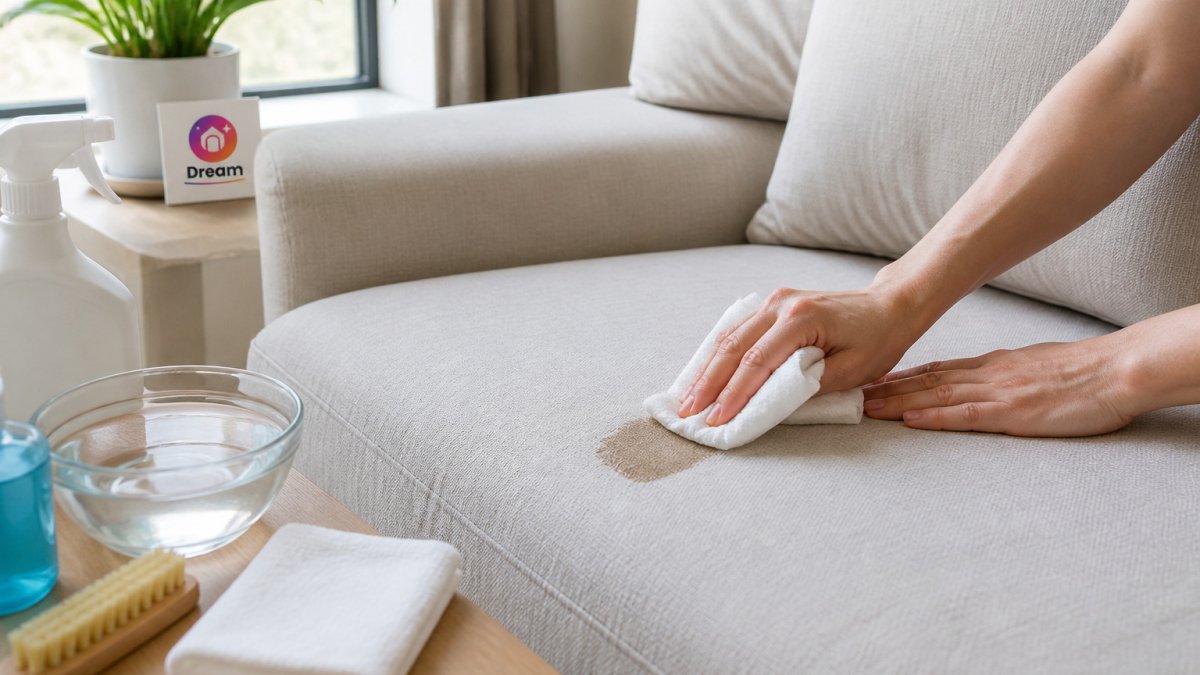
Act immediately when a spill happens. Blotting, not rubbing, is the key difference between success and spreading the stain.
- Use a clean, dry white cloth to blot the spill gently
- Press down firmly but don't rub or scrub
- Move to a clean section of the cloth as it absorbs liquid
- Keep blotting until the cloth comes away nearly dry
- Let the area air dry completely before applying any cleaner
Rubbing pushes the spill deeper into fibers and spreads it across a wider area. Blotting lifts the liquid up and out. This single habit prevents most stains from becoming permanent.
Stain-Specific Decision Tree
Match the stain to the method below, then confirm it against your furniture's care code (W, S, WS, or X) before you apply anything.
Grease, oil, and butter
- Blot up as much as possible with a dry cloth.
- Sprinkle a small amount of cornstarch or baking soda on the spot and let it sit 15-20 minutes to pull oil out of the fibers. Vacuum it away.
- For W or WS codes, follow with a few drops of mild dish soap in warm water, misted lightly and blotted. Dish soap is formulated to cut grease.
- For S codes, dab with rubbing alcohol on a cloth instead of soap and water.
Food and drink (coffee, juice, wine, sauce)
- Blot, then flush with a barely damp cloth using cool water, never hot, which can set tannins and dyes.
- For W or WS codes, a mild dish soap solution lifts most food residue. Work from the outside of the stain toward the center so you don't spread the ring.
- For S codes, use a solvent-based upholstery cleaner or rubbing alcohol on a cloth.
Ink and marker
- Blot, don't rub, rubbing smears ink across a wider area.
- Rubbing alcohol on a clean white cloth is the standard first attempt for S and WS codes. Dab, lift, and rotate to a clean part of the cloth.
- For W codes, test alcohol on a hidden spot first; some water-safe fabrics are still sensitive to solvents.
- Never pour alcohol directly onto the couch.
Pet accidents
- Blot up liquid, then neutralize odor with a 50/50 white vinegar and water solution on W and WS codes. Vinegar also helps break down the proteins in urine.
- For S codes, use an enzyme-based solvent cleaner rather than vinegar and water.
- After the area is dry, sprinkle baking soda, let it sit overnight, and vacuum to lift residual odor.
Unknown stains
- Start with the gentlest method your care code allows: plain water on W or WS, plain alcohol on S.
- If the stain doesn't budge, escalate one step at a time rather than jumping to a stronger product.
- Test every new product on a hidden area first and wait 24 hours.
Treating Set-In Stains
Stains that have dried require patience. Repeat the appropriate method above multiple times rather than using more product per pass. Each pass lifts a little more of the stain.
When to Stop and Escalate
If a stain hasn't improved after three or four gentle passes, stop. Repeated treatment on the same spot can mat the fibers or lighten the dye. At that point, check the manufacturer's care guidance or consult a professional upholstery cleaner, continuing to scrub is more likely to cause damage than to remove the stain.
Vacuuming and Regular Maintenance for Microfiber Upholstery
Regular maintenance prevents dirt from building up and makes deep cleaning easier.
Vacuum your microfiber furniture weekly using the upholstery attachment. This removes dust and prevents particles from settling into fibers.
Pay special attention to seams, crevices, and underneath cushions where dust collects. These areas trap the most debris.
Rotate cushions every few weeks if your furniture has removable cushions.
For ongoing maintenance, keep a microfiber mop head for your spin mop handy for quick touch-ups.
Brush the fabric gently with a soft-bristled brush occasionally.
How to Dry Microfiber Furniture Without Water Spots
Drying is as important as cleaning. Water spots form when minerals in water are left behind as moisture evaporates, and flattened or stiff fibers are usually a drying problem, not a cleaning problem. Get this stage right and your couch looks refreshed; rush it and you'll see rings and matted patches.
Absorb Excess Moisture First
After cleaning, use dry white cloths to press out excess moisture. Press gently rather than rubbing. Change to fresh cloths as they become damp. The drier the fabric is before air drying begins, the less chance minerals have to concentrate into rings.
Air Dry With Good Circulation
Air drying is best. Open windows to increase air circulation, and point a fan at the furniture to speed drying without causing damage. Avoid direct sunlight, which can fade the fabric and cause uneven drying.
Never use a hair dryer, space heater, or other heat source. High heat can damage microfiber and set stains permanently.
The furniture should feel dry to the touch within a few hours. If it takes longer, increase air circulation.
Prevent Water Rings
Rings form when moisture dries unevenly, leaving a concentrated mineral edge. Two habits prevent them:
- Clean and rinse in small sections rather than soaking a large area at once, so the whole section dries at the same rate.
- When rinsing, mist with plain water and blot immediately rather than letting water sit.
If a ring does appear after drying, lightly mist the entire affected area, not just the ring, with plain water and blot evenly. Blending the moisture across the whole section helps the ring dry out uniformly.
Restore the Fabric Nap
Microfiber's soft, suede-like feel comes from a raised nap. Cleaning and drying can flatten it, leaving stiff or shiny patches. Restoring the nap is the step most people skip.
- Once the fabric is fully dry, brush gently with a soft-bristled brush.
- Brush in one direction, following the grain of the fabric, using light strokes.
- For larger areas, a soft upholstery brush or a clean, dry microfiber cloth rubbed lightly in one direction also works.
- If a patch feels stiff, a very light mist of plain water followed by gentle brushing and re-drying can relax the fibers.
Check Light-Colored Upholstery Last
For light-colored microfiber, do a final inspection once everything is dry. Look for faint rings or uneven patches under good light. Catching them now, while a light re-mist and blot can still blend them, saves a second full cleaning later.
Common Mistakes to Avoid When Cleaning Microfiber
Understanding what not to do prevents damage as much as knowing what to do.
Don't rub or scrub aggressively.
Don't oversaturate the fabric with liquid.
Don't use hot water. Warm water works fine and is gentler on the fibers.
Don't use bleach or harsh chemicals. These can discolor microfiber and weaken fibers.
Don't ignore your care code.
Don't dry with heat. Hair dryers, space heaters, and direct sunlight can damage microfiber.
Don't clean without testing first.
Shop Microfiber Care Essentials at Dream Deal Shop
Keeping microfiber furniture looking fresh doesn't require expensive products or professional cleaning. The right tools and a simple routine handle most cleaning needs.
At Dream Deal Shop, we offer a curated selection of home, wellness, and lifestyle products at real discounts. Our daily hand-picked drops feature unique items for everyday needs. Once items sell out, they're gone for good, so check today's collection.
First-time customers get 10% off their first order.
Frequently Asked Questions
How do I know if my microfiber furniture can be cleaned with water?
Check the care label on your furniture for a cleaning code. The letter 'W' means water-based cleaners are safe; 'S' indicates solvent-based only; 'WS' allows both; and 'X' means vacuum only. Always test any cleaning solution on a hidden area first to confirm it won't damage the delicate fabric or cause discoloration.
Can I use rubbing alcohol to clean microfiber furniture?
Rubbing alcohol (isopropyl alcohol) can work on microfiber if your care label shows 'S' or 'WS' codes. Always test on a small, hidden area first.
What's the best way to remove dried stains from a microfiber couch?
For set-in stains, mist the area lightly with your chosen cleaning solution (mild dish soap and water or diluted rubbing alcohol, depending on your care code) and let it sit for 5-10 minutes. Blot gently with a clean cloth, working from the outside of the stain inward. Repeat until the stain fades, then dry thoroughly to prevent water spots.
How do I restore the fabric nap after cleaning microfiber furniture?
Once the area is dry, use a soft-bristled brush or a clean microfiber cloth to gently brush the fabric in one direction.
Microfiber furniture is durable and beautiful when you know how to care for it. Start with your furniture's care code, use the gentlest effective method, and dry thoroughly. Most stains and dirt come out with basic supplies and a little patience. Keep your microfiber looking like new by maintaining a simple routine and addressing spills immediately.
