


How to Maintain Stainless Steel Kitchen Tools Properly
Last Updated: November 4, 2026
Quick Summary
Wash stainless steel kitchen tools soon after use with a few drops of mild dish soap and a soft, non-abrasive sponge. Rinse thoroughly and dry immediately with a clean cloth to prevent water spots. Avoid steel wool, wire brushes and bleach, since they scratch the surface and cause rust or pitting.
- Rinse under warm running water to remove loose food right after use.
- Dry immediately with a clean cloth instead of air-drying to avoid water spots.
- Wipe along the grain of the metal rather than in circles to keep the finish uniform.
- Never scrub with steel wool or a wire brush, which leaves embedded iron particles that rust.
- Keep bleach and chloride cleaners away from stainless, as they cause pitting.
Table of Contents
- Why Stainless Steel Kitchen Tools Need Care
- Daily Cleaning Routine for Stainless Steel Utensils
- How to Clean Stainless Steel Appliances Naturally
- What to Use to Clean Stainless Steel Pots
- Removing Stubborn Stains, Burnt Food and Water Spots
- Tools and Materials to Avoid on Stainless Steel
- Choosing Your Next Stainless Steel Tool at Dream Deal Shop
- Frequently Asked Questions
Stainless steel kitchen tools are built to last, but only if you care for them properly. Dream Deal Shop has pulled together a practical guide to help you keep your spatulas, spoons, pots and bowls looking sharp for years. Good maintenance starts with knowing what to clean with, what to avoid, and how often to do it.
Why Stainless Steel Kitchen Tools Need Care
Stainless steel resists rust and stains better than many metals, but it is not indestructible.
Regular care keeps your tools hygienic and prevents the discolouration and water spots that make them look worn before their time.
Daily Cleaning Routine for Stainless Steel Utensils
Wash your utensils soon after use. Food that dries onto a spatula or spoon is harder to remove and can leave marks.
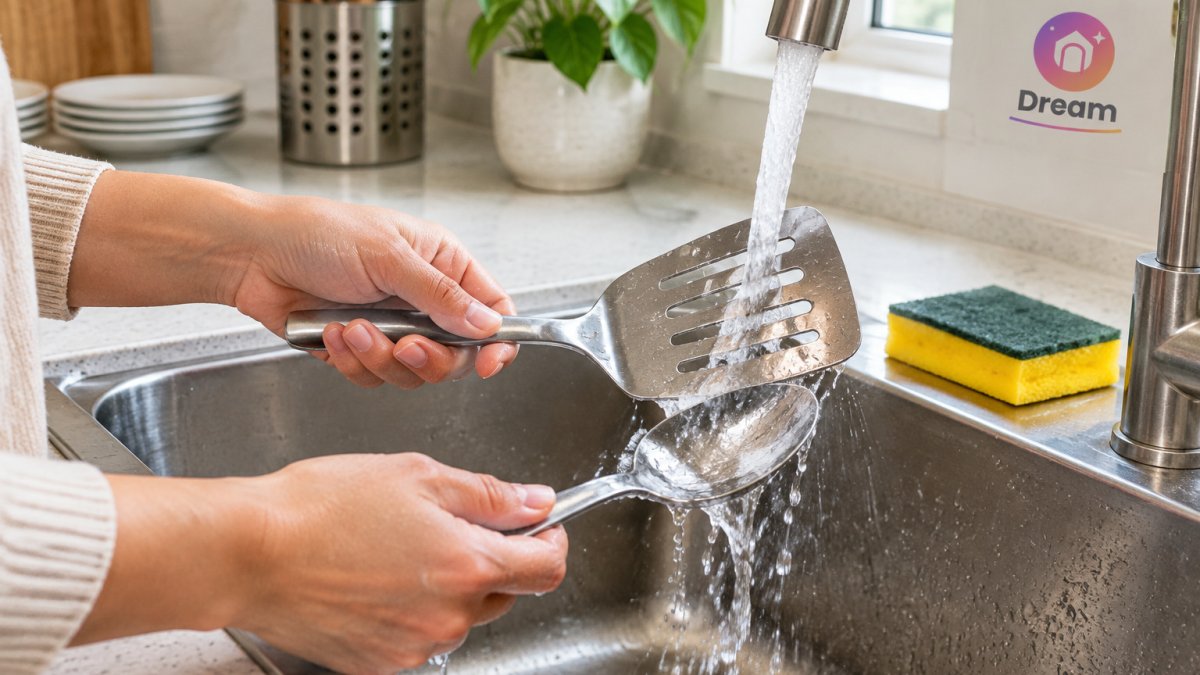
- Rinse the tool under warm running water to remove loose food.
- Wash with a few drops of mild dish soap and a soft, non-abrasive sponge.
- Rinse thoroughly so no soap residue remains.
- Dry immediately with a clean cloth. Air-drying leaves water spots, especially where water sits in hinges or handle joints.
Wiping along the grain of the metal, rather than in circles, helps keep the finish uniform.
Our Highly Absorbent Double-Sided Sponge Magic Cleaning Pot Rust Sponge Cleaning Brush is a sponge suited to routine washing, and it is sold in packs of 10, 30 or 50.

The steps for routine washing are summarised below.
| Step | What to do | Time or frequency |
|---|---|---|
| Rinse | Rinse under warm running water to remove loose food | Right after use |
| Wash | Use a few drops of mild dish soap and a soft, non-abrasive sponge | Right after use |
| Rinse thoroughly | Remove all soap residue | After washing |
| Dry | Dry immediately with a clean cloth | Immediately, not air-dried |
How to Clean Stainless Steel Appliances Naturally
Many people want to clean stainless steel without harsh chemicals. A mild, natural approach works well for most surfaces.
Mix equal parts warm water and white vinegar in a spray bottle, spray lightly, then wipe with a cloth in the direction of the grain. Finish by drying so streaks do not form.
For stubborn marks, make a paste from baking soda and water, apply it gently, and rub along the grain. Rinse and dry thoroughly afterward. Avoid letting vinegar or baking soda sit on the surface for long periods, and never mix vinegar with bleach.
What to Use to Clean Stainless Steel Pots
Pots and pans take more abuse than utensils, so the right cleaning method matters. Our Reusable Kitchen Cleaning Cloths Roll can be used wet or dry for wiping spills and washing dishes, sinks, stovetops and counters.

For interior cleaning, soak the pot in hot soapy water for 10 to 15 minutes to loosen residue, then scrub with a non-abrasive pad. Our 316 stainless steel kitchen utensils can be cleaned with the same routine, though hand washing and prompt drying are recommended to protect the ebony handle.

Removing Stubborn Stains, Burnt Food and Water Spots
Most stainless steel problems fall into four buckets: burnt-on food, heat tint (the rainbow or blue-brown haze), white mineral spots, and rust freckles. Each has a different cause, so the fix is different too. Treating them all with the same scrub is how people dull a good pan.
Burnt-on food. Fill the pot with water to cover the burnt area and let it sit before gently scrubbing. Let it cool before scrubbing.
Heat tint. Rainbow haze on stainless is a thin film from overheating rather than dirt, and it is cosmetic rather than a safety issue.
Highly Absorbent Double-Sided Sponge Magic Cleaning Pot Rust Sponge Cleaning →
Water spots and streaks. These are mineral deposits left when water evaporates. Wipe with a 1:1 white vinegar and water solution, then dry immediately with a cloth.
Rust freckles. Small rust spots on stainless usually come from surface contamination, steel wool fibres, salty food left too long, or contact with a carbon steel item. Rust freckles on stainless usually come from surface contamination; keeping the area dry and avoiding salty contact helps.
Watch out: never scrub a stain with steel wool or a wire brush. It removes the stain but leaves microscopic scratches and embedded iron particles that become the next rust spot.
A common pattern among people who keep stainless looking new for years is to treat stains the day they appear rather than after they set. A soft sponge and a microfiber cloth kept near the sink make that easy. Our Highly Absorbent Double-Sided Sponge Magic Cleaning Pot Rust Sponge Cleaning Brush is a sponge for routine scrubbing, and the Reusable Kitchen Cleaning Cloths Roll can be used for drying.
Tools and Materials to Avoid on Stainless Steel
Knowing what not to use matters as much as knowing what to use, because most stainless steel damage is cumulative. A single scratch or chloride exposure is minor; repeated exposure is what turns a shiny pan dull and pitted.
- Steel wool and wire brushes. These scratch the surface and, worse, leave tiny iron particles embedded in the stainless. Those particles rust, and the rust spreads to the surrounding metal. This is the most common cause of rust freckles on otherwise good stainless.
- Bleach and chloride-based cleaners. Chlorides attack the protective chromium oxide layer and cause pitting, small dark craters that cannot be polished out. Never leave bleach sitting on stainless, and never mix it with vinegar or other acids.
- Harsh abrasive powders on mirror-polished finishes. They cut through the polish and leave a hazy patch that no amount of buffing restores.
- Prolonged soaking in salty water. Salt accelerates chloride corrosion. A quick rinse after cooking salty food is fine; leaving a pot to soak overnight in brine is not.
- Oven cleaner on stainless interiors. Many oven cleaners contain strong alkalis and chlorides that discolour and pit stainless. Use a dedicated stainless cleaner instead.
Why grade matters. Not all stainless behaves the same. 304 (18/8) stainless is the common kitchen grade and handles most cleaning fine.
Repairing minor damage. Light surface scratches on a brushed finish can often be blended by rubbing along the grain with a fine non-scratch pad.
Watch out: if you use a magnetic knife strip or store carbon steel next to stainless, keep them separated. Contact between dissimilar metals in the presence of moisture can cause galvanic corrosion on the stainless side.
Sticking to soft sponges, microfiber cloths and gentle, residue-free cleaners avoids all of this. Our 316 stainless steel kitchen utensils are listed as 316 stainless steel with an ebony handle. First-time customers get 10% off their first order.
Choosing Your Next Stainless Steel Tool at Dream Deal Shop
If you are adding to your kitchen, look for 304 or 316 stainless steel. Dream Deal Shop carries options such as the Snainy 316 Stainless-Steel Kitchen Utensil, available as spatulas, spoons, pasta servers, colanders and other styles, and the GEDO Insulated 304 Stainless-Steel Food Bowl for serving and everyday meals.
First-time customers get 10% off their first order, so it is a good moment to stock up on the tools you use most.
Frequently Asked Questions
Does WD-40 clean stainless steel?
For routine care, warm water with a mild dish soap is a suitable choice, then rinse and dry the tool.
What should you not use on stainless steel?
Avoid steel wool, abrasive scouring powders and harsh bleach-based cleaners, because they scratch the surface and can dull the finish. Chloride-containing cleaners can also cause pitting over time. Stick to non-abrasive sponges, a soft cloth and mild dish soap. Wipe with the grain of the metal, rinse thoroughly and dry immediately to prevent water spots.
Can I use vinegar or Windex on stainless steel?
Diluted white vinegar is a common home option for stainless steel. Wipe with a soft cloth, then rinse and dry.
Is it okay to use Dawn dish soap on stainless steel?
Yes, a mild dish soap is suitable for regular cleaning of stainless steel kitchen tools. Mix a few drops with warm water, wash with a non-abrasive sponge, then rinse thoroughly and dry.
Keep your stainless steel tools clean, dry and free of harsh residue, and they will stay in good shape for years. Shop today's drop at Dream Deal Shop and find your next kitchen essential before it sells out.
