


How to Declutter Home for Beginners: Step by Step
Last Updated: October 22, 2026
Quick Summary
How to declutter home for beginners step by step starts with picking one small area under 4 square feet, removing everything, sorting into Keep, Donate, Recycle, and Trash piles, then applying simple rules like the one-year rule to decide what stays. Complete each session in 30-60 minutes and drop off donations within 48 hours to build momentum.
- Start with a small space like one drawer or shelf, not your whole home, to build confidence and momentum.
- Work through seven beginner-friendly areas in order: entryway, kitchen drawer, bathroom vanity, bedroom nightstand, living room surface, closet shelf, and storage bin.
- Use the one-year rule for everyday items and the photo method for sentimental items to make keep-or-go decisions easier.
- Sort into four piles and prepare donations by washing items, testing electronics, and bagging by category before drop-off.
- Maintain decluttered spaces with a weekly 15-minute tidy and the one-in-one-out rule to prevent clutter from returning.
Table of Contents
- Start Small: Choose Your First Area
- What to Declutter First: Set Clear Goals
- Remove Everything and Sort Into Piles
- Decluttering Rules for Deciding What to Keep
- How Long to Declutter a Room: Realistic Timelines
- Create a Decluttering Checklist for Beginners
- Maintain Your Decluttered Home
- Frequently Asked Questions
Start Small: Choose Your First Area
How to declutter home for beginners step by step starts with one simple choice: pick a small area. Don't tackle your whole house.
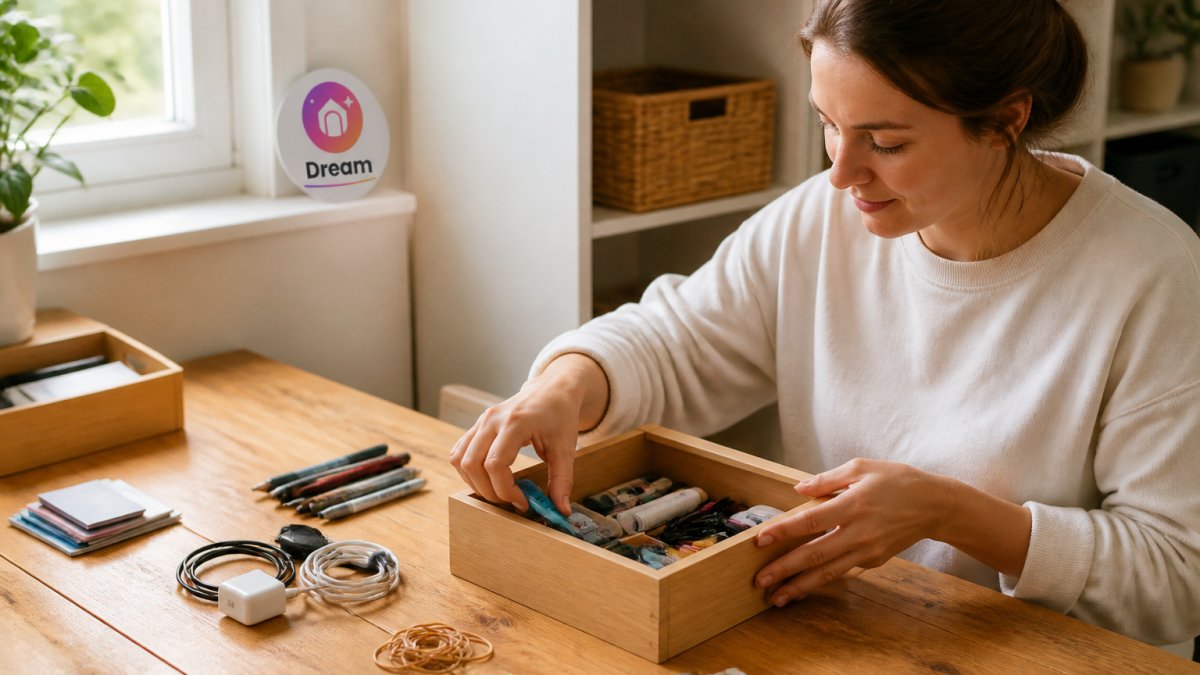
Why small? Small wins build momentum. You finish fast, see real progress, and feel motivated to keep going.
Start with a space you use daily. Your nightstand. A kitchen drawer. A closet shelf. These areas make a visible difference when they're clean.
Here's what we recommend:
- Avoid big rooms on your first try
- Pick a space smaller than 4 square feet
- Choose somewhere you'll see the results every day
- Set a timer for 30-60 minutes
The goal isn't perfection. The goal is momentum.
What to Declutter First: Set Clear Goals
Before you remove a single item, decide where you're going and when you'll stop. Beginners quit because they start without a finish line. A clear goal plus a simple room-by-room sequence turns a vague project into a series of small, winnable sessions.
Pick a goal that fits your real life
Your goal shapes every keep-or-go decision. Choose one primary goal for your first month:
- Make space, you need room to move, store, or work
- Reduce stress, visual clutter is draining you
- Prepare to move, you're packing or downsizing
- Find things faster, daily items keep going missing
Write your goal down and keep it visible. When you hesitate over an item, ask: does keeping this serve my goal? If not, it goes.
A beginner-friendly room-by-room sequence
Don't declutter the whole home at once. Work in this order, which front-loads quick wins and builds confidence:
- Entryway or mudroom (30-60 minutes), clear shoes, coats, mail, and bags. Stop when the floor and main surface are clear.
- One kitchen drawer or counter section (30-45 minutes), start with the junk drawer or the counter you use most. Stop when everything has a home or is in a pile.
- Bathroom vanity or linen shelf (30-45 minutes), expired products, duplicates, and hotel freebies go first. Stop when the shelf holds only what you use weekly.
- Bedroom nightstand and one dresser drawer (30-45 minutes), stop when the drawer closes easily and you can see what's inside.
- Living room surface or coffee table (30-60 minutes), clear papers, remotes, and orphaned items. Stop when the surface is usable again.
- One closet shelf or hanging section (45-90 minutes), stop when you can see the back wall and hang items without crowding.
- One storage bin or under-bed box (45-90 minutes), stop when the lid closes flat and you know what's inside.
That's seven sessions, not seven days. Spread them across two to three weeks. Each session has a built-in stopping point so you never face an open-ended mess.
Set a time budget and a hard stop
Use a timer for every session. Most beginners do their best work in 30-60 minute blocks. When the timer ends, stop, even if you're not finished. Leaving a half-sorted pile is fine; you'll return to it. The habit matters more than any single session.
Write your plan here:
- My primary goal is: _______________
- My first area is: _______________
- My time budget is: ___ minutes
- My hard stop is: ___ (day and time)
Know when to skip an area
Some spaces are too emotionally loaded or too shared to start with. Skip these on your first pass:
- Sentimental storage (photo boxes, keepsake bins), save for later when you've built decision confidence
- Shared spaces with no agreement, talk to housemates before touching common areas
- Rooms tied to a recent loss or major life change, give yourself time
Starting with neutral, low-stakes areas builds the decision muscle you'll need for the harder ones.
Remove Everything and Sort Into Piles
This is the most important step for how to declutter home for beginners step by step.
Put it all on your bed, floor, or table where you can see it. Yes, all of it.
Now sort into four piles:
- Keep - Things you use or love
- Donate - Items in good shape you don't need
- Recycle - Broken things, old paper, damaged items
- Trash - Garbage, unusable items
The reason you remove everything first: you see what you actually have. Items hiding in the back get a decision too.
Take your time with this step. It's the heart of the process.
Decluttering Rules for Deciding What to Keep
Deciding what stays is hard. These rules make it easier.
The One-Year Rule
If you haven't used something in one year, you probably don't need it. This rule works for most items: kitchen gadgets, clothes, books, decorations.
The one-year rule isn't absolute. Some things (winter coats, formal wear, seasonal decorations) get used less often. But for everyday items, one year is a good marker.
Ask yourself: When did I last use this? If you can't remember, it goes.
Handling Sentimental Items and Gifts
Sentimental items are the hardest to declutter.
Here's the truth: you don't need the item to keep the memory.
But some sentimental items deserve to stay. Ask yourself:
Stylish & Sturdy 3-Tier Desk Organizer with 2 Large + 2 Small Compartments →
- Does this item make me happy when I see it?
- Would I buy this again today?
- Does it fit my current life?
If yes to all three, keep it. If no, take a photo and let it go.
Gifts are different. You feel guilty throwing away a gift.
The gift was the gesture. You received it. You don't owe the giver anything else.
How Long to Declutter a Room: Realistic Timelines
Time matters. Knowing how long decluttering takes helps you plan and stay motivated.
For a small space (one drawer, one shelf):
- Remove everything: 5-10 minutes
- Sort into piles: 10-15 minutes
- Decide what stays: 10-20 minutes
- Total: 30-45 minutes
For a medium space (one closet, one bookshelf):
- Remove everything: 15-25 minutes
- Sort into piles: 20-30 minutes
- Decide what stays: 30-45 minutes
- Total: 1-1.5 hours
For a bedroom:
- Remove everything: 45-60 minutes
- Sort into piles: 60-90 minutes
- Decide what stays: 90-120 minutes
- Total: 3-4 hours (split across two days if needed)
Don't rush. A slow, thoughtful declutter is better than a fast one where you keep things out of guilt.
Create a Decluttering Checklist for Beginners
A checklist is only useful if it covers the whole job, including what happens to the stuff you let go. Most beginner guides stop at sorting. This one carries you through donation, recycling, and disposal so nothing sits in a pile for weeks.
The full beginner checklist
- Choose one small area and set a 30-60 minute timer
- Write your goal and your hard stop
- Remove everything from the space
- Sort into Keep, Donate, Sell, Recycle, Trash
Prepare donations so they actually get accepted
Charity shops and donation centers reject items that arrive dirty, broken, or unsorted. A little prep makes the difference between a donation and a dumpster trip:
- Wash or wipe everything, clothing, dishes, toys, and small appliances
- Test electronics and battery items, if they don't work, they're e-waste, not donations
- Bag by category, one bag of clothes, one box of kitchen items, one box of books
- Label boxes clearly with contents and size
Items most donation centers commonly cannot accept: mattresses, used pillows, broken furniture, recalled products, expired cosmetics, and anything with missing parts. Check your local center's list before you load the car.
Where each pile should actually go
- Donate, charity shops, shelters, community centers, school programs, and buy-nothing groups
- Sell, online marketplaces for items worth your time; skip selling anything under a low threshold where the effort outweighs the return
- Recycle, paper, cardboard, glass, metal, and clean plastics through municipal programs
- E-waste, old cables, chargers, batteries, and small electronics go to dedicated e-waste drop-offs, not curbside bins
Close the loop in 48 hours
The single biggest beginner mistake is letting donation bags sit by the door for a month. They become clutter again. Set a rule: donations leave the house within 48 hours of sorting. Put the drop-off on your calendar before you start sorting.
A simple weekly reset checklist
Once your first areas are clear, keep them that way with a 15-minute weekly reset:
- Clear all flat surfaces in one room
- Return stray items to their homes
- Sort the mail pile
- Check the donation bag, is it full enough to drop off?
- Pick one drawer or shelf for a quick 5-minute tidy
When you're ready to give kept items a permanent home, storage that fits your space makes maintenance easier. At Dream Deal Shop, first-time customers get 10% off their first order, and our home essentials collection includes practical organizers and space-saving storage to help your decluttered rooms stay that way.
Maintain Your Decluttered Home
Decluttering once isn't enough.
The best way to maintain is simple: one in, one out.
This stops clutter from creeping back.
Here's a monthly maintenance routine:
- Spend 15 minutes each week tidying one small area
- Once a month, do a 30-minute full sweep of your home
- Before buying something new, ask: Do I have space for this?
- Donate items immediately when you decide they don't serve you
Storage helps too. At Dream Deal Shop, we carry storage solutions like the Stylish & Sturdy 3-Tier Desk Organizer for keeping daily items organized, and vacuum compression bags that save space for seasonal clothing and bedding.


The real secret to staying decluttered: don't let new clutter in.
Decluttering feels overwhelming at first, but it doesn't have to be.
Begin with one drawer this week. See how it feels.
Ready to start? Pick your first area today.
First-time shoppers get 10% off their first order at Dream Deal Shop. Shop today's drop now to find storage solutions and home essentials that help you keep your space organized after you declutter.
Frequently Asked Questions
What should I remove first when decluttering?
Start with visible trash and broken items, things you know you don't want. This builds momentum fast. Move to obvious duplicates next (extra kitchen utensils, worn-out clothes), then tackle unused items you haven't touched in months. Sentimental items and 'just in case' belongings are harder decisions, so save those for later when you've built confidence in your choices.
What is the one-year rule for decluttering?
If you haven't used something in a year, you likely don't need it. This rule works well for clothing, kitchen gadgets, and seasonal items. However, exceptions exist: winter coats in summer, formal wear, and genuinely sentimental pieces may not fit this timeline. Use the rule as a starting point, not a strict law. Trust your instinct when something truly matters to you.
How long does it actually take to declutter a room?
A small bedroom or office typically takes 2-4 hours if you work steadily. A larger bedroom or living room may need 4-8 hours across one or two days. Don't rush, quality decisions matter more than speed. Break it into 1-2 hour sessions if you feel overwhelmed. Most beginners underestimate time needed, so build in buffer and celebrate progress rather than forcing completion.
How do I keep my home clutter-free after decluttering?
Adopt a simple rule: one item in, one item out. Before buying something new, remove something similar. Set a monthly 15-minute reset to catch items creeping back in. Use storage solutions like vacuum compression bags for seasonal clothing and stackable organizers for frequently used items. Dream Deal Shop offers affordable storage options to help maintain your newly organized space, and first-time customers get 10% off their first order.