


9 Common Mistakes When Buying Fitness Apparel
Last Updated: November 1, 2026
Quick Summary
The most common mistakes when buying fitness apparel are choosing clothes that are too baggy or too tight, ignoring the fabric, and skipping support. Match your fitness apparel to your activity, measure against the brand's size chart, and pick moisture-wicking fabric over cotton. Test the fit with a squat, an overhead reach and a short jog before you commit.
- Test fit with a deep squat, overhead reach and short jog on the spot.
- Match the garment to your activity first and the aesthetic second.
- Choose moisture-wicking blends over cotton, which holds sweat against skin.
- Measure waist and hips against the brand's size chart, not your usual letter size.
- Wash performance fabrics in cold water, skip fabric softener and line dry.
Table of Contents
- 1. Buying Clothes That Are Too Baggy or Too Tight
- 2. How to Choose Workout Clothes for Your Activity
- 3. How Should Gym Clothes Fit? Checking Fit Over the Shoulders and Waistband
- 4. The Best Fabric for Workout Clothes (and Why Cotton Falls Short)
- 5. How to Choose Leggings for Exercise Without Guessing on Sizing
- 6. Skipping Support: Sports Bras, Straps and Garment Stability
- 7. Wearing Regular Clothes to Train (and Other Overheating Mistakes)
- 8. Ignoring Fabric Care, Cost Per Wear and Returns Before You Buy
- Frequently Asked Questions
1. Buying Clothes That Are Too Baggy or Too Tight
Most fitness apparel problems start with one bad habit: buying for how a garment looks in the mirror instead of how it moves. Shoppers often gravitate toward either extreme, oversized tees that hide everything or compression pieces two sizes too small, and both choices can cause trouble once training begins. Baggy clothes snag on equipment, bunch at the waist, and hide your form from a coach or a mirror. Tight clothing restricts range of motion and pulls at seams during a squat or a reach.
The fix is simpler than it sounds. Choose a fit that skims the body without clinging, then test it with three movements: a deep squat, an overhead reach, and a short jog on the spot. If the fabric rides up, digs in, or bunches, size up or try a different cut. For a practical starting point, the women's clothing collection includes loose racerback tanks suited to movement like this.
2. How to Choose Workout Clothes for Your Activity
The right workout wear depends on what you're actually doing, not what's trending. Running rewards lightweight, breathable pieces that won't chafe. Lifting favors stable fabrics and a fit that doesn't shift under a bar. Yoga and Pilates call for stretch and a waistband that stays put through folds and twists. When learning how to choose workout clothes, match the garment to the movement pattern first and the aesthetic second.
A quick reference:
| Activity | What to Prioritize | What to Avoid |
|---|---|---|
| Running | Lightweight, breathable fabric | Heavy cotton, loose hems |
| Lifting | Stable fit, flat seams | Slippery, oversized tops |
| Yoga / Pilates | Four-way stretch, secure waistband | Baggy shorts, stiff fabric |
| Gym classes | Moisture-wicking, freedom of movement | Non-stretch everyday wear |
3. How Should Gym Clothes Fit? Checking Fit Over the Shoulders and Waistband
Gym clothes should fit snugly at the shoulders and waistband while leaving room to move everywhere else. Those two zones carry most of a garment's stability. A racerback that gapes at the shoulder slips during overhead work; a waistband that rolls down mid-squat means constant readjusting.
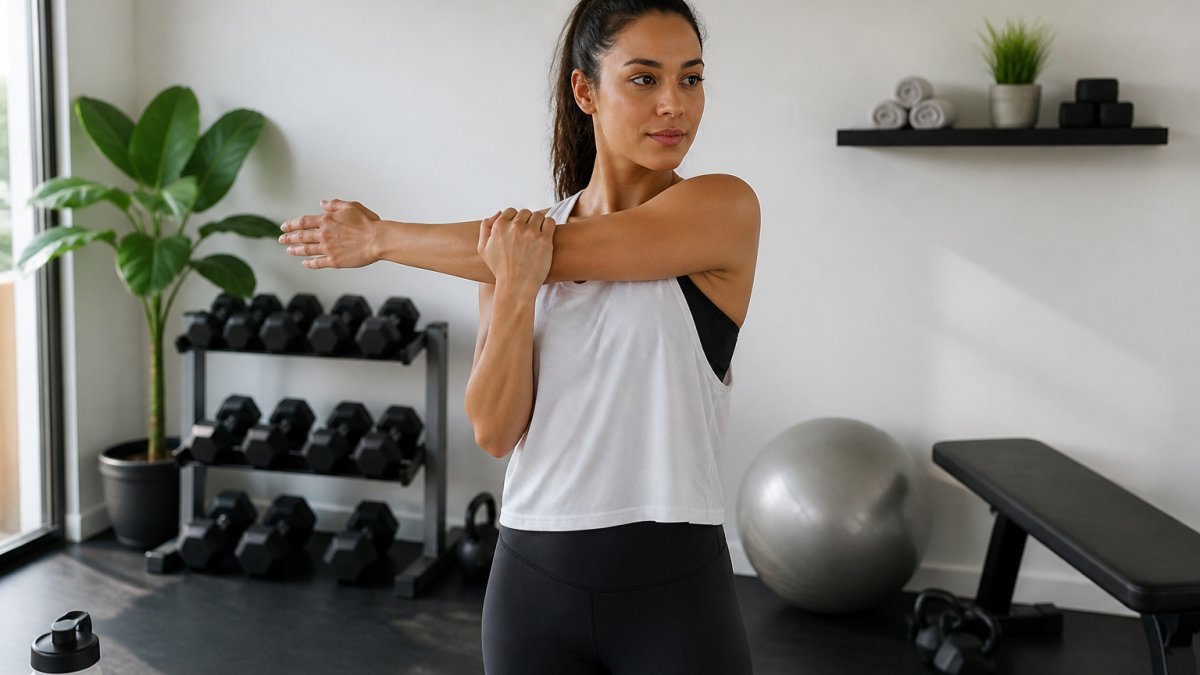
Test the shoulders by raising both arms overhead and rolling them forward. The fabric should follow without pulling the neckline sideways. Test the waistband by squatting and hinging at the hips; it should stay flat against your body. A racerback style such as the sleeveless yoga and running tank has an open back and loose sleeveless silhouette, suited to yoga, fitness and running.
4. The Best Fabric for Workout Clothes (and Why Cotton Falls Short)
The best fabric for workout clothes is a moisture-wicking blend, typically polyester with a little elastane for stretch. Cotton can absorb sweat and hold it against your skin, which can leave you damp once you're working hard.
Look for three things on the label: a moisture-wicking claim, some stretch fiber, and flat seams in high-friction areas. If a top lists only cotton, save it for rest days.
5. How to Choose Leggings for Exercise Without Guessing on Sizing
Sizing is where most legging purchases go wrong. The reliable method is to measure your waist and hips, then compare those numbers against the brand's own size chart rather than your usual letter size. Fit varies widely between labels, so a "medium" from one maker can match a "large" from another.
Check these before you buy:
Women's Loose Racerback Workout Tank Top →
- Waistband stays flat when you bend forward
- Fabric passes the squat test (no show-through)
- Seams sit flat, not twisted
- Stretch recovers after you pull the fabric
- Length suits your activity and shoe choice
6. Skipping Support: Sports Bras, Straps and Garment Stability
Support is the most overlooked part of fitness apparel, and it matters most for high-impact activity. A sports bra should hold firm without digging into the shoulders or ribs. Adjustable straps let you dial in the fit, and a wide underband distributes pressure better than a thin elastic one.
Garment stability extends beyond the bra. A knee support strap is one example of a support product that reinforces joint stability during training. Loose straps on tanks, rolling waistbands, and shifting hems all force you to stop and adjust mid-set. The rule: if you're tugging at it between reps, it's the wrong fit.
7. Wearing Regular Clothes to Train (and Other Overheating Mistakes)
Training in everyday clothes is a fast route to overheating. Jeans, cotton tees, and street shorts trap heat and restrict movement, and their seams weren't built for repeated stretching. Breathability is the antidote: lightweight, moisture-wicking fabric lets heat escape so your body can regulate temperature during effort.
Other common overheating mistakes include layering too heavily indoors, choosing dark non-breathable fabrics for hot studios, and ignoring how humid conditions change what you should wear. Dress for the temperature you'll reach mid-session, not the one you feel standing in the changing room.
8. Ignoring Fabric Care, Cost Per Wear and Returns Before You Buy
The last mistake happens after checkout: ignoring care instructions and return terms. Wash performance fabrics in cold water and skip the fabric softener, which coats fibers and reduces breathability. Line drying preserves stretch far longer than a hot tumble cycle.
Cost per wear changes the math on any purchase. A garment you wear three times a week for a year beats a cheap piece that pills after a month. Before buying, check the return window and whether damaged items are covered. If you're weighing a purchase, first-time customers get 10% off their first order.
Frequently Asked Questions
What should you look for when buying fitness apparel?
Check four things before you buy: the fabric (look for moisture-wicking blends rather than plain cotton), the fit over your shoulders and waistband, the support level for your activity, and the care instructions. Read the size chart and compare the garment measurements with a piece you already own that fits well. A loose racerback tank in a polyester-elastane blend, for example, gives you stretch and breathability for yoga, running or the gym. Buying fitness apparel this way means fewer returns and pieces you actually wear.
How should gym clothes fit?
Gym clothes should let you move through a full range of motion without restriction. Raise your arms overhead and squat down in the fitting room or at home: nothing should dig into your shoulders, ride up or gape at the waistband. Snug is fine for support pieces like sports bras, but baggy clothing can catch on equipment and bulky seams can cause chafing. Aim for a fit that stays put during movement, not one that is simply the same letter size you wear in everyday clothes.
What is the best fabric for workout clothes?
Look for moisture-wicking synthetics or blends, such as polyester with elastane, which stretch with you and move sweat away from your skin. Cotton absorbs sweat and holds it, so it gets heavy and stays damp during a hard session. Check the label for breathability and stretch, and read the care instructions, since most performance fabrics do best with a cold hand wash and line drying. The best fabric for workout clothes is the one that suits your activity and survives regular washing.
How do you choose leggings for exercise?
Start with the activity: running leggings need a secure, high waistband, while yoga leggings can be softer and more flexible. Check the fabric for stretch and opacity, look for flat seams to reduce chafing, and compare the size chart measurements with leggings you already own. Before buying online, read the returns policy in case the fit is off. A little time spent on sizing and fabric checks saves you from leggings that roll down or turn see-through mid-squat.
Buying fitness apparel well comes down to fit tests, fabric sense, and reading the label before you click buy. Dream Deal Shop curates hand-picked drops across workout wear and everyday essentials, with limited stock that moves fast. Get started with Dream Deal Shop and shop today's drop before your size sells out.
