


Best Moisture Wicking Fabrics for Exercise: What to Wear
Last Updated: November 4, 2026
Quick Summary
The best moisture wicking fabrics for exercise are polyester and nylon knits, which pull sweat off your skin and spread it out to dry fast. Merino wool works well for cool-weather runs, while cotton holds sweat and should be avoided during workouts.
- Polyester dries fastest and suits high-sweat sessions like HIIT, running and gym work.
- Nylon feels smoother and cooler, making it a good fit for yoga and lifting.
- Spandex is not moisture-wicking alone but adds stretch recovery in blends.
- Check for visible mesh or textured zones, since construction controls wicking more than fiber name.
- Skip fabric softener on performance gear because it coats fibers and blocks moisture movement.
Table of Contents
- How Moisture Wicking Fabrics Actually Move Sweat
- Moisture-Wicking vs Cotton Workout Clothes: The Wet T-Shirt Problem
- Is Polyester Moisture-Wicking? What the Fiber Really Does
- Is Spandex Moisture-Wicking? Stretch, Recovery and Sweat
- Moisture-Wicking vs Dri-FIT: Brand Names and Plain Fabric
- Fabric Weight, GSM and Layering for Hot and Cold Workouts
- Skin Sensitivity, Odor and Microplastics: The Trade-Offs Nobody Mentions
- Picking Your Next Workout Layer at Dream Deal Shop
- Frequently Asked Questions
How Moisture Wicking Fabrics Actually Move Sweat
Moisture wicking fabrics are textiles engineered to pull sweat away from your skin and spread it across the surface of the garment so it evaporates fast.
Here's the short version before we go deeper: sweat doesn't disappear. It has to move somewhere, and the fabric decides whether it moves away from you or sits against your skin.
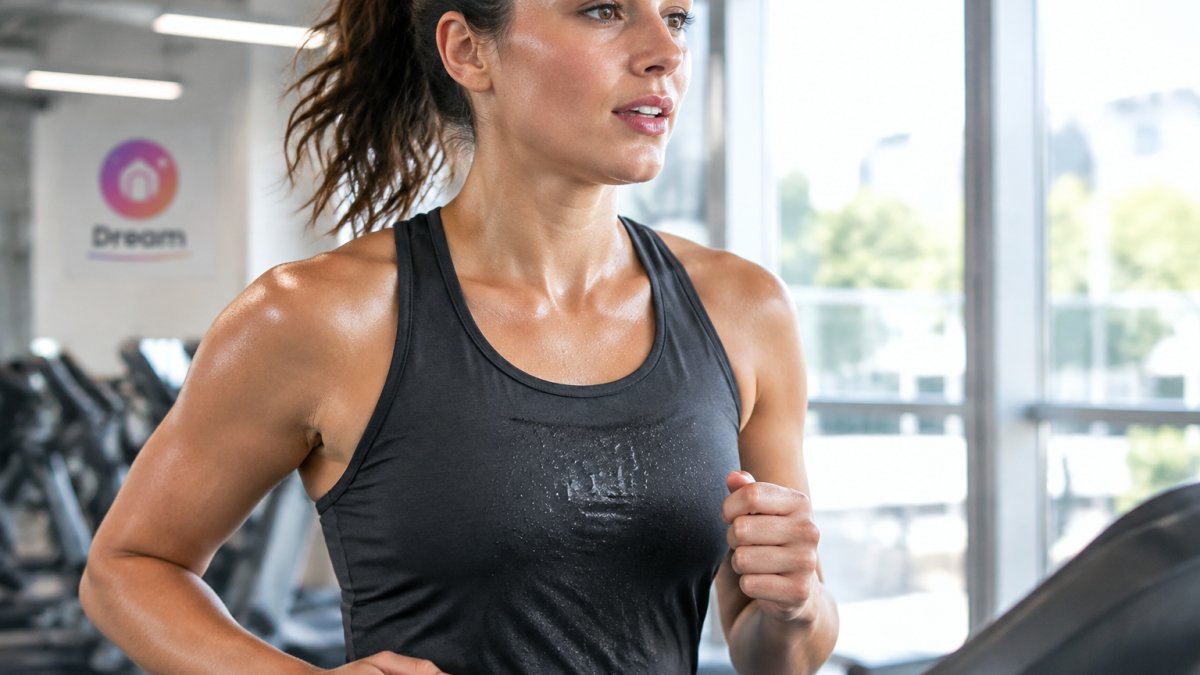
Capillary Action and Evaporation in Plain Terms
Capillary action is the way liquid climbs through tiny gaps in a material without any pump pushing it.
Sweat enters the fabric on the skin side, travels along those narrow channels, and spreads out across the outer surface.
Two properties make this work:
- Hydrophilic fibers attract and hold water on the inner face
- Hydrophobic fibers push water away, so the outer face releases it to the air
Many performance knits combine both in one fabric, which is why a good base layer feels dry on the inside and slightly damp on the outside after a hard session.
Why Fabric Construction Matters as Much as Fiber
Two shirts can list the same fiber and behave completely differently. Fabric construction decides whether wicking actually happens.
A tight, flat knit gives sweat nowhere to go. A knit with engineered channels, mesh zones, or a raised inner face creates the pathways that move moisture.
When you're shopping, look for visible texture such as mesh panels or a raised inner grid.
Moisture-Wicking vs Cotton Workout Clothes: The Wet T-Shirt Problem
Cotton is the wrong fabric for exercise, and the reason is simple: cotton is highly absorbent and holds water instead of releasing it. A cotton tee soaks up perspiration, gets heavy, clings to your body, and stays wet long after you stop moving.
That trapped moisture does three things. It drops your thermal comfort because wet fabric conducts heat away from the body fast. It creates friction against skin, which is where chafing starts. And it keeps a damp layer against you, which feels cold the moment you step outside or slow down.
The moisture-wicking vs cotton workout clothes comparison comes down to this:
| Fabric | Absorbs Sweat | Dries Fast | Feels on Skin | Best For |
|---|---|---|---|---|
| Cotton | Yes, holds it | No | Heavy when wet | Rest days, casual wear |
| Polyester wicking knit | Minimal hold | Yes | Light, dry | Running, HIIT, gym |
| Nylon wicking knit | Minimal hold | Yes | Smooth, cool | Yoga, training |
| Merino wool | Moderate | Moderate | Soft, warm | Cool-weather runs |
Cotton isn't a bad fabric. It's a bad fabric for sweating in. Save it for the couch.
Is Polyester Moisture-Wicking? What the Fiber Really Does
Yes, polyester is moisture-wicking, but only when it's built that way. Polyester on its own is naturally hydrophobic, meaning it repels water rather than absorbing it.
Because the fiber won't soak up sweat, moisture sits on the surface and moves along the knit structure instead of sinking in. The result is quick-drying fabric that stays light.
What most guides miss is that polyester's performance depends entirely on the knit. A dense polyester tee with no texture will trap heat and feel plasticky.
How Polyester, Nylon and Merino Compare
Polyester is the workhorse, but it isn't the only wicking fiber.
- Polyester: Fastest drying and cheapest to produce. It moves sweat quickly and stays light, but it holds odor more than natural fibers and can feel slick against skin. Best for high-sweat sessions like HIIT, running, and gym work.
- Nylon: Also hydrophobic and quick-drying, but with a smoother, cooler hand-feel and better abrasion resistance. It's slightly heavier than polyester at the same knit weight, which is why it shows up in leggings and training tops that need to survive friction. Best for yoga, lifting, and anything with repeated contact.
- Merino wool: A natural fiber that absorbs a moderate amount of moisture into the fiber itself, then releases it slowly. It regulates temperature well, resists odor naturally, and feels soft rather than slick. It dries slower than synthetics and costs more, so it suits cool-weather runs and multi-day wear more than hot yoga.
A common pattern is to blend: polyester for fast transport, nylon for durability and feel, and a small amount of spandex for stretch.
One honest limitation: polyester holds odor more than natural fibers do. Washing promptly after workouts matters more than any label claim.
A high polyester percentage on the tag doesn't guarantee wicking.
Is Spandex Moisture-Wicking? Stretch, Recovery and Sweat
Spandex is not moisture-wicking on its own. It's a stretch fiber, added in small amounts to give fabric stretch recovery and shape retention.
Where spandex earns its place is in the blend. A fabric with polyester and spandex together gets the wicking behavior from polyester and the four-way stretch from spandex.
Is spandex moisture-wicking in practice? In a blend, yes, because the polyester or nylon does the transport work while spandex handles the fit. On its own, no.
Our seamless high-waist yoga leggings are a good example of this blend logic in action: polyester and spandex together, seamless construction to cut friction, and a compression fit that stays put through running and training.

Moisture-Wicking vs Dri-FIT: Brand Names and Plain Fabric
Moisture-wicking vs Dri-FIT is not a real comparison. Dri-FIT is a brand name for a specific company's version of moisture-wicking polyester fabric.
Women's Quick-Dry Racerback Workout Tank Top →
Think of it this way: "moisture-wicking" describes what the fabric does. "Dri-FIT" describes who made it.
That distinction matters when you're shopping on a budget. A branded performance tee and an unbranded wicking top can both use synthetic blends with the same basic construction.
What you should actually check on the label:
- Fiber content, ideally polyester or nylon with some elastane
- Visible mesh or textured zones
- A stated quick-dry or breathable claim from the supplier
- Care instructions that don't require fabric softener
Read the fiber list rather than relying on the brand name.
Fabric Weight, GSM and Layering for Hot and Cold Workouts
GSM stands for grams per square meter, and it's the single most useful number on a performance fabric spec sheet.
Lighter knits generally suit hot yoga and summer running, while heavier knits hold more warmth for cold-weather training.
A simple layering system for different climates:
| Condition | Base Layer | Mid Layer | Outer Layer |
|---|---|---|---|
| Hot yoga, indoor gym | Lightweight wicking tank | None | None |
| Summer running | Light wicking tee | None | None |
| Cool-weather run | Wicking long sleeve | Light fleece | Wind shell |
| Winter training | Wicking base | Insulating mid | Weatherproof shell |
The rule that holds across all of them: the layer touching your skin must wick.
Planning a home session instead? A resistance band set pairs well with a light wicking layer, since indoor workouts heat up fast and you'll want breathable fabric rather than heavy cotton.
Skin Sensitivity, Odor and Microplastics: The Trade-Offs Nobody Mentions
Most wicking guides stop at performance. The trade-offs that actually affect whether you keep wearing a piece are skin comfort, odor, and what the fabric sheds in the wash. None of the top-ranking guides go deep here, so this is where a little knowledge pays off.
Skin Sensitivity and Hypoallergenic Options
Synthetic performance fabric doesn't suit every skin type. Some people find polyester against sensitive skin itchy or irritating, especially in tight-fitting technical apparel. The friction comes from two places: the fiber's slick surface against dry skin, and seams or tags that rub during repetitive motion.
A few practical fixes:
- Seamless construction removes the stitched edges that cause the most irritation, which is why seamless leggings and tops are a common choice for sensitive skin.
- Softer nylon blends feel cooler and smoother than coarse polyester knits, and they tend to cause less friction in high-contact areas.
- A looser fit reduces constant contact with skin, which matters for anyone who reacts to synthetic fibers.
- Merino wool is a natural alternative that many sensitive-skin athletes tolerate well, though it costs more and dries slower.
If you react to a garment, check the fiber list before blaming the fabric type, a rough knit or a stiff seam is often the real culprit, not the polyester itself.
Why Synthetic Fabric Holds Odor
Odor in athletic wear comes from bacteria feeding on sweat and skin oils, not from the sweat itself. Synthetic fibers are oleophilic, meaning they attract and hold oils, and those oils cling to the fiber even after washing.
Odor control treatments help, but the habits matter more: wash promptly after workouts, avoid fabric softener (it coats fibers and traps odor), and rotate tops so each one fully dries between uses.
Microplastics and Durability
Synthetic fibers shed tiny particles during washing, and those particles end up in waterways.
Durability is the underrated answer here.
Watch out: fabric softener coats wicking fibers and blocks their ability to move moisture. Skip it entirely on performance gear, and wash cold.
For the sweat and odor side of the equation, breathable moisture-wicking low-cut socks make a real difference, since feet are where damp fabric turns unpleasant fastest.
Picking Your Next Workout Layer at Dream Deal Shop
Choosing well comes down to three checks: the fiber list, the construction, and the weight for your climate. Get those right and you'll stay dry through whatever you're doing.
For a top that handles sweat without bulk, our quick-dry racerback workout tank uses a polyester-elastane knit with a breathable open-back cut, built for yoga, running, and gym sessions. If you prefer more room to move, the Women's Loose Racerback Workout Tank Top offers a loose sleeveless fit.


New here? First-time customers get 10% off their first order, and you can switch to your own currency on the site.
Frequently Asked Questions
Which fabric is the most moisture-wicking for workouts?
Polyester blends usually wick fastest because the fiber is hydrophobic, meaning it repels water rather than soaking it up, and pushes sweat to the surface to evaporate. Nylon is a close second with a slightly softer feel. Merino wool wicks well too but dries slower. For high-sweat sessions like intervals or hot yoga, a polyester-elastane blend is the safest pick. Pure cotton is the worst choice because it holds moisture against your skin.
Are moisture-wicking and Dri-FIT the same thing?
Dri-FIT is a brand trademark for a type of polyester performance fabric, not a separate technology category. Any garment labeled moisture-wicking uses similar principles: a hydrophobic fiber and a knit structure that pulls sweat away from skin. When you compare moisture-wicking vs Dri-FIT, you are mostly comparing generic performance fabric to one company's branded version. Check the fiber content on the label rather than the marketing name.
Is spandex moisture-wicking on its own?
Spandex is not a wicking fiber by itself. It is added in small amounts, often 15 to 20 percent, to give fabric stretch and shape recovery. The wicking job falls to the polyester or nylon it is blended with. That is why leggings listed as 82.5 percent polyester and 17.5 percent spandex can be genuinely moisture-wicking: the polyester does the sweat transport while the spandex keeps the fit snug.
Is moisture-wicking fabric waterproof?
No. Moisture-wicking fabric is designed to let sweat pass through and evaporate, which is the opposite of waterproof. Waterproof fabric blocks liquid from entering. A wicking base layer under a waterproof shell is the usual combination for wet weather, because the base layer moves sweat out while the shell keeps rain off. Wearing a waterproof jacket directly against skin traps sweat and feels clammy fast.
The difference between a good workout and a miserable one often comes down to what's against your skin. Build your base layer from fabrics that move sweat instead of holding it, and you'll feel the difference in the first ten minutes. Browse our latest drop, check the fiber list on each piece, and grab your size before it sells out.
