


7 Benefits of Silicone Teething Toys for Infants
Quick Summary
Silicone teething toys give babies a soft yet durable thing to chew on while teeth push through. They are easy to clean, flexible enough for gums and small hands, and come in playful shapes that keep curious babies engaged.
- Silicone is flexible, so gums and tiny hands can bend it without it snapping.
- A quick rinse is usually enough to clean a silicone teether.
- Chewing gives babies practice with jaw movement and tongue control.
- Supervise your baby while chewing, and retire any teether that tears or cracks.
- Many babies start showing teething signs around four to six months.
Table of Contents
- Why Silicone Teething Toys Are Worth Considering
- How Silicone Teethers Soothe Sore Gums
- Supporting Oral Motor Skills and Sensory Play
- Silicone Versus Other Teether Materials: Pros and Cons
- When to Use a Teether for Baby
- How to Clean Silicone Teething Toys
- Choosing the Best Silicone Teether for Your Baby
- Frequently Asked Questions
Why Silicone Teething Toys Are Worth Considering
Silicone teething toys give your baby something safe, durable and easy to clean to chew on during the months when teeth push through. Silicone is a common choice for teethers because it is durable and easy to clean.
If you are shopping for one, you are not alone. At Dream Deal Shop, we curate a selection of silicone teethers chosen for practical design and real value.
Here is what makes silicone a sensible choice:
- It is flexible. Gums and tiny hands can squeeze and bend it without it snapping.
- It is easy to clean. A quick rinse usually does the job.
- It comes in playful shapes. Dinosaurs, bears and remote-style designs keep the attention of curious babies.
How Silicone Teethers Soothe Sore Gums
Teething pain comes from pressure building under the gums as a tooth moves toward the surface. Chewing on something firm can ease that pressure for a while.
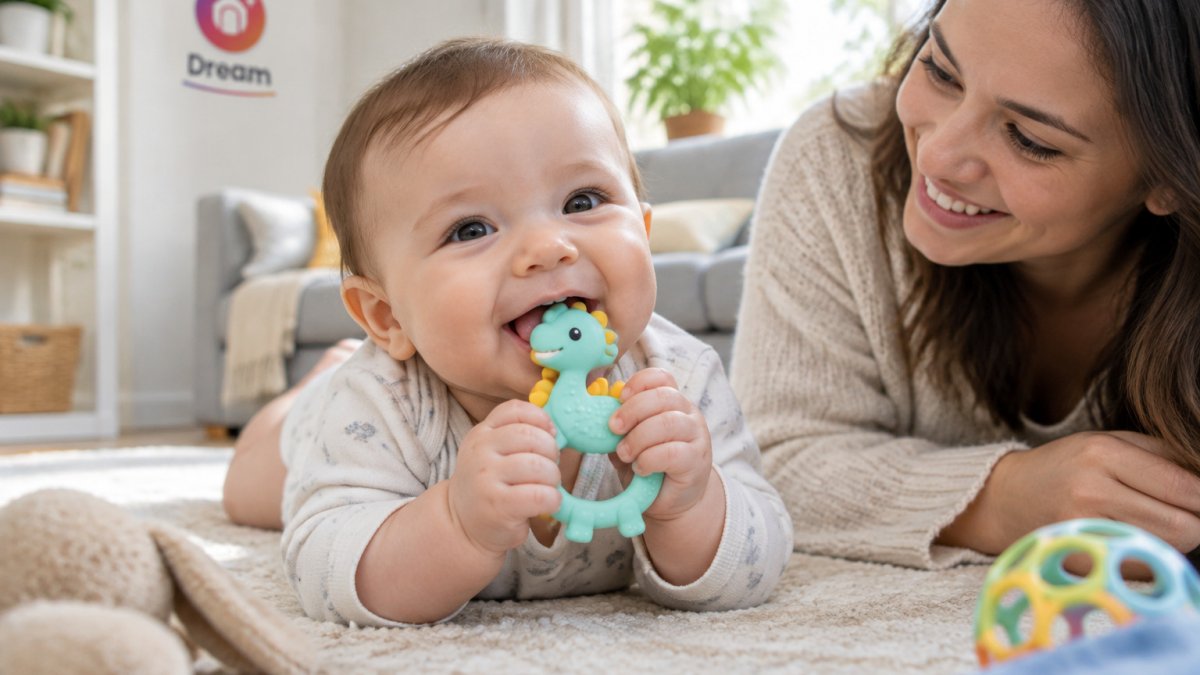
Always check the toy first, and never tie a teether around your baby's neck or leave it in the crib.
Supporting Oral Motor Skills and Sensory Play
Chewing is more than comfort. As your baby gnaws on a teether, they practice jaw movement, tongue control and the rhythmic bite-and-release pattern that later supports eating solid foods and forming speech sounds. Chewing is often described as a form of oral motor practice for the muscles used in chewing and speech.
Textured surfaces can add sensory input as babies explore a teether with their mouths.
Matching teether shapes to developmental stages
The right teether shape can change as your baby's motor skills develop:
A note for babies with sensory sensitivities
Some infants are more sensitive to texture than others. If your baby consistently gags, refuses all oral input, or seems distressed by textures, raise it with your pediatrician.
If your baby seems uninterested in one shape, try another. Variety keeps play fresh and gives different muscle groups a turn.
Silicone Versus Other Teether Materials: Pros and Cons
Silicone is not the only material you will see. Wood, rubber, fabric and some bioplastic teethers are also available.
Silicone
- Pros: Soft yet durable, easy to clean, and often marketed as BPA-free.
- Cons: Can attract lint or dust if stored loose.
Wood
Rubber
Fabric and cloth teethers
The sustainability angle most guides skip
If you are trying to shop with the planet in mind, material choice matters. Silicone is not biodegradable, but it is exceptionally long-lasting, a single well-made silicone teether can outlast several cheaper plastic or rubber alternatives that crack, degrade or get thrown away. Fewer replacements means less waste over the teething years. Wood from responsibly managed forests is renewable, but only if it is cared for properly and not cracked or discarded early. The practical takeaway for most families is to buy one durable, well-made teether rather than a rotating pile of short-lived ones.
At Dream Deal Shop, first-time customers get 10% off their first order.
Here is how silicone compares with the other teether materials mentioned in this guide.
| Material | Key pro | Key con |
|---|---|---|
| Silicone | Soft yet durable, easy to clean | Can attract lint or dust if stored loose |
| Wood | Renewable if responsibly sourced | Must be cared for; cracks if discarded late |
| Rubber | Listed as a teether option | Degrades or cracks over time |
| Fabric and cloth | Soft option for early months | Not detailed in this article |
When to Use a Teether for Baby
Many babies start showing teething signs somewhere around four to six months, though timing varies widely. Common signs include drooling, fussiness, wanting to chew on everything and gums that look swollen or tender. Offer a teether when you notice these signs, and keep one within reach during the day.
Watch for choking hazards too. Always supervise your baby while they chew, and retire any teether that has torn, cracked or become sticky. Once your baby can sit up and grasp objects on their own, a teether can become part of their regular play.
How to Clean Silicone Teething Toys
Clean your teether after each use, especially if it has been in your baby's mouth or on the floor. Wash it in warm soapy water, rinse thoroughly and let it air dry. For more on caring for reusable silicone items, read our review of reusable silicone food bags. Check the manufacturer's instructions before using any deeper cleaning method.
Inspect your teether regularly. Look for tears, cracks or loose parts, and replace it if you see any damage.
Choosing the Best Silicone Teether for Your Baby
When you compare options, look for these qualities:
- Food-grade or BPA-free silicone, as stated in the product listing.
- A size your baby can grip without it slipping into the mouth too far.
- Simple, one-piece construction with no small parts that could come loose.
- Easy cleaning, ideally dishwasher-safe.
Our Baby Dinosaur Silicone Teething Toy is BPA-free and suits babies in the 0 to 24 month range. The Silicone Baby Teether Toy in a TV remote shape is a playful option. The Baby Silicone Maracas Teether Toy with its cartoon bear design is listed for babies aged 0 to 12 months.
New to Dream Deal Shop? Get 10% off your first order and shop our latest drop.
Frequently Asked Questions
Are silicone teething toys safe for babies?
Silicone teethers are generally considered safe when they are made from food-grade silicone and labeled BPA-free. Check the product listing for the material and certification before buying. Choose a one-piece design without small detachable parts, which reduces choking risk. Inspect the teether regularly for tears or loose pieces and replace it if the surface starts to crack. Always supervise your baby during chewing, and never tie a teether around the neck or leave it in the crib.
At what age should a baby start using a teether?
Most babies begin showing teething signs around four to six months, with drooling, fussiness and a strong urge to chew on fingers and toys. A teether is usually helpful once these signs appear. Many products list a recommended age range, such as 0-6 months or 7-12 months, so match the teether to your baby's stage. Offer it when your baby seems uncomfortable, and watch for how they respond before making it a regular part of the routine.
How do I clean and sanitize silicone teething toys?
Wash silicone teethers with warm water and mild, unscented soap after each use, then rinse thoroughly. For sanitizing, follow the manufacturer's instructions for the specific teether. Let it air dry completely before giving it back to your baby. Clean it daily, or more often if it falls on the floor or gets mixed with food.
Can teething toys help with a baby's speech development?
A teether does not replace interaction, so talk, sing and read with your baby during play. If you have concerns about your child's speech or feeding, ask your pediatrician for guidance.
