


7 Ways to Maximize Space in Tiny Bedrooms
Table of Contents
- 1. Invest in Under-Bed Storage and Storage Beds
- 2. Small Bedroom Storage Ideas: Go Vertical
- 3. Choose Space-Saving Furniture for Small Bedrooms
- 4. How to Make a Small Bedroom Look Bigger with Light and Mirrors
- 5. Smart Small Bedroom Layout Ideas
- 6. Declutter and Organize for Maximum Impact
- 7. Multifunctional Furniture That Maximizes Space in Tiny Bedrooms
- Frequently Asked Questions
Last Updated: October 21, 2026
1. Invest in Under-Bed Storage and Storage Beds
The space under your bed is real estate you're probably wasting. A storage bed with built-in drawers or a platform that accommodates bins transforms dead space into functional storage for seasonal clothes, extra bedding, or items you don't use daily.
Under-bed storage works because it's invisible when you're in the room. You don't see boxes or clutter, just your bed. This keeps the visual space feeling open and calm, which matters more in a tiny bedroom than you might think.
If your current bed doesn't have drawers, vacuum compression bags are a game-changer. Vacuum compression bags compress bulky items like winter coats, duvets, and pillows down to a fraction of their size. You can stack multiple bags under the bed without taking up much vertical space. First-time customers at Dream Deal Shop get 10% off your first order, making these compression bags an affordable way to reclaim storage.

For heavier seasonal items or items you access less frequently, under-bed storage keeps them accessible but out of sight. The key is labeling, use clear bins or label your compression bags so you know what's stored without having to open everything.
2. Small Bedroom Storage Ideas: Go Vertical
Learning 7 ways to maximize space in tiny bedrooms starts with understanding that vertical storage is non-negotiable. Your walls hold far more than your floor ever will. Floating shelves, wall-mounted cabinets, and pegboards turn empty wall space into organized storage without eating into your floor area.
Floating shelves work best above your desk, dresser, or along a blank wall. They create visual interest and give you places for books, plants, or decorative storage boxes. The illusion of "floating" also makes the room feel less cluttered than traditional shelving would.
Wall-mounted storage doesn't have to be expensive or complicated. A simple pegboard above your desk organizes supplies, headphones, or jewelry. Corner shelves maximize awkward spaces that floor furniture can't reach. The goal is to move as much as possible off the floor, which immediately makes the room feel larger.
If you have cables, chargers, or electronics taking up desk or nightstand space, Tech Accessories like cable organizers and storage boxes hide the tangle while keeping outlets accessible. This single fix transforms a cluttered corner into organized, hidden infrastructure.
3. Choose Space-Saving Furniture for Small Bedrooms
Multifunctional furniture does the work of two pieces in the space of one. A bed with storage drawers, a desk that doubles as a dresser, or a nightstand with shelves above and drawers below all compress multiple functions into single pieces.
The rule is simple: if a piece of furniture only does one job, it's taking up too much space. A traditional nightstand holds a lamp and maybe a glass of water. A nightstand with drawers, shelves, or a built-in workspace earns its footprint by doing more.
Daybeds are another smart choice if you don't always need a full bed. They function as a bed at night and a sofa during the day, giving you seating without a separate chair taking up floor space. Futons work similarly, they're beds when you need them and couches when you don't.
Compact furniture designed for small spaces is built to proportion. A regular desk might overwhelm a tiny bedroom, but a corner desk or wall-mounted workspace fits naturally. The same goes for dressers, shelves, and cabinets, choosing pieces scaled to the room prevents it from feeling stuffed.
4. How to Make a Small Bedroom Look Bigger with Light and Mirrors
Light and mirrors are psychological tools that make rooms feel larger than they are. A mirror opposite a window reflects light and creates the illusion of depth. A room with good light feels open; a dark room feels cramped.
Maximize natural light first. Keep windows uncovered or use sheer curtains that filter light without blocking it. If your bedroom gets limited natural light, invest in bright LED lighting. Avoid dim, warm-only bulbs, they make small spaces feel cave-like.

Mirrors work best when placed strategically. A large mirror opposite a window bounces light around the room. Mirrors on the wall beside your bed create the illusion that the space extends further than it does. The trick is positioning, a mirror facing a blank wall does nothing; a mirror facing a light source multiplies it.
Color matters too. Light, neutral walls (soft whites, pale grays, warm beiges) reflect light and make the room feel airy. Dark walls absorb light and make small spaces feel smaller. If you want color, use it as an accent on one wall or through textiles and decor rather than painting all four walls.
Candles & Aroma products like scented candles add ambient warmth and coziness to a small bedroom without taking up much space. Pair them with soft lighting to create an inviting atmosphere that makes the room feel larger and more intentional.
5. Smart Small Bedroom Layout Ideas
Layout determines whether a tiny bedroom feels functional or claustrophobic. The goal is to maximize clear floor space and create a logical flow from the door to the bed.
Position your bed against the longest wall or in a corner. This leaves the rest of the room open for movement. A bed in the center of the room or blocking the door makes the space feel cramped and difficult to navigate.
Travel Vacuum Storage Bag with Electric Air Pump | IP67 Airtight Compression →
Keep your nightstand compact and positioned so it doesn't jut into the walkway. A wall-mounted shelf above the bed eliminates the need for a traditional nightstand entirely. This frees up floor space and makes the room feel more open.
Your desk or workspace should be in the brightest corner, ideally near a window. If you work from home, this placement gives you natural light and makes the space feel intentional rather than squeezed in.
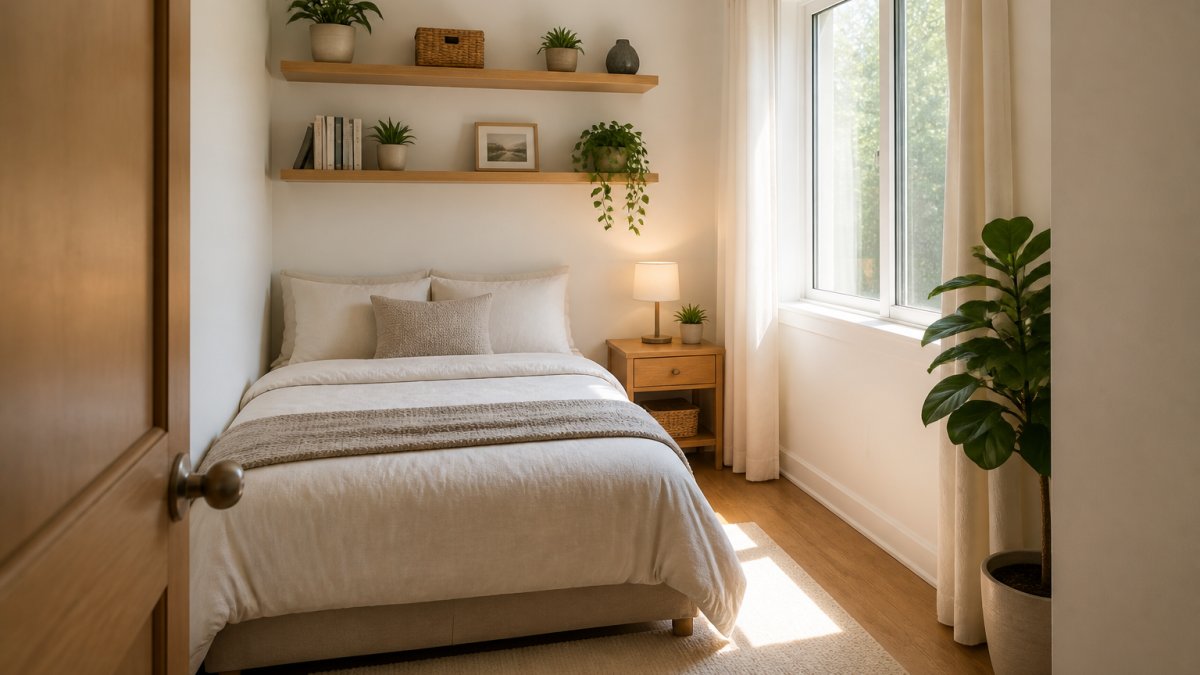
Leave at least 2-3 feet of clear floor space in front of your closet or wardrobe. This prevents the room from feeling blocked and makes daily routines easier. A cluttered, cramped bedroom is harder to keep organized.
6. Declutter and Organize for Maximum Impact
Clutter is the enemy of small spaces. A tiny bedroom with too much stuff feels suffocating; the same room with only essentials feels calm and spacious.
Start by removing items you don't use. Clothes you haven't worn in a year, books you don't reread, decor that doesn't spark joy, these take up valuable space and add visual noise. The fewer items you keep, the more organized the space automatically feels.
Organize what remains into categories. Clothes go in the closet or dresser, books on shelves, daily items in drawers. Everything should have a home. When items are scattered across surfaces, the room looks chaotic even if it's technically not full.
Seasonal rotation keeps your active wardrobe lean. Store winter coats and sweaters in compression bags under the bed during summer, then swap them out when the season changes. This keeps your dresser and closet from overflowing year-round.
Vertical storage boxes and clear bins help you see what you have without opening everything. Label them clearly. This prevents duplicate purchases and makes finding things faster.
7. Multifunctional Furniture That Maximizes Space in Tiny Bedrooms
Multifunctional furniture is the secret to living well in a tiny bedroom. Every piece should earn its space by doing more than one job.
A storage bed with built-in drawers holds clothes and bedding while serving as your sleeping surface. A desk with shelves above stores supplies and books while providing workspace. A bench at the foot of the bed offers seating, storage, and a place to lay out clothes.
Wall-mounted desks fold down when you need them and disappear when you don't. Ottomans with hidden storage provide seating and a place to toss items. Nightstands with multiple drawers organize everything from books to chargers.
For charging devices, Tech Accessories like wireless charging stations consolidate multiple chargers into one compact spot. This eliminates the need for multiple chargers cluttering your nightstand and keeps your devices powered without the cable mess.
The principle applies everywhere: choose furniture that serves multiple purposes over single-function pieces. A tiny bedroom with smart, multifunctional furniture feels spacious and organized. The same room filled with single-purpose pieces feels cramped and cluttered.
These 7 ways to maximize space in tiny bedrooms come down to smart storage, strategic layout, and intentional choices about what you keep. The techniques covered here work because they address the real constraint: floor space. By moving storage vertical, choosing multifunctional furniture, and keeping only what you actually use, you transform a cramped room into a calm, functional space.
At Dream Deal Shop, we specialize in hand-picked storage and organization solutions that help you reclaim space without breaking your budget. From compression bags to cable organizers and lighting solutions, our collection includes practical items designed for real homes. First-time customers get 10% off your first order. Shop today to secure the storage solutions that fit your bedroom before they sell out.
Frequently Asked Questions
What's the best way to arrange furniture in a tiny bedroom?
Position your bed against the longest wall to maximize floor space and create better circulation. Keep the area near the door clear so the room doesn't feel cramped. Use vertical storage (shelves, wall-mounted organizers) instead of floor-standing furniture. A compact nightstand and minimal pieces create an open, functional layout that makes even small spaces feel larger and easier to navigate.
How can you add storage to a small bedroom without making it feel cluttered?
Use under-bed storage for seasonal items and bulky bedding, compression bags can reduce volume by up to 80%. Install floating shelves or wall-mounted organizers to draw the eye upward. Choose multifunctional pieces like storage benches or beds with drawers. Keep surfaces clear by storing items in closed boxes or bins. The key is hidden storage and vertical thinking: what goes up doesn't take up floor space.
What small bedroom storage ideas actually work for renters?
Renters should focus on no-drill solutions: freestanding shelving units, over-door organizers, and furniture with built-in storage. Vacuum compression bags are ideal for seasonal clothing rotation without permanent installation. A storage bench doubles as seating and keeps items out of sight. Adhesive hooks and removable shelves let you organize without damaging walls. When you move, everything comes with you, perfect for temporary spaces.
How does lighting help make a small bedroom look bigger?
Bright, layered lighting opens up a small space psychologically. Use soft LED lights on shelves or above the headboard to add depth and dimension. Mirrors placed opposite windows reflect light and create the illusion of more square footage. Avoid dark corners, they make rooms feel smaller. Warm, adjustable lighting keeps the space cozy while maintaining that open feel.