


How Smart Hydration Tracking Affects Daily Wellness
Last Updated: November 5, 2026
Quick Summary
Smart hydration tracking uses wearables and apps to show how much you actually drink each day, turning a vague goal into a visible number. Wearable monitors estimate fluid status indirectly, so they are best for spotting trends across days rather than exact amounts.
- Most people underestimate how much they drink, and thirst is a late signal.
- Wearable monitors estimate hydration from sweat, skin conductance, and motion rather than measuring it directly.
- Choose a monitor whose app shows daily totals and multi-day trends, not just a single score.
- Log each drink right after you have it, since logging takes only seconds.
- Use the same bottle every day so each refill is easy to count against your goal.
Table of Contents
- Why Daily Hydration Is Easy to Get Wrong
- How a Wearable Hydration Monitor Works
- Using a Hydration Tracking App Day to Day
- Setting Up a Daily Water Intake Tracker Step by Step
- Hydration Monitoring for Older Adults
- How Accurate Are Smart Hydration Devices?
- Start Your Hydration Routine With the Right Bottle
- Frequently Asked Questions
Why Daily Hydration Is Easy to Get Wrong
Most of us don't drink enough water during the day. We get busy, we forget, and by mid-afternoon we feel tired and foggy. Smart hydration tracking helps close that gap by showing you what you actually drink.
Many people assume they are drinking enough because they feel fine. In practice, it is hard to judge intake by feel alone. Small amounts add up, and so do missed sips.
Here is what makes daily hydration tricky:
- You rarely notice how much you drink until the day is over.
- Coffee, tea, and meals count, but people often forget them.
- Hot weather, exercise, and long shifts raise the amount you need.
- Thirst is a late signal. By the time you feel it, you may already be behind.
Tracking turns a vague goal into a number you can see. That is the first step toward a steady routine.
How a Wearable Hydration Monitor Works
A wearable hydration monitor is a small device that estimates changes in your body's fluid balance rather than measuring it directly. Understanding what it senses helps you use its readings sensibly.
Most consumer wearables rely on one or more indirect signals:
- Sweat rate and sweat composition. Some patches or bands estimate fluid loss from how much you sweat and how salty it is.
- Skin conductance. Small electrical signals across the skin shift with moisture and blood flow, which devices use as a proxy for hydration status.
- Motion and heart-rate context. Accelerometers and optical heart-rate sensors help the device separate resting readings from active ones, since exercise changes both sweat and circulation.
- Self-reported intake. Many apps combine sensor data with what you log, because sensors alone cannot tell how much you drank.
Because these are proxies, a wearable is better at showing direction and trend than an exact number. A device might reliably show that you tend to run lower on hot afternoons, even if its absolute reading is off by a margin. That trend is the useful part.
What to look for in a monitor:
- A clear app that shows daily totals and multi-day trends, not just a single score
- Reminders you can turn on, snooze, or switch off
- Comfortable fit for everyday wear, including during exercise
- Easy charging and a battery that lasts your week
- A plain explanation of what the device measures and what it does not
Watch out: a monitor that presents a single "hydration score" without explaining its inputs is hard to interpret, so favor devices that show the underlying signals.
Pairing a monitor with a bottle you actually carry makes the data easier to act on. The Gradient Water Bottle - BPA-Free, Large Capacity, Leak-Proof comes in 600ml, 750ml, and 1000ml sizes, so each refill is easy to count against your device's estimate. First-time customers get 10% off their first order at Dream Deal Shop.

The article breaks down the main signals wearable hydration monitors use, so here is how they compare at a glance.
| Signal | What it estimates | Main limitation |
|---|---|---|
| Sweat rate and composition | Fluid loss from sweat | Depends on sweat rate and salt level |
| Skin conductance | Hydration proxy via skin signals | Shifts with moisture and blood flow |
| Motion and heart rate | Context separating rest from activity | Does not measure fluid directly |
| Self-reported intake | How much you actually drank | Relies on what you log |
Using a Hydration Tracking App Day to Day
A hydration tracking app is often the easiest place to start. Log each glass or bottle as you drink it. Over a few days, you will see patterns, like low intake at work or a dry spell on weekends.
Keep the habit simple. Logging takes seconds, so do it right after each drink rather than at the end of the day.
A simple daily routine:
Gradient Water Bottle – BPA-Free, Large Capacity, Leak-Proof →
- Morning: Log your first glass after waking up.
- Midday: Check your total and drink a glass before lunch.
- Afternoon: Set a reminder for your usual slump time.
- Evening: Review the day and set one small goal for tomorrow.
Setting Up a Daily Water Intake Tracker Step by Step
Follow these steps to start tracking without overwhelm.
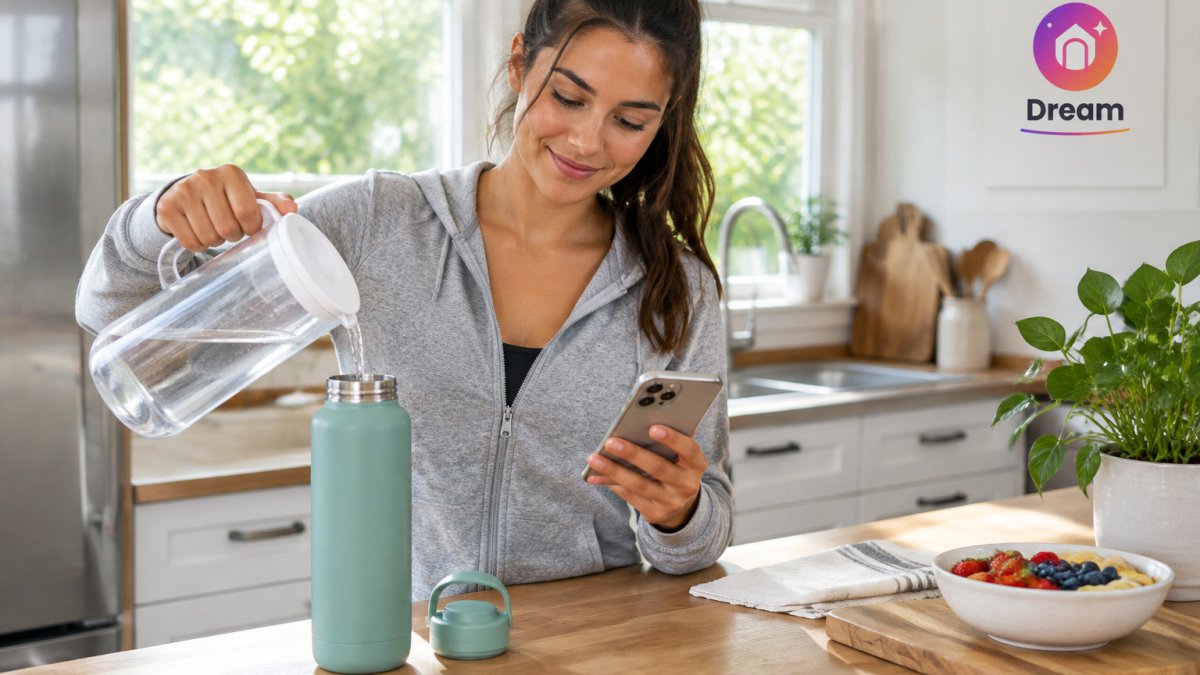
- Pick one method. Choose either an app or a wearable, not both, to start.
- Set a starting goal. Begin with a realistic target, then adjust based on how you feel.
- Choose your container. Use the same bottle each day so each refill is easy to count. A sports water bottle carrier bag from Dream Deal Shop can make it easier to take your bottle everywhere.
- Log every drink for one week. Accuracy matters more than perfection.
- Review and adjust. Raise or lower your goal based on your weekly totals.
Once your bottle is part of your routine, you will find it much easier to hit your daily target. A large, leak-proof option like the Gradient Water Bottle - BPA-Free, Large Capacity, Leak-Proof comes in 600ml, 750ml, and 1000ml sizes, so you can match it to your day.
The Smart Thermos Mug with Temperature Display shows the temperature of your drink by touching the lid. Your first order also gets 10% off at Dream Deal Shop.

Hydration Monitoring for Older Adults
Thirst can feel weaker with age, so a simple log can be useful. A simple log of how much is drunk each day can reveal when intake drops.
Caregivers can help by setting reminders and keeping a bottle within easy reach. Keep the routine gentle and consistent. If you have questions about fluid needs, speak with a qualified healthcare provider.
How Accurate Are Smart Hydration Devices?
Accuracy depends heavily on the method, so it helps to compare the main ways people track hydration side by side.
- Self-logged intake. You record each drink. This is the most transparent method because you know exactly what you counted, but it misses drinks you forget and says nothing about how much you actually absorbed or lost.
- Wearable estimates. These infer fluid status from sweat, skin signals, and motion. They are useful for spotting trends across days but carry uncertainty from fit, sweat rate, and individual skin differences.
- Physiological measures. Clinical methods used in labs and medical settings are the reference standard, but they are not practical for daily wellness tracking.
In practice, most consumer devices are validated against group averages, not against you as an individual. That means a reading can be directionally right, you really did drink less today, while the exact number is approximate. Treat device output as a prompt to check your routine, not as a diagnosis.
How to interpret readings and respond safely:
- Compare like with like. Wear the device the same way and at the same time each day so changes reflect your habits, not your setup.
- Look at weekly averages. Single readings swing with heat, activity, and sleep; multi-day trends are more meaningful.
- Cross-check with simple signals. Dark urine, thirst, dry mouth, and fatigue are familiar everyday cues that can corroborate what the device shows.
- Adjust gradually. If trends suggest you are consistently low, add a glass at a fixed time rather than making large sudden changes.
- Know when to stop self-managing. Persistent thirst, unusual swelling, dizziness, or symptoms that worry you are reasons to speak with a qualified healthcare provider rather than to adjust a device setting.
A simple way to keep your data honest is to use the same bottle every day. The Sports Water Bottle Carrier Bag is a neoprene holder for your water bottle, so refills stay easy to count. The carrier is sold separately from the bottle. First-time customers get 10% off their first order at Dream Deal Shop.

Start Your Hydration Routine With the Right Bottle
A good routine starts with a bottle you like to carry. Pick a size that matches your day, whether that is a 600ml bottle or a 1000ml bottle.
The Sports Water Bottle Carrier Bag is a neoprene holder for your water bottle. The carrier is sold separately from the bottle, so choose the size that fits yours.
Ready to build your routine? Shop today's drop at Dream Deal Shop and get 10% off your first order.
Frequently Asked Questions
What is smart hydration tracking?
Smart hydration tracking uses a connected device or phone app to log how much water you drink and remind you to keep drinking through the day. Some setups add a wearable sensor that estimates fluid loss from sweat. The goal is simple: turn a vague habit into a number you can see and adjust. Start by logging your intake for three or four days to learn your normal pattern, then set a daily target that fits your routine, activity and climate. Reminders work best when they are tied to moments you already have, such as your morning coffee or lunch break.
Are wearable hydration monitors accurate?
Accuracy varies by device and by what it measures. Many consumer wearables estimate hydration from sweat or skin signals, so their readings are best treated as trends rather than exact measurements. Compare a device's numbers against your own pattern over several weeks, and watch for changes in how you feel. If you have a medical condition that affects fluid balance, ask a healthcare provider which measures are reliable for you before making decisions based on any device.
Can a hydration tracking app help older adults drink enough water?
A hydration tracking app can help older adults by sending regular reminders and making intake easy to log. Simple, large-text apps with few steps tend to work better than complex dashboards. Caregivers can also review logs together with the person to spot days with low intake. Because thirst can decline with age, reminders are often more useful than relying on feeling thirsty, but any target should be confirmed with a doctor.
