

Durable Pet Accessories on a Budget: 2026 Picks
Table of Contents
- Quick Comparison: Durable Pet Accessories That Won't Break the Bank
- Affordable Indestructible Dog Toys: What Actually Survives
- Harnesses and Leashes Built to Take a Beating
- Budget Grooming Tools That Don't Fall Apart
- Pet Product Quality Checklist: Spot the Weak Points Before You Buy
- The Real Cost of Cheap: Why Value Beats Price Every Time
- Second-Hand Pet Gear: What's Safe and What's Not
- Conclusion
- Frequently Asked Questions
Last Updated: September 25, 2026
Quick Comparison: Durable Pet Accessories That Won't Break the Bank
Buying durable pet accessories on a budget comes down to one rule: pay for materials and construction, not branding. Reinforced stitching, metal hardware, and proven fabrics like 1000D ripstop nylon cost more upfront but outlast three cheap replacements. At Dream Deal Shop, we hand-pick pet gear daily.
| Category | What to Look For | What to Avoid | Typical Price Range |
|---|---|---|---|
| Chew toys | Soft rubber, bite-resistant build | Thin plastic, glued seams | Budget to mid |
| Harnesses | 1000D nylon, X-shaped stitching | Single-stitched webbing | Mid to higher |
| Leashes | Metal clips, reinforced ends | Plastic buckles | Budget to mid |
| Grooming tools | Stainless steel, USB rechargeable | Flimsy plastic combs | Budget |
Affordable Indestructible Dog Toys: What Actually Survives
Affordable indestructible dog toys share one trait: they flex instead of cracking. Soft rubber molar toys bend under pressure, while cheap hard plastic shatters into sharp edges. For aggressive chewers, rubber and reinforced nylon beat thin plastic.
Rubber vs Nylon vs Rope: Which Chew Toy Lasts
Match the toy to the dog, not the other way around.
- Rubber: Best for moderate chewers and teething puppies. Flexes without cracking.
- Nylon: Best for heavy chewers. Hard, dense, and resists deep punctures.
- Rope: Best for gentle chewers and fetch. Great for flossing action, weakest against determined shredders.
Harnesses and Leashes Built to Take a Beating
Durable harnesses and leashes depend on three components: fabric, stitching, and buckles. A harness is only as strong as its weakest seam, so reinforced X-shaped stitching and metal hardware matter more than a fancy label.
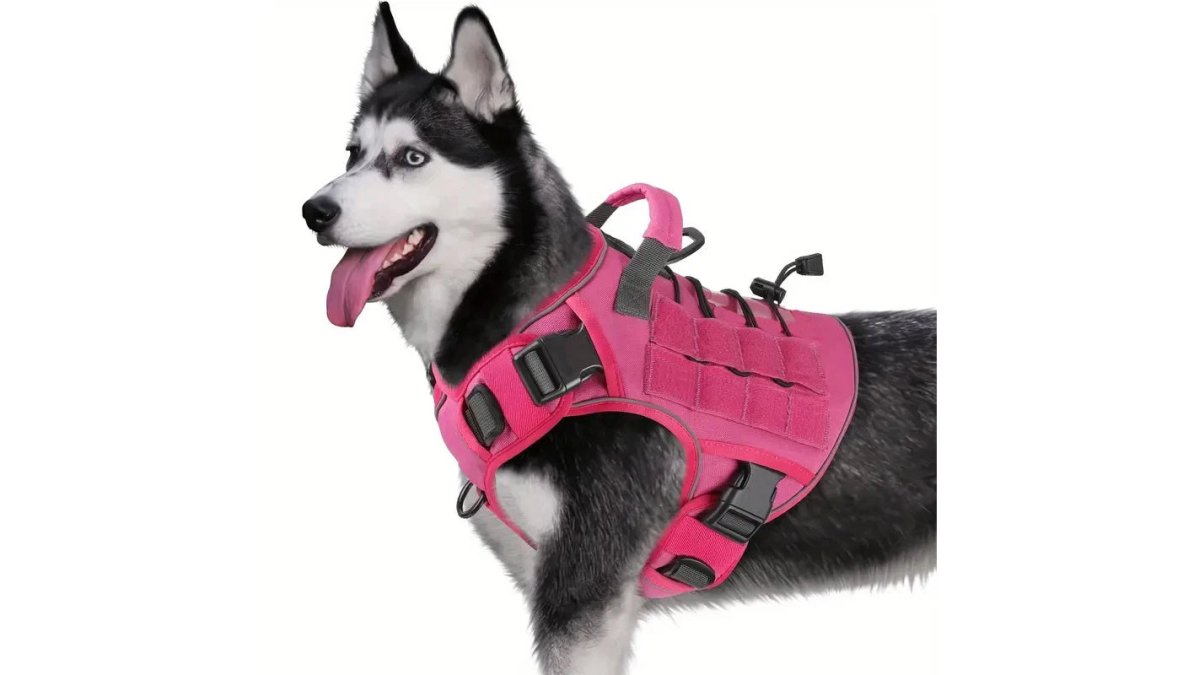
Mesh, Nylon, or 1000D Ripstop: Material Matters
- Soft mesh: Breathable and comfortable for extended wear, best for training and everyday walks.
- Standard nylon: Tough and affordable, good for moderate use.
- 1000D ripstop nylon: Military-grade durability for tough conditions and strong pullers.
For cats and smaller pets, the Tactical Dog & Cat Harness with Leash uses a soft mesh vest that distributes pressure evenly, with a top carry handle and included leash.


Budget Grooming Tools That Don't Fall Apart
Budget grooming tools fail predictably: dull blades, cracked housings, and burnt-out motors. The fix isn't buying the most expensive option, it's knowing which materials determine lifespan, then calculating cost-per-use instead of sticker price.
The Material Science of Grooming Tool Durability
Stainless steel blades hold an edge 3-5x longer than coated carbon steel because they resist corrosion and don't chip under stress, and they can be resharpened rather than replaced. Plastic combs and coated-pin slicker brushes fail when the coating wears off, exposing rough edges that snag fur and scratch skin.
Cost-Per-Use: The Math That Changes Everything
Cost per month = Purchase price ÷ Expected lifespan in months
Matching Tools to Coat Type and Pet Size
Not every durable tool works for every pet, an undercoat rake perfect for a Husky will scratch a Poodle's skin. Match the tool to the coat:
- Short, smooth coats (Beagle, Boxer): Rubber curry brush or grooming glove. Stainless steel combs can irritate skin.
- Double coats (Husky, German Shepherd): Undercoat rake with stainless steel teeth, followed by a slicker brush. The Pet Grooming Brush with bottom rake comb is a grooming rake.
- Curly or wool coats (Poodle, Bichon): Slicker brush with long, flexible pins, plus a metal comb for checking for mats. Pet Grooming Gloves work for daily maintenance between grooms.
- Long, silky coats (Yorkie, Shih Tzu): Wide-tooth stainless steel comb and a pin brush with coated tips to prevent static and breakage.
The Grooming Table: When It's Worth the Investment
If you groom at home more than once a month, a foldable pet grooming table with a stainless steel frame and non-slip surface is a great investment. Look for a table rated for at least 1.5x your pet's weight, cheap tables list optimistic limits, and stainless steel legs that resist rust.

The Safety Checklist for Budget Grooming Tools
Cheap grooming tools can injure pets in ways that aren't obvious until it's too late. Check before first use:
- Blade temperature: Run the tool for 2 minutes, then touch the blade to your inner wrist. If it's too hot for you, it's too hot for your pet's skin.
- Pin integrity: Run your fingers over brush pins. Any rough spots, missing tips, or exposed metal means the coating has failed.
- Cord and plug condition: Frayed cords on clippers or dryers are a shock hazard, especially in bathrooms.
- Noise level: Tools above 70db can cause anxiety and long-term hearing damage in pets. Test before committing.
- Material safety: Avoid tools with strong chemical odors or unmarked plastics. Non-toxic, pet-safe materials should be stated on the packaging or product page.
Pet Product Quality Checklist: Spot the Weak Points Before You Buy
A pet product quality checklist catches failures before you pay. Use this scan on any item, in any store, in under two minutes.
- Stitching: Look for double or X-pattern seams at stress points. Single stitching fails first.
- Hardware: Metal D-rings and buckles outlast plastic. Flex plastic clips and listen for cracking.
- Fabric weight: Heavier, denser weave resists tearing. 1000D ripstop is a top-tier signal.
- Edges and finishing: Raw, fraying edges mean the item will unravel with use.
- Smell test: A strong chemical odor can indicate low-grade materials. Non-toxic gear shouldn't reek.
- Replacement parts: Check whether buckles, straps, or pads can be swapped instead of replacing the whole item.
Stitching, Hardware, and the Sniff Test
The sniff test is the fastest filter you have: quality materials have little to no odor, while a sharp plastic or chemical smell signals cheap fillers or coatings that wear off quickly.
The Real Cost of Cheap: Why Value Beats Price Every Time
The cheapest item is rarely the lowest cost over time. This is the buy-it-twice trap: a budget leash that snaps in six months forces you to buy again until you've spent more than one quality purchase would have cost.
| Item | Cheap Version Lifespan | Durable Version Lifespan | Better Long-Term Value |
|---|---|---|---|
| Chew toy | Weeks to months | Many months | Durable |
| Harness | One season | Multiple years | Durable |
| Nail grinder | Burns out fast | Rechargeable, reusable | Durable |
| Grooming brush | Bristles bend | Holds shape | Durable |
Second-Hand Pet Gear: What's Safe and What's Not
Second-hand pet gear can be a bargain or a hidden hazard. The difference comes down to material degradation, hidden stress fractures, and whether the item can be fully sanitized. Here's the inspection protocol professionals use.
Tactical Dog & Cat Harness with Leash →
The Material Degradation Timeline
Not all materials age the same way. Knowing how each breaks down tells you what to inspect and what to avoid.
The 5-Point Inspection Protocol for Used Gear
For any second-hand pet item, run this sequence:
- Smell test: A strong chemical, musty, or urine odor means absorbed contaminants that won't wash out. Skip it.
- Stress point check: For weight-bearing items (crates, tables, carriers), inspect welds, hinges, and connection points. Hairline cracks or stress marks are failure points.
- Hardware inspection: Metal buckles and D-rings should move freely without grinding. Plastic hardware should flex slightly but not creak. Any crack, even hairline, means replace the hardware or skip the item.
- Surface integrity: Rough spots on plastic, exposed metal on coated items, or fraying fabric mean the protective layer has failed.
- Cleanability: Non-porous surfaces (stainless steel, hard plastic, sealed wood) can be sanitized. Porous surfaces (fabric, rope, untreated wood) cannot and shouldn't be bought used.
What's Safe to Buy Used (and What Isn't)
Safe with inspection:
- Metal crates (welds, rust, latch function)
- Stainless steel grooming tables (leg locks, surface rust)
- Hard plastic carriers (stress cracks around handles and door latches)
- Ceramic or stainless steel bowls (chips and cracks that harbor bacteria)
- Hard plastic litter boxes (deep scratches that trap odor)
Inspect closely:
- Leashes and collars with metal hardware (stitching and hardware; nylon may have hidden UV damage)
- Grooming tools with metal blades (nicks and rust; replace questionable blades)
- Pet gates and playpens (hinges, latches, bar integrity)
Always buy new:
- Chew toys of any material (hidden damage, bacteria, degradation)
- Soft bedding, blankets, and beds (can't be fully sanitized; may harbor fleas, mites, or bacteria)
- Anything with cracked plastic buckles or D-rings (single point of failure under load)
- Harnesses and leashes with any fraying, fading, or stiffness (UV damage and reduced tensile strength)
- Food and water bowls with deep scratches or chips (bacteria harbors in scratches)
The Cost-Per-Use Calculation for Second-Hand Gear
Second-hand only saves money if the item lasts. A $20 used crate lasting 2 years costs $0.83 per month; a $60 new crate lasting 10 years costs $0.50 per month, and you know its full history. Run the math before assuming used is cheaper.
Safety Standards for Cheap Goods: What to Check on New Items Too
The same protocol applies to new budget items, since low-cost manufacturing sometimes skips safety steps premium brands build in. Look for:
- Non-toxic material claims: Especially on anything your pet chews or wears against skin. Look for phrases like "food-grade silicone," "BPA-free," or "non-toxic dyes."
- Reinforced construction: Double-stitched seams, metal hardware at stress points, and reinforced edges.
- No strong chemical odor: A sharp plastic smell often indicates low-grade fillers or coatings that can off-gas.
- Weight ratings: For crates, carriers, and tables, check that the weight limit is at least 1.5x your pet's weight. Cheap items often list optimistic limits.
Where to Find Safe Second-Hand Gear
Not all second-hand sources are equal. Estate and moving sales often have high-quality items because owners are motivated to sell, not hide defects. Thrift stores vary, inspect everything. Online marketplaces need the most caution; ask for close-up photos of stress points, hardware, and damage.
Conclusion
Finding durable pet accessories on a budget is a skill, not luck. Once you check stitching, hardware, and materials, you stop overpaying for junk and replacing gear every few months.
Frequently Asked Questions
Are there any dog toys that are actually indestructible?
No toy is truly indestructible, but some come close. Look for toys made from dense natural rubber or reinforced nylon with thick walls and no small parts that can be torn off. The Interactive Dog Chew Toy & Toothbrush at Dream Deal Shop uses soft rubber molar bumps built for daily chewing, and its bite-resistant build handles regular use. Always supervise your dog with any chew toy and replace it at the first sign of cracking or deep gouges.
How can I find durable pet toys that don't cost a fortune?
Focus on material and construction rather than brand names. Rubber toys with thick walls, ballistic nylon straps, and reinforced stitching all signal longevity. Compare the cost per month of use, not the sticker price. A €15 rubber chew toy that lasts six months costs less per month than a €5 toy that falls apart in three weeks. Dream Deal Shop's daily drops often include affordable indestructible dog toys.
What should I look for when buying budget-friendly pet supplies?
Run through a pet product quality checklist before buying. Check stitching density on harnesses and leashes, look for metal hardware instead of plastic where load-bearing, and confirm materials are non-toxic. For grooming tools, check that bristles or grinding heads are securely attached. If a product has no material details listed, that's a red flag. Dream Deal Shop lists materials and specs on every product page so you can verify before you buy.
How often should I replace my pet's accessories to ensure safety?
It depends on the item and how hard your pet is on it. Leashes and harnesses typically need replacing every 12 to 18 months, sooner if you notice fraying, rusted clips, or stretched straps. Chew toys should be inspected weekly and replaced at the first sign of cracking. Grooming tools last years with proper cleaning. The replacement cycle shortens dramatically for strong pullers or aggressive chewers, so check gear monthly rather than waiting for a failure.
Is it possible to find high-quality pet gear at discount prices?
Yes, but you need to know what separates quality from junk. Look for specific material callouts like 1000D ripstop nylon, stainless steel frames, or reinforced X-shaped stitching. Generic descriptions like 'premium material' tell you nothing. Dream Deal Shop curates daily drops of pet accessories at real discounts, and each listing includes material specs, so you can compare value for money without guessing. Once a drop sells out, it doesn't restock.